AWS Graviton3: Achieve 25% Cloud Cost Reduction by 2026
Mastering AWS Graviton3 for a 25% Cost Reduction in Cloud Workloads by 2026
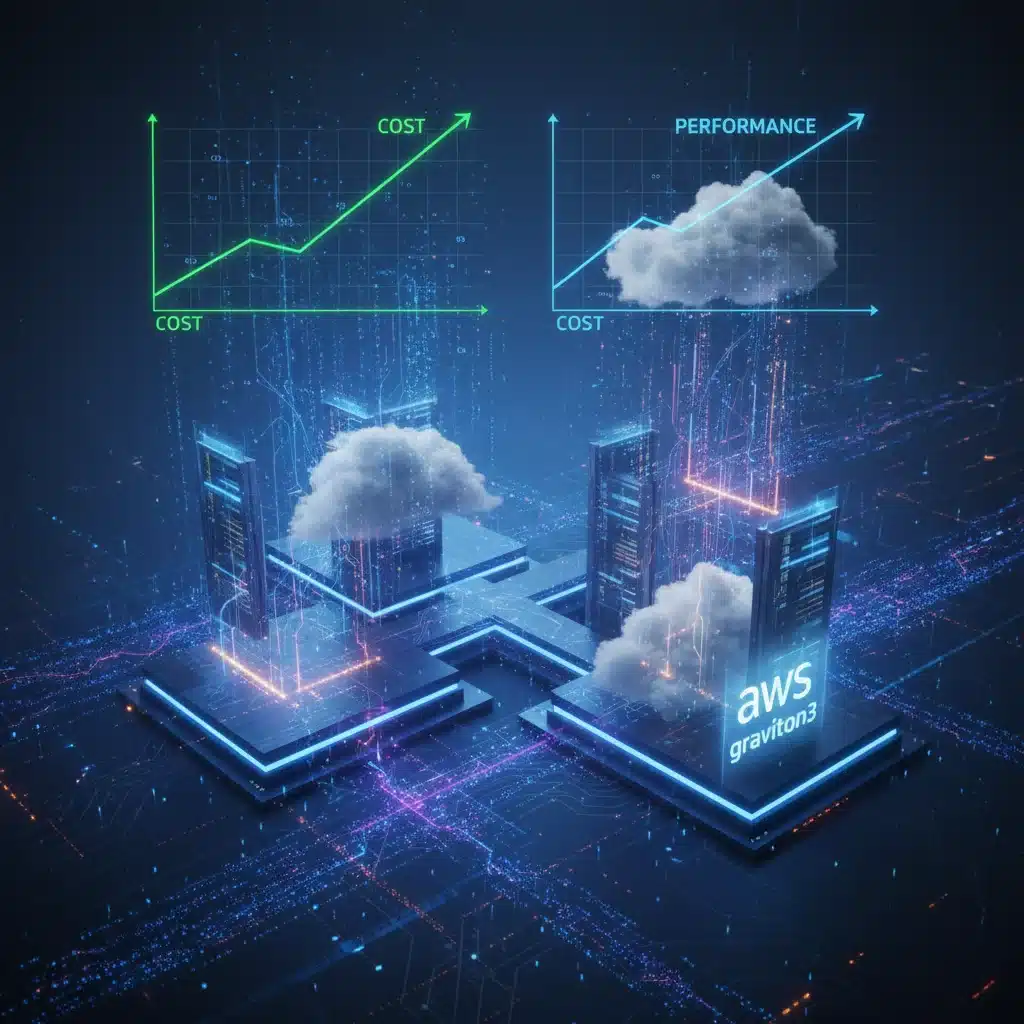
In the rapidly evolving landscape of cloud computing, businesses are constantly seeking innovative ways to optimize performance and, crucially, reduce operational costs. The advent of custom-designed silicon, particularly AWS Graviton3 processors, marks a pivotal moment in this quest. With the promise of significant performance gains and substantial cost reductions, mastering AWS Graviton3 is becoming an imperative for any organization aiming for a competitive edge. This comprehensive guide will delve into how AWS Graviton3 can help achieve up to a 25% cost reduction in cloud workloads by 2026, exploring its technical advantages, migration strategies, and best practices for optimization.
The cloud computing paradigm has transformed how businesses operate, offering unparalleled scalability, flexibility, and agility. However, as cloud adoption matures, cost management emerges as a critical challenge. Unoptimized cloud resources can quickly escalate expenses, eroding the very benefits cloud computing promises. This is where AWS Graviton3 processors step in as a game-changer. Built on the ARM architecture, Graviton3 instances offer a superior price-performance ratio compared to their x86 counterparts, making them an attractive option for a wide array of workloads.
Understanding the Power of AWS Graviton3
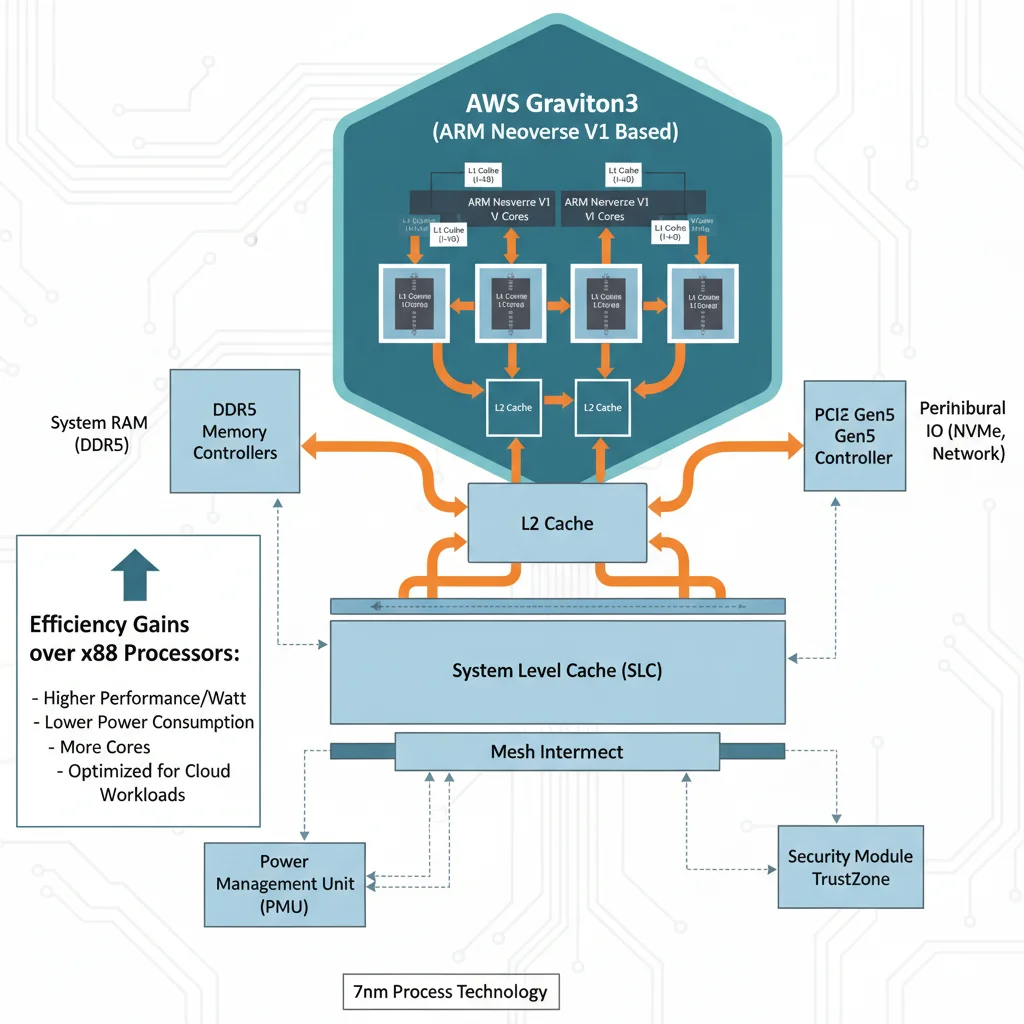
AWS Graviton3 is the third generation of AWS-designed ARM-based processors, specifically engineered for optimal performance in the Amazon Elastic Compute Cloud (EC2) environment. These processors are at the heart of several new EC2 instance types, including C7g, M7g, and R7g, designed to cater to compute-intensive, general-purpose, and memory-optimized workloads, respectively. The fundamental shift from traditional x86 architecture to ARM provides several inherent advantages that translate directly into cost savings and performance enhancements.
The ARM Advantage
The ARM architecture is renowned for its energy efficiency and high core count. Graviton3 processors leverage this by offering more cores per instance, enabling higher parallel processing capabilities. This efficiency is not just about raw power; it’s about doing more work with less energy, which directly impacts the underlying operational costs for AWS, and subsequently, the pricing passed on to customers. For many common cloud workloads, this translates into a significantly lower cost per unit of performance.
Key Features and Performance Improvements
Graviton3 processors boast several architectural improvements over their predecessors, Graviton2, and even more so over comparable x86 instances:
- Up to 25% better performance: For general-purpose workloads, Graviton3 instances can deliver up to a 25% performance improvement over Graviton2.
- Up to 2x faster floating-point performance: Critical for scientific computing, machine learning inference, and media processing.
- Up to 2x faster cryptographic workload performance: Enhancing security and data privacy operations.
- Up to 3x better machine learning performance: Leveraging the new Graviton3 vector instructions (bfloat16) for enhanced ML inference.
- DDR5 Memory: The first cloud processor to use DDR5 memory, offering 50% more bandwidth than DDR4, crucial for memory-intensive applications.
- Enhanced Security: Always-on memory encryption and dedicated caches for each vCPU provide a more secure execution environment.
These improvements collectively contribute to a compelling case for migrating to Graviton3, especially when considering the long-term goal of achieving significant cost reductions.
The Path to 25% Cost Reduction: A Strategic Approach
Achieving a 25% cost reduction by 2026 with AWS Graviton3 is an ambitious yet attainable goal. It requires a strategic, phased approach that encompasses assessment, migration, optimization, and continuous monitoring. This isn’t just about swapping out instance types; it’s about re-evaluating your application architecture and development practices to fully leverage the Graviton3 capabilities.
Phase 1: Assessment and Planning
Before embarking on any migration, a thorough assessment of your current cloud environment is paramount. This phase involves identifying suitable workloads for Graviton3, understanding potential challenges, and developing a detailed migration plan.
Workload Identification
Not all workloads are created equal, and some are better suited for Graviton3 than others. Ideal candidates typically include:
- Web servers and application servers: Nginx, Apache, Node.js, Python, Ruby, PHP applications.
- Containerized microservices: Docker, Kubernetes workloads.
- Backend services: APIs, message queues, caching services (Redis, Memcached).
- Big data analytics: Apache Spark, Hadoop.
- High-performance computing (HPC): Certain scientific simulations and data processing tasks.
- Databases: PostgreSQL, MySQL, Cassandra.
- CI/CD pipelines: Jenkins, GitLab CI, CircleCI.
Workloads that are heavily reliant on x86-specific instructions or proprietary software with no ARM compilation might be more challenging. However, with increasing software support for ARM, this list of exceptions is shrinking.
Tools for Assessment
AWS provides several tools to aid in the assessment process:
- AWS Compute Optimizer: This service analyzes your EC2 usage history and recommends optimal EC2 instance types, including Graviton-based instances, for your workloads.
- Graviton Readiness Advisor: A specific tool within AWS Compute Optimizer that helps identify applications suitable for Graviton.
- Application Profiling: Utilize performance monitoring tools to understand CPU, memory, and I/O utilization patterns of your applications. This data will be crucial for validating performance post-migration.
Pilot Projects
Start with non-critical workloads or development/staging environments. A successful pilot project builds confidence, provides valuable lessons learned, and helps refine the migration process for more critical applications.
Phase 2: Migration Strategy and Execution
Migrating to Graviton3 involves recompiling your application code for the ARM architecture and potentially updating dependencies. The ease of migration largely depends on your application’s programming language, dependencies, and deployment model.
Application Recompilation and Dependencies
Most modern programming languages and runtimes (Java, Python, Node.js, Go, .NET, Ruby, Rust, C/C++) offer excellent support for ARM. If your application is written in one of these languages and uses standard libraries, recompilation is often straightforward.
- Containerized applications: For Docker containers, you’ll need to rebuild your images for the
arm64architecture. Multi-architecture images are an excellent solution, allowing a single image tag to serve both x86 and ARM platforms. Tools like Buildx can simplify this. - Managed services: AWS managed services like Amazon RDS, Amazon EKS, Amazon ECS, AWS Lambda, and AWS Fargate now support Graviton instances, simplifying migration for these components.
- Custom binaries: If your application relies on custom binaries or third-party libraries, ensure that ARM-compatible versions are available. You might need to contact vendors or compile them from source if necessary.
When recompiling, pay attention to compiler flags and optimization settings. Sometimes, minor code adjustments might be needed to address architecture-specific differences, although these are generally rare for well-written, portable code.
Database Migration
For databases, migrating to Graviton3-powered RDS instances or self-managed databases on Graviton EC2 instances typically involves a standard database migration process. Ensure compatibility with the chosen database version on ARM and perform thorough testing.
CI/CD Pipeline Updates
Update your CI/CD pipelines to build and deploy ARM-compatible artifacts. This might involve configuring build agents to run on Graviton instances or using multi-architecture build tools. Automating the build and deployment process for both architectures can streamline future development.
Phase 3: Optimization and Performance Validation
Migration is only the first step. To fully realize the 25% cost reduction, continuous optimization and rigorous performance validation are crucial. The goal is not just to run on Graviton3 but to run optimally.
Performance Benchmarking
After migrating, conduct extensive performance benchmarking. Compare the performance of your applications on Graviton3 instances against their x86 counterparts. Key metrics to monitor include:
- Throughput: Requests per second, transactions per second.
- Latency: Response times for critical operations.
- Resource utilization: CPU, memory, network I/O, disk I/O.
- Cost per transaction/request: This is the ultimate metric for measuring cost efficiency.
Tools like Apache JMeter, ab (ApacheBench), k6, or custom load testing scripts can be invaluable here. Ensure your benchmarks simulate real-world usage patterns accurately.
Right-Sizing Instances
Graviton3’s superior performance often means you can use smaller instance sizes or fewer instances to achieve the same or better performance than on x86. This is a primary driver of cost reduction. Continuously monitor resource utilization and adjust instance types and sizes accordingly. AWS Compute Optimizer can provide ongoing recommendations.
Code Optimization
While Graviton3 offers significant out-of-the-box improvements, further code optimization can unlock even greater gains. Profile your application to identify bottlenecks and areas where ARM-specific optimizations could be applied. This might involve:
- Optimizing data structures for cache efficiency.
- Leveraging ARM NEON intrinsics for highly parallel computations (if applicable).
- Fine-tuning garbage collection or memory allocation strategies.
Monitoring and Alerting
Implement robust monitoring and alerting using AWS CloudWatch, Prometheus, Grafana, or other APM tools. Track key performance indicators (KPIs) and cost metrics to identify any regressions or opportunities for further optimization. Set up alerts for unusual resource utilization or cost spikes.
Phase 4: Continuous Improvement and Scaling
The journey to cloud cost optimization is ongoing. As your applications evolve and new Graviton generations emerge, continuous improvement will be key to maintaining and even exceeding your cost reduction targets.
Embrace Serverless with Graviton
AWS Lambda now supports Graviton processors, offering improved performance and lower costs for serverless functions. Migrating eligible Lambda functions to Graviton can provide significant savings, especially for high-volume, short-duration invocations. This aligns perfectly with the trend towards serverless architectures for maximum efficiency.
Leverage Spot Instances and Savings Plans
Combine Graviton3 instances with AWS cost-saving mechanisms like Spot Instances for fault-tolerant workloads and Savings Plans or Reserved Instances for stable, long-running workloads. The lower base cost of Graviton instances amplifies the savings from these programs.
Automate and Standardize
Automate the deployment and management of your Graviton-based infrastructure using Infrastructure as Code (IaC) tools like AWS CloudFormation or Terraform. Standardize your Graviton adoption across teams to ensure consistency and accelerate future migrations.
Real-World Impact and Case Studies
Numerous companies have already realized substantial benefits from migrating to AWS Graviton. For instance, SmugMug reported a 40% performance improvement and 20% cost reduction by migrating their image processing workloads to Graviton2. Similarly, Honeycomb saw a 20-30% performance increase and cost savings. While these examples are for Graviton2, Graviton3 promises even greater efficiencies, making the 25% cost reduction target highly plausible.
Consider a large e-commerce platform experiencing seasonal traffic spikes. By migrating their web servers and backend microservices to Graviton3, they could handle peak loads with fewer instances, reducing their overall compute footprint. This translates directly into lower EC2 bills, especially when combined with auto-scaling groups that can efficiently scale Graviton instances up and down.
Addressing Potential Challenges
While the benefits are clear, organizations might encounter some challenges during the transition to Graviton3.
- Dependency Compatibility: As mentioned, ensuring all third-party libraries and tools are ARM-compatible can sometimes be a hurdle. Thorough testing is essential.
- Learning Curve: Developers and operations teams might need to familiarize themselves with the ARM architecture, especially for low-level debugging or performance tuning.
- Tooling Support: While major tools support ARM, niche or legacy tools might not. Evaluate your entire toolchain.
- Initial Effort: The initial assessment, recompilation, and testing efforts require an investment of time and resources. However, the long-term savings typically outweigh this initial overhead.
AWS and the broader open-source community are continually improving ARM support, mitigating many of these challenges. The trend is clear: ARM is becoming a first-class citizen in cloud computing.
The Future of Cloud Computing: Graviton and Beyond
The innovation behind AWS Graviton processors signifies a broader shift in cloud computing – towards specialized, purpose-built silicon. This trend is driven by the increasing demand for higher performance, greater energy efficiency, and lower costs. As workloads become more diverse and specialized, generic processors often fall short of optimal performance. Custom silicon like Graviton allows cloud providers to tailor hardware precisely to the needs of cloud workloads, delivering superior value.
Looking ahead to 2026, we can expect even further advancements in ARM-based processors. Subsequent generations of Graviton will likely push the boundaries of performance and efficiency even further, offering even greater opportunities for cost reduction. Organizations that embrace Graviton3 now will be well-positioned to leverage these future innovations, staying ahead of the curve in cloud cost optimization.
Moreover, the adoption of Graviton contributes to a more sustainable cloud. The energy efficiency of ARM processors means that running workloads on Graviton instances consumes less power, reducing the carbon footprint of your cloud operations. This aligns with broader corporate social responsibility goals and the increasing focus on sustainable IT practices.
Conclusion: Embracing AWS Graviton3 for a Sustainable Competitive Advantage
Achieving a 25% cost reduction in cloud workloads by 2026 with AWS Graviton3 is not just an aspiration; it’s a strategic imperative for businesses looking to maximize their cloud investment. By understanding the architectural advantages of Graviton3, adopting a structured migration approach, and committing to continuous optimization, organizations can unlock significant performance gains and substantial cost savings. The journey involves careful planning, diligent execution, and a commitment to leveraging the latest cloud technologies. As the cloud landscape continues to evolve, mastering AWS Graviton3 will undoubtedly be a cornerstone of a cost-effective, high-performing, and sustainable cloud strategy, ensuring a competitive advantage for years to come.