AWS Graviton3: Achieve 30% Cloud Cost Reduction by 2026
In the rapidly evolving landscape of cloud computing, efficiency and cost-effectiveness are paramount. Organizations are constantly seeking innovative solutions to optimize their infrastructure while maintaining, or even enhancing, performance. One of the most significant advancements in this realm is the introduction and widespread adoption of AWS Graviton3 processors. These ARM-based custom-designed chips by Amazon Web Services are not just another option; they represent a fundamental shift in how cloud workloads can be run, promising substantial benefits, particularly in the critical area of cost reduction.
The imperative to achieve significant cost savings in the cloud is growing. As cloud adoption matures, so does the scrutiny on operational expenses. Projections indicate that by 2026, companies leveraging AWS Graviton3 could realize an average of 30% cost reduction in their cloud workloads. This isn’t merely an optimistic forecast; it’s a tangible goal achievable through strategic planning and execution. This comprehensive guide will delve deep into the world of AWS Graviton3, exploring its capabilities, benefits, migration strategies, and the real-world impact it can have on your bottom line.
The Evolution of Cloud Processors: Why Graviton3 Matters
For years, x86 architecture dominated the server market, including cloud instances. While robust and widely supported, x86 processors often come with higher licensing costs and can be less power-efficient for certain types of workloads. The advent of ARM-based processors in the server space, spearheaded by AWS with its Graviton family, has introduced a compelling alternative.
From Graviton1 to Graviton3: A Journey of Innovation
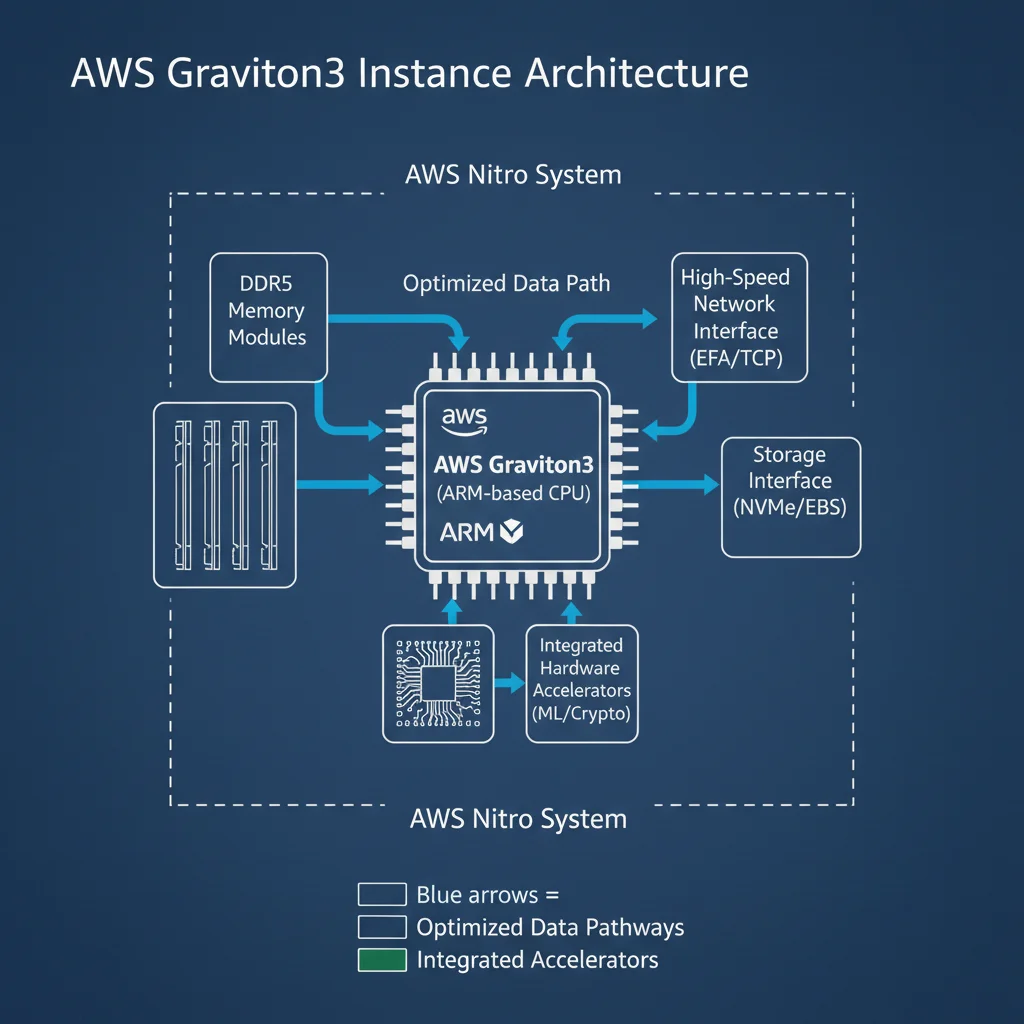
The journey began with Graviton1, offering a glimpse into the potential of ARM for cloud workloads. Graviton2 significantly upped the ante, providing a compelling performance-per-dollar advantage over comparable x86 instances. Now, AWS Graviton3, built on the ARM Neoverse V1 core, pushes these boundaries even further. It offers up to 25% better compute performance, up to 2x faster floating-point performance, and up to 2x faster cryptographic workload performance compared to Graviton2. This generational leap isn’t just about raw speed; it’s about a holistic improvement in efficiency, which directly translates to AWS Graviton3 Cost Reduction.
The Core Advantage of ARM Architecture
ARM architecture is renowned for its energy efficiency, a characteristic that has made it ubiquitous in mobile devices. Translating this efficiency to the server environment means lower power consumption, which for cloud providers like AWS, can lead to significant operational savings. These savings are then passed on to customers in the form of more competitive pricing for Graviton instances. Furthermore, ARM’s simpler instruction set architecture (ISA) often allows for more efficient execution of certain types of code, especially those that are highly parallelizable or do not require the complex instruction sets common in x86.
Unpacking the Benefits of AWS Graviton3 for Cost Reduction
The primary driver for many organizations considering Graviton3 is the promise of substantial cost savings. Let’s break down how these savings are realized and what other benefits accompany them.
Direct Cost Savings through Instance Pricing
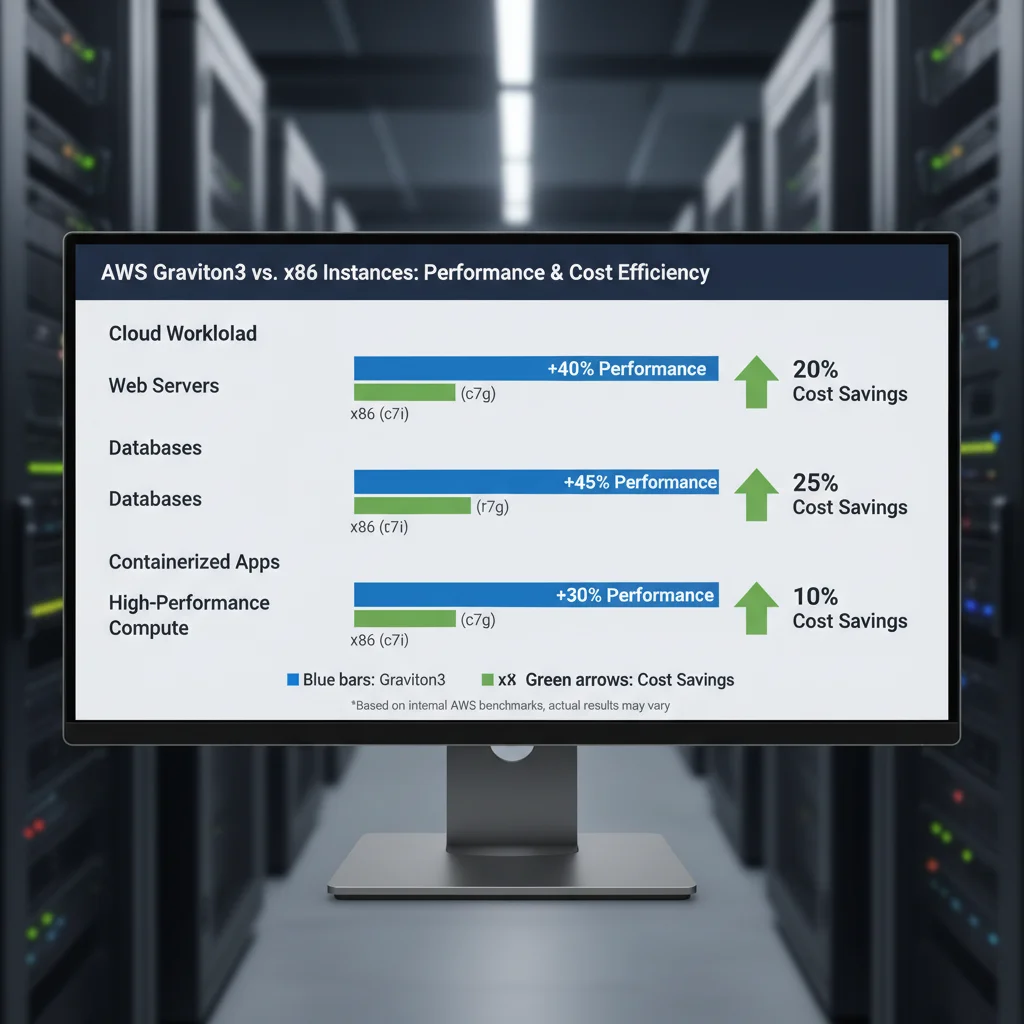
AWS Graviton instances are typically priced lower than their x86 counterparts, even when offering comparable or superior performance for many workloads. This immediate reduction in hourly instance costs is the most straightforward path to AWS Graviton3 Cost Reduction. When scaled across an entire fleet of instances, these savings can quickly accumulate to millions of dollars annually for large enterprises.
Improved Performance-to-Cost Ratio
Beyond the direct pricing, the real magic lies in the improved performance-to-cost ratio. Graviton3 instances often deliver more compute power, memory bandwidth, and networking capabilities per dollar spent. This means you can achieve the same level of performance (or better) with fewer instances or smaller instance types, further amplifying your cost savings. For example, a workload that previously required an m6i.large instance might perform equally well on an m7g.medium, which could be significantly cheaper.
Energy Efficiency and Sustainability
While not a direct line item on your AWS bill, the energy efficiency of Graviton3 processors contributes to a more sustainable cloud footprint. As environmental concerns become more pressing, organizations are increasingly looking for ways to reduce their carbon emissions. Running workloads on Graviton instances helps achieve this by consuming less power per unit of work, aligning with corporate sustainability goals and potentially leading to indirect long-term savings through reduced energy overhead for AWS, which can influence future pricing models.
Enhanced Security Features
Graviton3 processors are designed with enhanced security features, including always-on memory encryption. This adds another layer of protection for your data and applications, reducing the risk of security breaches and the associated costs of remediation, compliance fines, and reputational damage. While not a direct cost reduction, it’s a significant value addition that contributes to overall operational resilience and risk mitigation.
Optimized for Cloud-Native Workloads
Graviton3 processors are particularly well-suited for cloud-native applications, microservices, containers, and serverless functions. These modern architectures often benefit from the efficient, high-core-count design of ARM processors. As more organizations adopt cloud-native patterns, Graviton3 becomes an increasingly attractive platform for running these workloads optimally, driving further efficiency and cost benefits.
Identifying Suitable Workloads for Graviton3 Migration
While Graviton3 offers broad advantages, not all workloads are equally ready or beneficial for migration. Identifying the right candidates is crucial for a successful AWS Graviton3 Cost Reduction strategy.
Common Workload Candidates
- Web Servers and Application Servers: Node.js, Python, Java, PHP, and Ruby applications often see significant performance improvements and cost savings.
- Containerized Workloads: Kubernetes and ECS workloads running Docker containers are excellent candidates, especially with the increasing availability of ARM-compatible container images.
- Microservices: The distributed nature of microservices makes them highly adaptable to Graviton3, leveraging its efficient core design.
- Data Analytics: Big data processing frameworks like Apache Spark, Hadoop, and Presto can benefit from the improved memory bandwidth and processing capabilities.
- Databases: Open-source databases like PostgreSQL, MySQL, and Redis often show strong performance on Graviton3.
- Caching Services: Memcached and Redis can leverage the enhanced memory and networking.
- CI/CD Pipelines: Build and test environments can be accelerated and made more cost-effective.
Workloads Requiring Careful Evaluation
Some workloads might require more extensive testing or might not be ideal for Graviton3:
- Proprietary Software: Applications with strict x86 dependencies or those that rely on specific x86 instruction sets might require recompilation or might not be compatible.
- Legacy Applications: Older applications with complex binaries or obscure dependencies could pose migration challenges.
- Workloads with x86-Specific Optimizations: Highly optimized scientific computing or gaming engines that heavily utilize x86-specific vector extensions might not see the same performance gains or could require significant re-engineering.
A Step-by-Step Guide to Migrating to AWS Graviton3
Migrating to Graviton3 doesn’t have to be a daunting task. AWS provides a wealth of tools and resources to facilitate the process. Here’s a general roadmap:
Phase 1: Assessment and Planning
- Inventory Your Workloads: Identify all applications and services running on x86 instances. Categorize them by criticality, dependencies, and potential for migration.
- Dependency Mapping: Document all software dependencies, including operating systems, libraries, runtimes, and third-party tools. Check for ARM compatibility.
- Performance Benchmarking: Establish baseline performance metrics for your current x86 workloads. This is crucial for comparing against Graviton3 performance post-migration.
- Cost Analysis: Calculate current x86 instance costs and estimate potential AWS Graviton3 Cost Reduction based on instance pricing and performance expectations.
- Pilot Program Selection: Choose a low-risk, non-critical application or service to serve as your pilot for migration. This allows you to learn and refine your process without impacting core business operations.
Phase 2: Preparation and Testing
- Choose an ARM-Compatible OS: Ensure your operating system (e.g., Amazon Linux 2, Ubuntu, Red Hat Enterprise Linux) has ARM versions available.
- Recompile or Verify Binaries: For compiled languages (e.g., C++, Go), you’ll need to recompile your code for ARM64 architecture. For interpreted languages (e.g., Python, Node.js, Java), ensure your runtime and any native extensions are ARM compatible.
- Update Dependencies: Verify that all libraries, frameworks, and third-party tools have ARM-compatible versions. Leverage container images from public repositories (e.g., Docker Hub) that offer multi-architecture support.
- Create a Graviton3 Test Environment: Provision new Graviton3 instances (e.g.,
m7g,c7g,r7g) in a staging or development environment. - Deploy and Test: Deploy your pilot application to the Graviton3 test environment. Conduct thorough functional, integration, and performance testing. Compare performance against your x86 baselines.
Phase 3: Deployment and Optimization
- Automate Deployment: Integrate Graviton3 instance types into your existing CI/CD pipelines and infrastructure-as-code (IaC) templates (e.g., CloudFormation, Terraform).
- Phased Rollout: Implement a phased rollout strategy for production workloads. Start with a small percentage of traffic, monitor closely, and gradually increase Graviton3 adoption.
- Continuous Monitoring and Optimization: Utilize AWS monitoring tools (CloudWatch, Performance Insights) to track performance, resource utilization, and costs of your Graviton3 instances. Look for opportunities to further optimize instance types or application configurations.
- Iterate and Expand: Apply lessons learned from your pilot and initial rollouts to migrate additional workloads, continuously refining your strategy for maximum AWS Graviton3 Cost Reduction.
Tools and Resources for a Smooth Graviton3 Migration
AWS provides a rich ecosystem of tools and services to assist with your migration journey:
- AWS Graviton Ready Program: This program highlights software and services from AWS Partners that support Graviton-based instances, simplifying the search for compatible solutions.
- Porting Advisor for Graviton: A valuable tool that helps identify potential compatibility issues in your application code and provides recommendations for porting to ARM64.
- AWS Systems Manager: Can be used for automating the deployment and management of applications across mixed x86 and Graviton fleets.
- AWS CodeBuild and CodePipeline: Configure your CI/CD pipelines to build multi-architecture container images or binaries, supporting both x86 and ARM.
- Amazon ECR (Elastic Container Registry): Store multi-architecture container images, allowing you to deploy the correct image based on the underlying instance architecture.
- AWS Fargate: Supports Graviton processors, making it easier to run containerized workloads without managing EC2 instances directly.
- Amazon EKS (Elastic Kubernetes Service) and Amazon ECS (Elastic Container Service): Both container orchestration services support Graviton instances, allowing you to mix and match instance types within your clusters.
- Amazon RDS and Aurora: Many managed database services offer Graviton-based instances, simplifying database migration.
Real-World Impact: Case Studies and Success Stories
Numerous organizations have already realized significant benefits by migrating to Graviton processors, demonstrating the tangible impact of AWS Graviton3 Cost Reduction.
Leading Companies Embrace Graviton
- Netflix: A prominent early adopter, Netflix has publicly shared its success in migrating a significant portion of its streaming infrastructure to Graviton, leading to substantial performance improvements and cost savings.
- SmugMug: The photo-sharing platform migrated its web tier and other services to Graviton, experiencing a 40% performance improvement and a 20% cost reduction.
- Snap Inc. (Snapchat): Utilizes Graviton for various backend services, benefiting from improved efficiency and lower operational costs.
- Datadog: Integrated Graviton support into its monitoring agent, allowing customers to gain efficiency and cost benefits when running Datadog on Graviton instances.
These examples underscore that Graviton is not just for niche applications but can power large-scale, high-traffic production workloads, delivering measurable improvements in both performance and cost efficiency.
Overcoming Potential Challenges in Graviton3 Migration
While the benefits are clear, organizations might encounter challenges during migration. Anticipating and addressing these can ensure a smoother transition.
Software Compatibility and Dependencies
The most common hurdle is ensuring all software components, including operating systems, libraries, and third-party tools, are compatible with the ARM64 architecture. This often involves recompiling code or finding ARM-specific versions of binaries. For complex applications with many dependencies, this can be a time-consuming process. Leveraging containerization with multi-architecture images can significantly simplify this by abstracting the underlying architecture.
Testing and Benchmarking
Thorough testing is paramount. It’s not enough for an application to simply run; it must perform optimally. This requires rigorous functional testing, load testing, and performance benchmarking to ensure that the Graviton3 environment meets or exceeds the performance of the x86 environment. Without proper baselines and comparative testing, the true impact of AWS Graviton3 Cost Reduction and performance gains cannot be accurately measured.
Skills and Expertise
While ARM architecture is becoming more prevalent, some development and operations teams may have limited experience with it. Investing in training or leveraging AWS professional services and partners can help bridge any skill gaps and accelerate the migration process. Understanding how to optimize applications for ARM can further enhance performance and cost savings.
Monitoring and Observability
Ensure your monitoring and observability stack (e.g., logging, metrics, tracing) is fully compatible with ARM-based instances. Most modern observability tools support multi-architecture deployments, but it’s essential to verify this before going live to maintain visibility into your applications.
The Future of Cloud Computing: Graviton’s Role Beyond 2026
The trajectory of Graviton processors suggests a future where ARM-based instances become increasingly central to cloud computing. As AWS continues to innovate with future Graviton generations, the performance-per-watt and performance-per-dollar advantages are likely to grow even wider.
Continued Optimization and Ecosystem Growth
The ecosystem supporting Graviton is rapidly expanding. More software vendors are offering ARM-native versions of their products, and open-source communities are prioritizing ARM compatibility. This growing support will further reduce migration friction and unlock new possibilities for optimization. Expect to see even more specialized Graviton instance types tailored for specific workloads, offering even greater efficiency.
Sustainability as a Driving Force
With increasing global focus on climate change and corporate sustainability, the energy efficiency of Graviton processors will become an even more significant differentiator. Organizations will increasingly prioritize infrastructure that not only saves money but also reduces their carbon footprint. Graviton is perfectly positioned to meet this demand, making it a strategic choice for environmentally conscious companies.
Democratization of High Performance
Graviton makes high-performance computing more accessible and affordable. By reducing the cost of compute, it enables smaller businesses and startups to leverage powerful infrastructure that was once the exclusive domain of large enterprises. This democratization fuels innovation and allows more organizations to build and scale ambitious cloud applications.
Achieving 30% Cost Reduction by 2026: A Strategic Imperative
The goal of achieving a 30% cost reduction in cloud workloads by 2026 through AWS Graviton3 is not an arbitrary target; it’s a realistic and achievable strategic imperative for many organizations. This level of savings can free up significant capital to invest in innovation, accelerate digital transformation initiatives, or improve profitability.
To reach this goal, it requires more than just a technical migration; it demands a cultural shift towards embracing new architectures and a commitment to continuous optimization. Organizations that proactively assess their workloads, plan their migrations carefully, and continuously monitor and refine their Graviton deployments will be best positioned to reap the full benefits.
Key Takeaways for Success
- Start Small, Think Big: Begin with pilot projects to gain experience and build confidence before scaling.
- Automate Everything: Leverage IaC and CI/CD pipelines to streamline deployment and management across architectures.
- Monitor Relentlessly: Continuous monitoring is crucial for identifying performance bottlenecks and optimizing resource allocation.
- Stay Updated: Keep abreast of the latest Graviton developments, new instance types, and ecosystem support.
- Partner Wisely: Don’t hesitate to engage AWS professional services or experienced partners for complex migrations.
Conclusion: Embrace Graviton3 for a More Efficient Cloud Future
AWS Graviton3 processors represent a pivotal moment in cloud computing, offering an unparalleled opportunity for AWS Graviton3 Cost Reduction and performance enhancement. By strategically migrating suitable workloads to Graviton3 instances, organizations can unlock significant financial savings, improve application performance, and contribute to a more sustainable cloud environment.
The path to achieving a 30% cost reduction by 2026 is clear: embrace the power of ARM with AWS Graviton3. It’s a strategic investment that pays dividends not only in reduced operational costs but also in enhanced agility, security, and a future-proof cloud infrastructure. Don’t be left behind; start planning your Graviton3 migration today and secure your competitive edge in the cloud economy.