Cloud Native Development: Accelerating Application Delivery by 40% with Kubernetes in 2026

In the rapidly evolving landscape of software development, the quest for faster, more reliable, and scalable application delivery is relentless. Enterprises globally are grappling with the need to innovate at an unprecedented pace, driven by market demands and competitive pressures. The answer, increasingly, lies in Cloud Native Kubernetes development. By 2026, experts predict that organizations embracing Cloud Native principles, particularly with Kubernetes as their orchestrator, will accelerate their application delivery by an astonishing 40%. This isn’t just a marginal improvement; it’s a paradigm shift that redefines how applications are built, deployed, and managed.
This comprehensive guide delves deep into the world of Cloud Native Kubernetes, exploring its foundational concepts, the undeniable benefits it offers, and the strategic pathways to harness its full potential. We’ll examine why Kubernetes has become the de facto standard for container orchestration, how it integrates with other Cloud Native technologies, and what the future holds for this transformative approach to software development.
Understanding Cloud Native Development: The Foundation of Modern Applications
Before we dissect the role of Kubernetes, it’s crucial to grasp the essence of Cloud Native development. Cloud Native is not merely about deploying applications to the cloud; it’s an architectural philosophy and a set of practices designed to build and run applications that fully leverage the advantages of the cloud computing model. This includes characteristics like elasticity, resilience, and rapid iteration.
Core Principles of Cloud Native
- Containerization: Packaging applications and their dependencies into lightweight, portable, and self-sufficient units. Docker is the most popular containerization technology, providing consistency across different environments.
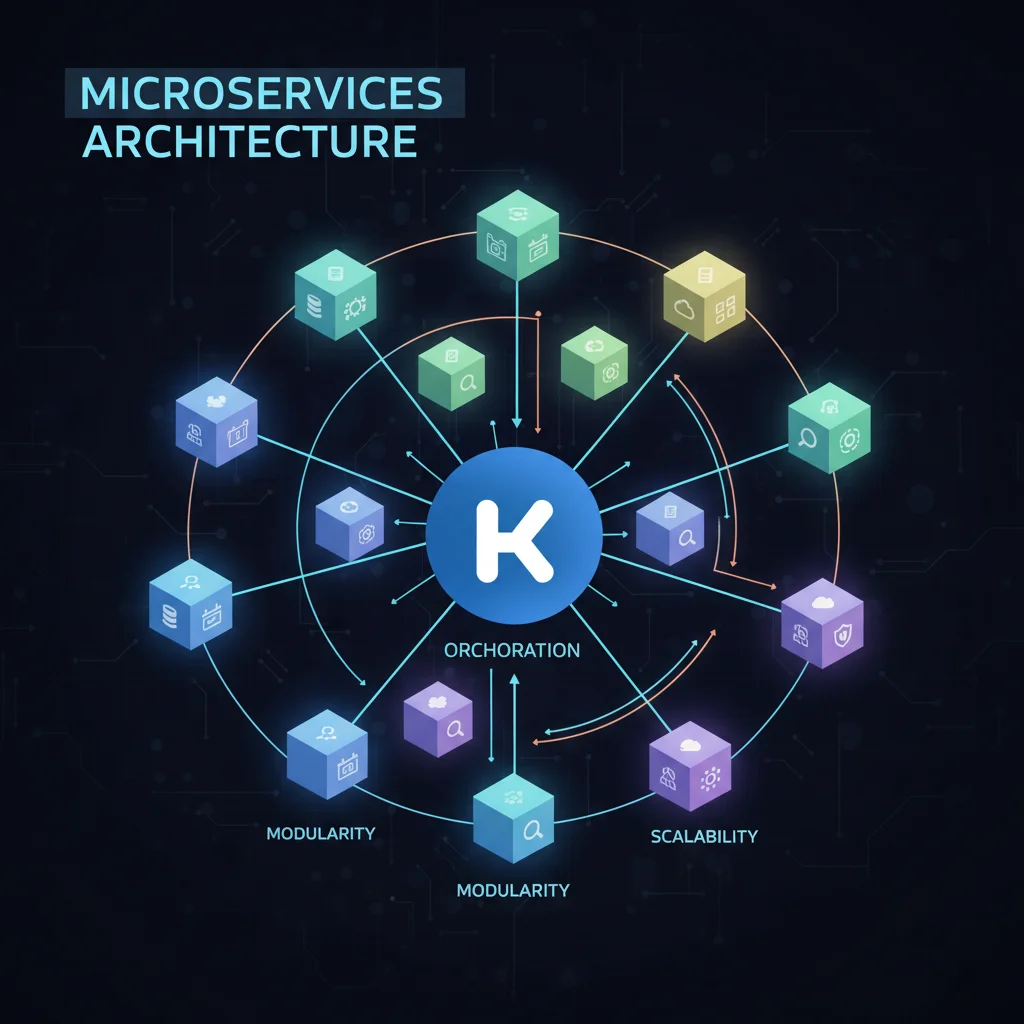
- Microservices Architecture: Decomposing a large application into a suite of small, independently deployable services. Each service runs in its own process and communicates with others through well-defined APIs. This modularity enhances agility, scalability, and fault isolation.
- Continuous Integration/Continuous Delivery (CI/CD): Automating the build, test, and deployment processes to ensure frequent and reliable software releases. CI/CD pipelines are fundamental to achieving rapid application delivery.
- DevOps Culture: Fostering collaboration and communication between development and operations teams to streamline the entire software development lifecycle, breaking down traditional silos.
- Orchestration: Automating the deployment, scaling, and management of containerized applications. This is where Kubernetes plays its pivotal role.
- Immutability: Treating infrastructure components as immutable, meaning they are never modified after deployment. Instead, new versions are deployed, and old ones are replaced, leading to more predictable and stable environments.
- Declarative APIs: Defining the desired state of the system, allowing the orchestrator to automatically converge the actual state to the desired state.
These principles collectively enable organizations to build applications that are highly resilient, scalable, and adaptable to changing business requirements. The shift from monolithic applications to microservices, coupled with containerization, laid the groundwork for the rise of powerful orchestration tools.
Kubernetes: The Engine Driving Cloud Native Adoption
While containerization provided the packaging mechanism, managing hundreds or thousands of containers across a distributed environment quickly became a complex challenge. Enter Kubernetes, an open-source container orchestration platform developed by Google. Kubernetes automates the deployment, scaling, and management of containerized applications, making it the cornerstone of modern Cloud Native Kubernetes architectures.
Key Features and Capabilities of Kubernetes
- Automated Rollouts and Rollbacks: Kubernetes progressively rolls out changes to your application or its configuration, monitoring its health during the process. If something goes wrong, it can automatically roll back the changes.
- Service Discovery and Load Balancing: Kubernetes can expose a container using a DNS name or its own IP address. If traffic to a container is high, Kubernetes can load balance and distribute the network traffic to maintain stability.
- Storage Orchestration: Kubernetes allows you to automatically mount a storage system of your choice, whether it’s local storage, a public cloud provider like AWS EBS or Google Persistent Disk, or a network storage system.
- Self-Healing: Kubernetes can restart containers that fail, replace and reschedule containers when nodes die, kill containers that don’t respond to user-defined health checks, and doesn’t advertise them to clients until they are ready to serve.
- Secret and Configuration Management: Kubernetes lets you store and manage sensitive information, such as passwords, OAuth tokens, and SSH keys. You can deploy and update configurations and secrets without rebuilding your container images.
- Resource Management: Kubernetes allows you to define CPU and RAM requirements for your containers. It can then schedule containers onto nodes that have sufficient resources, ensuring efficient utilization.
- Horizontal Scaling: With Kubernetes, you can easily scale your application up or down by adding or removing pods, either manually or automatically based on CPU utilization or other custom metrics.
The power of Kubernetes lies in its ability to abstract away the underlying infrastructure, allowing developers to focus on writing code while operations teams manage the platform. This separation of concerns significantly accelerates development cycles and improves operational efficiency.
The 40% Acceleration: How Cloud Native Kubernetes Achieves It
The projected 40% acceleration in application delivery by 2026 is not an arbitrary number; it’s a direct consequence of the synergistic benefits offered by Cloud Native Kubernetes. This acceleration manifests in several critical areas:
1. Faster Development Cycles with Microservices
By breaking down monolithic applications into smaller, independent microservices, development teams can work on different services concurrently without stepping on each other’s toes. This parallel development reduces bottlenecks and allows for quicker iteration. Furthermore, smaller codebases are easier to understand, test, and maintain, leading to fewer bugs and faster fixes. Kubernetes provides the perfect runtime environment for these microservices, handling their deployment, scaling, and networking seamlessly.
2. Automated Operations and Reduced Manual Overhead
Kubernetes automates many of the tedious and error-prone tasks traditionally associated with application deployment and management. This includes provisioning infrastructure, scaling applications, handling rolling updates, and monitoring health. By automating these processes, operations teams can focus on higher-value activities, and developers can deploy code more frequently without manual intervention. This reduction in operational overhead directly translates to faster delivery times.
3. Enhanced Scalability and Resource Utilization
Cloud Native applications built on Kubernetes are inherently designed for scalability. Kubernetes can automatically scale applications up or down based on demand, ensuring optimal resource utilization and preventing performance bottlenecks during peak loads. This elasticity means applications can handle fluctuating traffic without manual intervention, leading to more resilient services and faster response times for users, indirectly contributing to faster delivery by reducing the need for manual scaling adjustments and associated downtime.
4. Improved Developer Productivity and Experience
With Kubernetes providing a consistent and reproducible environment across development, testing, and production, developers spend less time debugging environment-specific issues. The declarative nature of Kubernetes allows developers to define the desired state of their applications, and Kubernetes takes care of the rest. This streamlined experience, coupled with robust CI/CD pipelines, empowers developers to push code to production with greater confidence and speed.
5. Accelerated Time to Market for New Features
The combination of microservices, automated CI/CD, and Kubernetes orchestration significantly reduces the time it takes to bring new features and updates to users. Instead of waiting for lengthy release cycles, organizations can deploy small, incremental changes continuously. This agility allows businesses to respond more quickly to market demands, gain a competitive edge, and deliver value to customers faster.
Strategic Implementation of Cloud Native Kubernetes
Achieving the promised 40% acceleration with Cloud Native Kubernetes requires a strategic and well-planned implementation. It’s not just about adopting the tools; it’s about transforming processes, culture, and architecture.
1. Start Small and Iterate
Instead of attempting a big-bang migration, begin with a small, non-critical application or a new greenfield project. This allows teams to gain experience with Cloud Native principles and Kubernetes without disrupting core business operations. Learn from early successes and failures, and gradually expand the scope.
2. Invest in Training and Upskilling
Cloud Native technologies, especially Kubernetes, have a steep learning curve. Invest in comprehensive training for both development and operations teams. Foster a culture of continuous learning and experimentation. This will ensure that your teams are equipped with the necessary skills to leverage these powerful tools effectively.
3. Embrace DevOps Culture
The success of Cloud Native Kubernetes hinges on a strong DevOps culture. Break down silos between development and operations. Encourage shared responsibility, collaboration, and automation across the entire software delivery pipeline. Implement practices like Infrastructure as Code (IaC) to manage infrastructure declaratively.
4. Design for Observability
In a distributed microservices environment, understanding the behavior of your applications is critical. Implement robust observability practices, including centralized logging, metrics collection, and distributed tracing. Tools like Prometheus, Grafana, and Jaeger are indispensable for monitoring and troubleshooting Cloud Native applications running on Kubernetes.
5. Prioritize Security from the Outset
Security in Cloud Native environments is a shared responsibility. Implement security best practices at every stage of the development lifecycle, from secure coding to container image scanning, network policies, and runtime security. Leverage Kubernetes’ built-in security features and integrate third-party security tools.
6. Choose the Right Cloud Provider and Managed Services
While Kubernetes can run anywhere, leveraging managed Kubernetes services from public cloud providers (e.g., GKE, AKS, EKS) can significantly reduce operational burden. These services handle the underlying infrastructure and control plane management, allowing your teams to focus on application development. Evaluate providers based on your specific needs, existing cloud investments, and cost considerations.

Challenges and Considerations
While the benefits are substantial, adopting Cloud Native Kubernetes is not without its challenges. Organizations must be prepared to address these to ensure a successful transition:
- Complexity: Kubernetes can be complex to set up, configure, and manage, especially for organizations new to container orchestration. The learning curve for teams can be steep.
- Cost Management: While Cloud Native aims for efficiency, improper resource management or unoptimized configurations can lead to unexpected cloud costs. Careful monitoring and cost optimization strategies are essential.
- Security: The distributed nature of microservices and the dynamic environment of containers introduce new security considerations. A robust security strategy is paramount.
- Cultural Shift: Moving to a DevOps and Cloud Native culture requires significant organizational change, which can be difficult to implement.
- Tooling and Ecosystem: The Cloud Native ecosystem is vast and constantly evolving, with numerous tools and technologies. Choosing the right stack and integrating them effectively can be challenging.
Addressing these challenges proactively through careful planning, investment in training, and leveraging expert guidance is crucial for maximizing the benefits of Cloud Native Kubernetes.
The Future of Cloud Native Kubernetes: Beyond 2026
The journey of Cloud Native Kubernetes is far from over. As we look beyond 2026, several trends are poised to further shape its evolution and impact on application delivery:
1. Serverless Kubernetes and Abstraction
The line between Kubernetes and serverless computing is blurring. Platforms like Google Cloud Run and AWS Fargate offer serverless container experiences, allowing developers to deploy containers without managing the underlying Kubernetes clusters. This trend will continue, providing even higher levels of abstraction and reducing operational overhead.
2. Edge Computing Integration
As applications extend to the edge, Kubernetes will play a crucial role in orchestrating workloads on smaller, distributed clusters closer to data sources and users. This will enable faster processing, lower latency, and enhanced resilience for IoT and edge applications.
3. AI/ML Workloads on Kubernetes
Kubernetes is increasingly becoming the preferred platform for deploying and managing AI/ML workloads, including training models and serving inferences. Its ability to handle diverse workloads, manage resources, and scale effectively makes it ideal for the demanding requirements of machine learning.
4. Enhanced Security and Compliance
Security will remain a top priority. Expect further advancements in Kubernetes security features, integration with advanced threat detection systems, and automated compliance tools to meet stringent regulatory requirements.
5. Multi-Cloud and Hybrid Cloud Strategies
Organizations will continue to adopt multi-cloud and hybrid cloud strategies to avoid vendor lock-in and leverage the best services from different providers. Kubernetes, with its portability, is uniquely positioned to facilitate these strategies, providing a consistent orchestration layer across diverse environments.
6. Platform Engineering and Internal Developer Platforms (IDPs)
To further enhance developer productivity and streamline the adoption of Cloud Native practices, there will be a growing emphasis on platform engineering. This involves building internal developer platforms (IDPs) that abstract away the complexity of Kubernetes and other infrastructure, providing developers with self-service capabilities and a golden path for application deployment.
Conclusion: Embracing the Cloud Native Kubernetes Revolution
The prediction of a 40% acceleration in application delivery by 2026, driven by Cloud Native Kubernetes, underscores the profound impact this technological shift is having on the software industry. It’s a testament to the power of containerization, microservices, and robust orchestration in transforming how organizations build, deploy, and manage their applications.
Embracing Cloud Native Kubernetes is not merely a technical decision; it’s a strategic imperative for businesses aiming to remain competitive, innovative, and agile in a fast-paced digital world. While the journey presents its challenges, the rewards – in terms of speed, scalability, resilience, and developer productivity – are immense. By understanding its core principles, strategically implementing its components, and staying attuned to future trends, organizations can harness the full potential of Cloud Native Kubernetes to unlock unprecedented levels of application delivery efficiency and drive sustained business growth.
The future of application development is undeniably Cloud Native, and Kubernetes is the engine propelling it forward. Are you ready to accelerate your journey?