Cloud Provider Comparison 2026: AWS, Azure, Google Cloud Deep Dive
In the rapidly evolving digital landscape, choosing the right cloud provider is no longer just a technical decision; it’s a strategic imperative that can define a business’s agility, scalability, and competitive edge. As we look towards 2026, the dominance of the ‘big three’ – Amazon Web Services (AWS), Microsoft Azure, and Google Cloud Platform (GCP) – continues, yet their offerings, pricing models, and strategic focuses are constantly shifting. This comprehensive cloud provider comparison delves deep into the strengths, weaknesses, and unique propositions of AWS, Azure, and Google Cloud, equipping you with the knowledge to make an informed decision for your organization’s future.
The Cloud Landscape in 2026: An Overview
The year 2026 finds cloud computing firmly entrenched as the backbone of modern enterprise IT. Cloud adoption rates continue to climb, driven by the insatiable demand for digital transformation, data analytics, artificial intelligence, and remote work capabilities. Businesses, from nascent startups to multinational corporations, are leveraging the cloud for everything from basic infrastructure hosting to advanced machine learning models and serverless applications. The decision of which cloud provider to partner with has become a cornerstone of long-term business strategy, impacting everything from operational costs to innovation cycles.
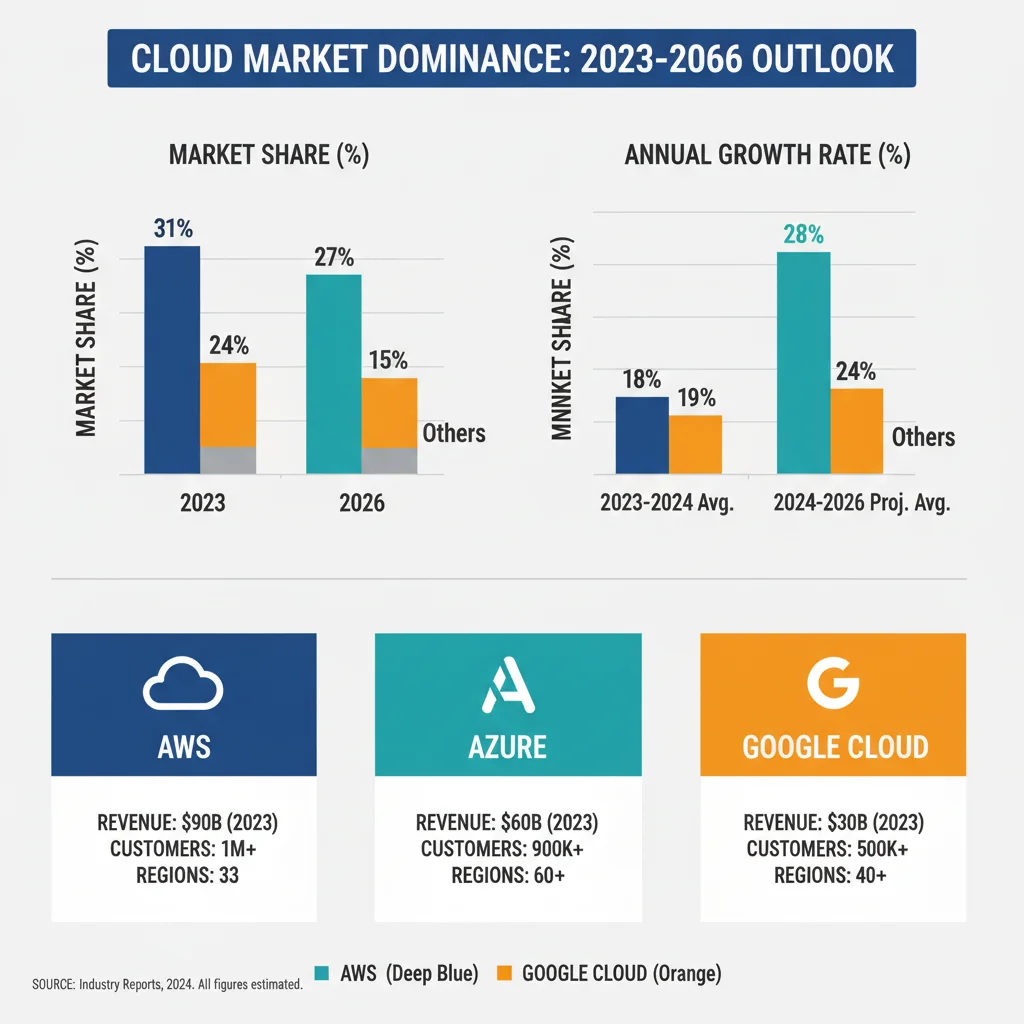
While the market remains competitive, AWS, Azure, and Google Cloud collectively command a significant majority of the public cloud infrastructure market. Each has cultivated a distinct ecosystem, attracting different types of customers and excelling in specific areas. Understanding these nuances is crucial for any organization looking to optimize its cloud investment and ensure future-proofing.
Amazon Web Services (AWS): The Pioneer’s Enduring Dominance
AWS, the trailblazer of public cloud computing, continues to hold the largest market share. Its nearly two decades of innovation have resulted in the broadest and deepest set of services, making it a go-to choice for enterprises seeking comprehensive solutions. In our cloud provider comparison, AWS stands out for its maturity, extensive feature set, and a vast global infrastructure.
Strengths of AWS:
- Unmatched Service Portfolio: AWS offers over 200 fully featured services, from compute (EC2), storage (S3, EBS), and networking to advanced AI/ML (SageMaker), IoT (IoT Core), and blockchain. This breadth allows for highly customized and complex architectures.
- Global Reach: With more regions and availability zones than any other provider, AWS provides unparalleled global presence, crucial for low-latency applications and disaster recovery strategies.
- Maturity and Ecosystem: Its long history means a robust, mature ecosystem of third-party tools, a massive developer community, and extensive documentation and support resources.
- Innovation Pace: AWS consistently introduces new services and features, often setting the pace for the entire cloud industry.
- Scalability and Reliability: Proven track record of handling massive workloads and maintaining high availability for critical applications.
- Pricing Flexibility: Offers various pricing models, including on-demand, reserved instances, and spot instances, providing options for cost optimization, though complexity can be a challenge.
Considerations for AWS:
- Cost Management Complexity: While flexible, AWS’s vast array of services and pricing models can make cost optimization a complex task without proper governance.
- Learning Curve: The sheer volume of services can be intimidating for newcomers, requiring significant investment in training and certification.
- Vendor Lock-in Concerns: The deep integration of AWS services can make it challenging to migrate away from the platform once heavily invested.
Ideal Use Cases for AWS:
AWS is often the preferred choice for large enterprises, startups needing rapid scaling, companies requiring specialized services (e.g., advanced analytics, quantum computing), and organizations with a strong DevOps culture looking for maximum control and customization. Its breadth makes it suitable for almost any workload, from web applications and databases to scientific simulations and media processing.
Microsoft Azure: The Enterprise Hybrid Cloud Powerhouse
Microsoft Azure has rapidly closed the gap on AWS, leveraging Microsoft’s strong enterprise relationships and its commitment to hybrid cloud solutions. Azure’s appeal lies in its seamless integration with existing Microsoft technologies, making it a natural fit for organizations already heavily invested in the Microsoft ecosystem. This cloud provider comparison highlights Azure’s strength in enterprise integration and hybrid deployments.
Strengths of Azure:
- Hybrid Cloud Capabilities: Azure excels in hybrid deployments with offerings like Azure Stack, Azure Arc, and extensive connectivity options, allowing seamless integration between on-premises data centers and the cloud.
- Enterprise Integration: Deep integration with Windows Server, Active Directory, SQL Server, .NET, and other Microsoft products simplifies adoption for enterprises already using these technologies.
- Strong PaaS Offerings: Azure provides a robust suite of Platform-as-a-Service (PaaS) offerings, simplifying development and deployment for developers.
- Security and Compliance: Strong focus on enterprise-grade security, compliance certifications, and governance tools, appealing to highly regulated industries.
- Developer-Friendly Tools: Excellent support for a wide range of programming languages and development tools, catering to diverse developer communities.
- Global Network: A rapidly expanding global infrastructure with numerous regions and availability zones, second only to AWS.
Considerations for Azure:
- Cost Optimization: While competitive, Azure’s pricing can also be complex, requiring careful management to avoid unexpected costs.
- Performance Variability: Some users report occasional performance inconsistencies compared to AWS for specific workloads, though this is continually improving.
- Learning Curve (Non-Microsoft Shops): Organizations not heavily invested in Microsoft technologies might find the learning curve steeper for certain services.
Ideal Use Cases for Azure:
Azure is particularly well-suited for enterprises with significant existing investments in Microsoft technologies, organizations requiring robust hybrid cloud solutions, and businesses in regulated industries demanding stringent security and compliance. It’s also a strong contender for companies developing .NET applications and those looking for powerful PaaS offerings.
Google Cloud Platform (GCP): The Innovation and AI Powerhouse
Google Cloud Platform, while a distant third in market share, is a formidable player known for its innovation, particularly in data analytics, machine learning, and open-source technologies. GCP leverages Google’s global network and expertise in large-scale data processing, offering a compelling alternative for data-intensive workloads and AI-driven initiatives. Our cloud provider comparison wouldn’t be complete without highlighting GCP’s strengths in these cutting-edge areas.
Strengths of GCP:
- Data Analytics and Machine Learning: GCP is arguably the leader in advanced data analytics and machine learning services, including BigQuery, Dataflow, TensorFlow, and Vertex AI.
- Global Network Infrastructure: Leverages Google’s high-performance global fiber network, offering excellent connectivity and low latency.
- Open Source Commitment: Strong support for open-source technologies, making it attractive to developers and organizations committed to open standards.
- Kubernetes Origins: As the birthplace of Kubernetes, GCP offers GKE (Google Kubernetes Engine), considered one of the best managed Kubernetes services.
- Cost-Effectiveness for Specific Workloads: Often provides competitive pricing for certain services, especially for sustained usage and data-intensive tasks, with features like sustained use discounts.
- Innovation and Future-Proofing: Google’s continuous investment in cutting-edge technologies like quantum computing and AI ensures a platform that is at the forefront of innovation.
Considerations for GCP:
- Smaller Market Share & Ecosystem: While growing rapidly, its market share and third-party ecosystem are smaller compared to AWS and Azure, potentially limiting integration options for some niche tools.
- Fewer Regions: While growing, GCP has fewer global regions and availability zones than its competitors, which might be a factor for highly distributed or geographically sensitive applications.
- Enterprise Adoption: While gaining traction, it still faces challenges in convincing traditional enterprises to fully commit, especially those with existing strong ties to Microsoft or AWS.
Ideal Use Cases for GCP:
GCP is an excellent choice for data-driven organizations, AI/ML startups, companies heavily invested in open-source technologies, and those looking for superior managed Kubernetes services. It’s also suitable for web-scale applications and businesses prioritizing innovation in areas like real-time analytics and predictive modeling.
Key Factors in Your Cloud Provider Comparison for 2026
Beyond the individual strengths and weaknesses, several critical factors should guide your cloud provider comparison and ultimate decision-making process:
1. Cost and Pricing Models:
- AWS: Complex but highly granular. Pay-as-you-go, reserved instances, spot instances, savings plans. Can be very cost-effective with careful management.
- Azure: Similar pay-as-you-go with reserved instances and Azure Hybrid Benefit for existing Microsoft licenses. Often competitive, especially for hybrid scenarios.
- GCP: Known for sustained use discounts, custom machine types, and per-second billing. Can be very cost-efficient for burstable and long-running workloads.
- Recommendation: Conduct a detailed total cost of ownership (TCO) analysis for your specific workloads across all three. Leverage cost management tools provided by each cloud.
2. Security and Compliance:
- All three providers offer robust security features, extensive compliance certifications (HIPAA, GDPR, ISO 27001, etc.), and shared responsibility models.
- Differentiation: Azure often highlights its enterprise-grade security and compliance tools as a natural extension of Microsoft’s long history in enterprise software. AWS has a vast array of security services. GCP focuses on security by design, leveraging Google’s internal security expertise.
- Recommendation: Assess each provider’s specific compliance certifications relevant to your industry and region. Evaluate their identity and access management (IAM) capabilities, data encryption options, and network security features.
3. Ecosystem and Integrations:
- AWS: Largest ecosystem of third-party tools, ISVs, and partners.
- Azure: Strong integration with Microsoft enterprise products and a growing partner network.
- GCP: Strong ties to open-source communities and Google’s own suite of products.
- Recommendation: Consider your existing technology stack. If you’re heavily invested in Microsoft, Azure might offer smoother integration. If you rely on open-source, GCP could be a natural fit.
4. Developer Experience and Tools:
- AWS: Comprehensive SDKs, CLI, and IDE toolkits. Strong DevOps focus.
- Azure: Excellent support for .NET, Visual Studio, and a wide range of languages. Strong PaaS offerings.
- GCP: Favored by open-source developers, strong Kubernetes support, and powerful AI/ML developer tools.
- Recommendation: Consider your development team’s existing skill sets and preferred tools. A platform that aligns with your developers’ expertise can accelerate adoption and productivity.
5. Global Reach and Latency:
- AWS: Most extensive global footprint.
- Azure: Rapidly expanding, second largest.
- GCP: Growing, with a focus on high-performance network.
- Recommendation: Map out your user base and data residency requirements. Choose a provider with regions and availability zones that minimize latency for your target audience and meet data sovereignty laws.
6. Support and Managed Services:
- All three offer various support tiers, from basic to enterprise-level, with different SLAs and response times.
- Recommendation: Evaluate the level of support you need. Consider if you’ll rely on managed services to offload operational burdens, and compare the offerings from each provider.
The Rise of Multi-Cloud and Hybrid Cloud Strategies
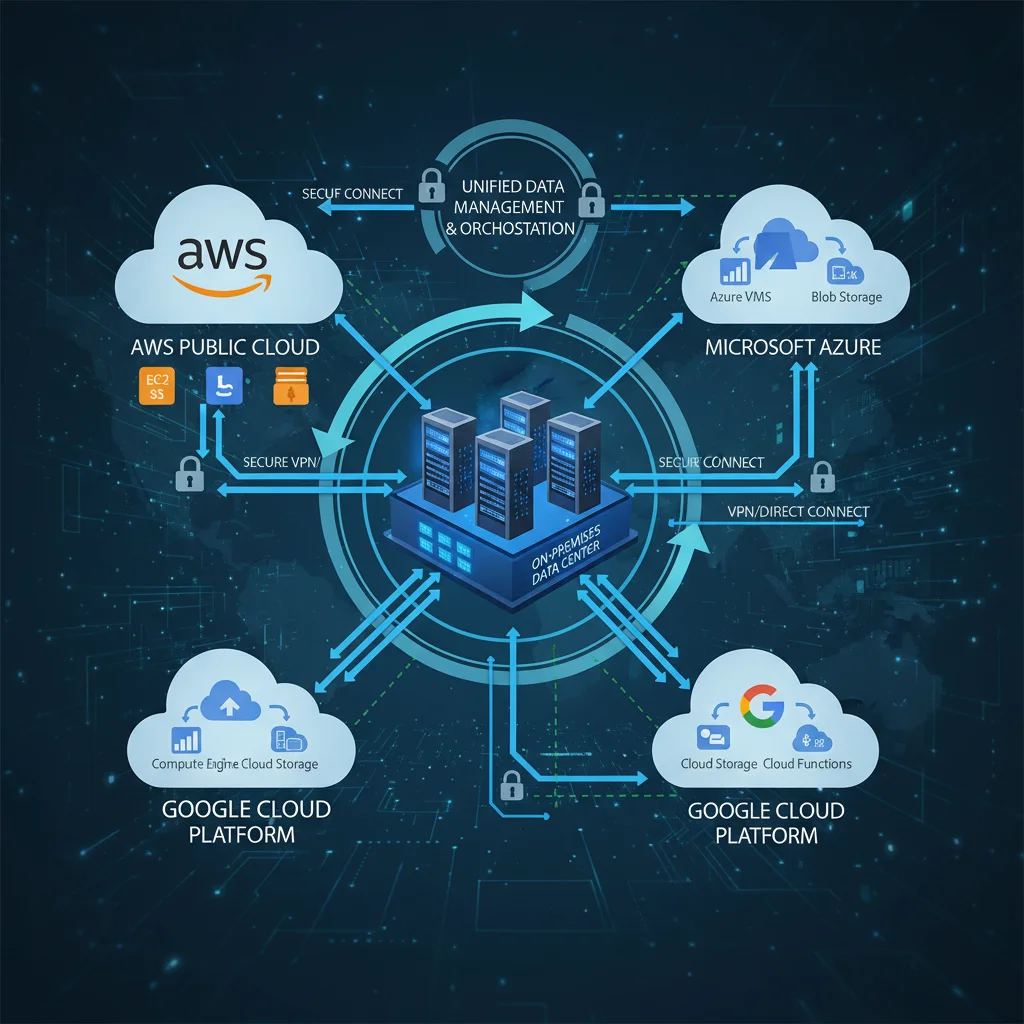
While this cloud provider comparison focuses on individual platforms, it’s crucial to acknowledge the growing trend of multi-cloud and hybrid cloud strategies. In 2026, many organizations are opting not for an either/or decision but for a combination of providers to mitigate vendor lock-in, leverage best-of-breed services, and meet diverse compliance or geographical needs.
- Multi-Cloud: Involves using multiple public cloud providers (e.g., AWS for compute, GCP for AI/ML, Azure for specific enterprise apps). This strategy offers resilience and allows organizations to pick the best service for each workload.
- Hybrid Cloud: Combines on-premises infrastructure with one or more public cloud providers. Azure, with its Azure Stack and Azure Arc offerings, is particularly strong in this area, but AWS Outposts and GCP Anthos also provide robust hybrid solutions. This approach is ideal for organizations with legacy systems, strict data sovereignty requirements, or specific performance needs that necessitate keeping some workloads on-premises.
Adopting a multi-cloud or hybrid strategy requires careful planning, robust orchestration tools, and a strong focus on interoperability. It can introduce complexity in management and security, but the benefits of flexibility and resilience often outweigh these challenges for many enterprises.
Future Trends and What to Watch for in Cloud Computing (2026 and Beyond)
As you conduct your cloud provider comparison, keep an eye on these emerging trends that will shape the cloud landscape in the coming years:
- Serverless Dominance: Expect continued growth in serverless computing (AWS Lambda, Azure Functions, GCP Cloud Functions), driving efficiency and reducing operational overhead.
- Edge Computing: The convergence of cloud and edge computing will become more pronounced, with providers extending their services closer to data sources for real-time processing and IoT applications.
- AI Everywhere: AI and Machine Learning capabilities will become even more embedded into core cloud services, democratizing access to advanced analytics and intelligent automation.
- Sustainability: Cloud providers are increasingly focusing on sustainable operations. Expect more transparency and features related to carbon footprint reduction.
- FinOps Maturity: As cloud spending grows, FinOps (Cloud Financial Operations) will mature further, with more sophisticated tools and practices for managing and optimizing cloud costs.
- Sovereign Cloud: For highly regulated industries and governments, the concept of ‘sovereign cloud’ will gain traction, offering data residency and operational controls within specific geographic boundaries.
Conclusion: Making Your Informed Choice
Choosing the right cloud provider in 2026 is a multifaceted decision that requires a deep understanding of your organization’s unique requirements, existing IT landscape, budget constraints, and long-term strategic goals. There is no one-size-fits-all answer, and the ‘best’ provider is ultimately the one that best aligns with your specific needs.
This comprehensive cloud provider comparison has aimed to provide a detailed overview of AWS, Azure, and Google Cloud, highlighting their core strengths and considerations. Whether you prioritize market leadership and extensive services (AWS), seamless enterprise integration and hybrid capabilities (Azure), or cutting-edge innovation in data and AI (GCP), each platform offers compelling advantages.
We recommend a phased approach: start with a thorough assessment of your current applications and infrastructure, define your business objectives for cloud adoption, conduct a detailed TCO analysis, and consider piloting workloads on your top two or three contenders. Engage with cloud experts and leverage proof-of-concept projects to truly understand how each platform performs in your specific context.
The cloud journey is continuous. By making an informed decision today, you lay the groundwork for a scalable, resilient, and innovative future for your business in the dynamic world of cloud computing.