Optimizing Cloud Spending: A 3-Month Strategy to Achieve 10% Savings by 2026
In the rapidly evolving landscape of digital transformation, cloud computing has become an indispensable backbone for businesses of all sizes. From startups to multinational enterprises, organizations leverage cloud services for scalability, flexibility, and innovation. However, the benefits come with a significant challenge: managing and optimizing cloud spending. Unchecked cloud expenditures can quickly erode profit margins, turning a strategic advantage into a financial burden. This article presents a robust, actionable 3-month strategy designed to help your organization achieve a minimum of 10% savings in cloud spending by 2026. This isn’t just about cutting costs; it’s about intelligent resource management, efficiency, and maximizing the return on your cloud investment.
The journey to optimize cloud spending requires a structured approach, combining technical insights with financial discipline. Our strategy is divided into three distinct phases, each building upon the last, ensuring a comprehensive and sustainable cost optimization program. By following this roadmap, you can identify inefficiencies, implement best practices, and establish a culture of cost awareness across your teams.
Understanding the Cloud Cost Conundrum
Before diving into the strategy, it’s crucial to understand why cloud costs often spiral out of control. Several factors contribute to this phenomenon:
- Lack of Visibility: Many organizations struggle to gain a clear, consolidated view of their cloud spending across different departments, projects, and cloud providers (AWS, Azure, GCP).
- Resource Sprawl: Unused or underutilized resources (idle VMs, unattached storage volumes, forgotten databases) continue to incur costs.
- Inefficient Resource Provisioning: Over-provisioning resources “just in case” leads to paying for capacity that isn’t fully utilized.
- Lack of Cost Awareness: Development and operations teams may prioritize speed and functionality over cost efficiency, often without realizing the financial implications of their choices.
- Complex Pricing Models: Cloud providers offer a myriad of services with intricate pricing structures, making it challenging to predict and control costs.
- Absence of Governance: Without clear policies, procedures, and accountability, it’s difficult to enforce cost-effective practices.
Addressing these challenges head-on is the core objective of our 3-month strategy to optimize cloud spending.
The 3-Month Cloud Spending Optimization Strategy: A Roadmap to 10% Savings by 2026
Our strategy is designed to be agile yet thorough, allowing organizations to see tangible results within a quarter while laying the groundwork for long-term financial health in the cloud.
Month 1: Assessment, Discovery, and Baseline Establishment
The first month is dedicated to gaining a deep understanding of your current cloud environment and spending patterns. This foundational phase is critical for identifying areas of waste and opportunities for optimization.
Week 1-2: Comprehensive Cloud Cost Audit and Analysis
Objective: To establish a clear baseline of current cloud spending and identify immediate areas of concern.
- Gather All Billing Data: Collect detailed billing reports from all your cloud providers (AWS Cost Explorer, Azure Cost Management, Google Cloud Billing). Ensure you have access to granular data, not just summary invoices.
- Centralize and Consolidate: If using multiple cloud providers or accounts, centralize this data into a single platform or spreadsheet for a unified view. Consider FinOps tools for this.
- Allocate Costs: Begin the process of tagging and allocating costs to specific departments, projects, applications, or teams. This is often the most revealing step, as it shows who is spending what. If tagging isn’t already robust, start implementing a tagging strategy immediately.
- Identify Top Spenders: Pinpoint the services, resources, and teams that are driving the majority of your cloud costs. This helps prioritize your efforts.
- Analyze Usage Patterns: Look for trends in resource utilization. Are there peak times? Are resources running 24/7 when they only need to be active during business hours?
- Review Resource Types: Examine the types of instances, storage, and databases being used. Are they the most cost-effective options for their workloads?
Deliverables for Month 1, Week 2: Consolidated billing report, initial cost allocation breakdown, identified top spending services/teams, and a preliminary list of potential waste areas.
Week 3-4: Deep Dive into Resource Utilization and Rightsizing Opportunities
Objective: To identify specific underutilized resources and opportunities for rightsizing and eliminating waste.
- Idle Resource Identification: Use cloud provider tools (e.g., AWS Trusted Advisor, Azure Advisor, GCP recommendations) or third-party tools to find idle resources such as unattached EBS volumes, idle load balancers, and unused IP addresses.
- Rightsizing Analysis: For compute instances (EC2, Azure VMs, GCE instances) and databases, analyze CPU, memory, and network utilization metrics. Are instances consistently running at low utilization (e.g., <20% CPU)? If so, they are candidates for rightsizing to smaller, less expensive instances.
- Storage Optimization: Review storage usage. Are you using expensive block storage for archival data? Can you move less frequently accessed data to cheaper storage tiers (e.g., S3 Infrequent Access, Azure Cool Blob Storage, Nearline/Coldline Storage)?
- Network Cost Analysis: Examine data transfer costs. Are there unnecessary cross-region or internet egress transfers?
- Identify Orphaned Resources: Resources left behind after projects are completed or instances are terminated (e.g., old snapshots, forgotten databases).
- Engage Stakeholders: Begin conversations with engineering, operations, and product teams to understand their resource requirements and discuss potential optimizations. Their input is vital for successful implementation.
Deliverables for Month 1, Week 4: Detailed report of idle and underutilized resources, rightsizing recommendations for compute and storage, and a prioritized list of quick-win optimization opportunities.
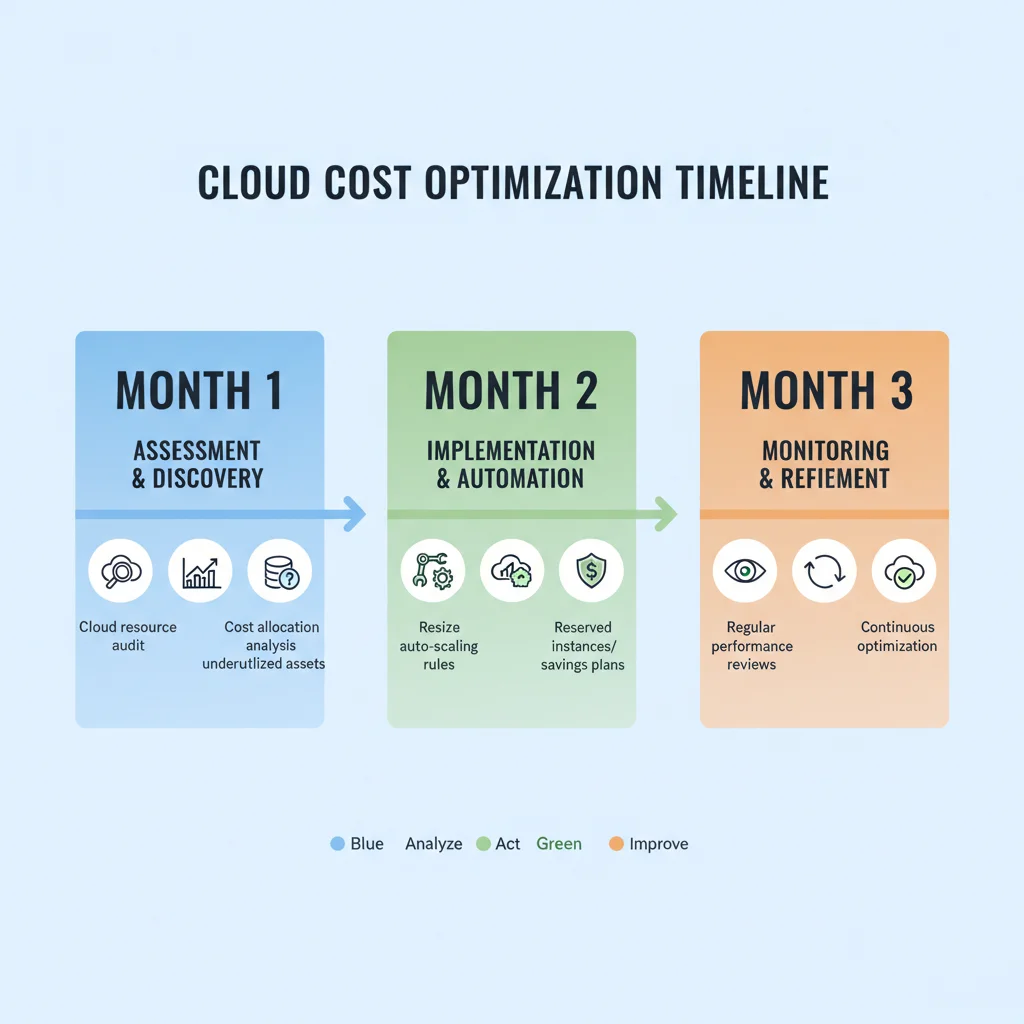
Month 2: Implementation, Automation, and Cost Control Mechanisms
Having identified the low-hanging fruit and gained a clear understanding of your cloud spend, Month 2 focuses on executing the optimization plan and implementing mechanisms to control future costs. This is where you actively optimize cloud spending.
Week 5-6: Executing Quick Wins and Rightsizing
Objective: To implement the identified quick wins and begin rightsizing efforts to realize immediate savings.
- Terminate Idle Resources: Work with owners to safely terminate identified idle resources. Ensure proper backups or archiving if necessary.
- Rightsizing Implementation: Based on the analysis from Month 1, begin rightsizing compute instances and databases. Start with non-production environments to mitigate risk, then move to production with careful planning and monitoring.
- Storage Tiering: Implement lifecycle policies to automatically move data to cheaper storage tiers based on access patterns (e.g., S3 Intelligent-Tiering, Azure Blob Storage lifecycle management).
- Schedule Non-Production Environments: Automate the shutdown of non-production environments (development, staging, testing) during off-hours (nights, weekends). This can lead to significant savings.
- Reserved Instances/Savings Plans Evaluation: Based on stable, long-running workloads identified in Month 1, evaluate and purchase Reserved Instances (RIs) or Savings Plans (AWS, Azure, GCP). These offer substantial discounts (up to 72%) in exchange for a commitment.
Deliverables for Month 2, Week 6: Documented list of terminated resources, completed rightsizing actions, implemented scheduling for non-production environments, and a plan for RI/Savings Plan purchases.
Week 7-8: Automation, Governance, and FinOps Integration
Objective: To embed cost optimization into daily operations through automation and establish governance frameworks.
- Automate Cost Controls: Implement automation scripts or use cloud provider services (e.g., AWS Lambda, Azure Functions, GCP Cloud Functions) to enforce policies like auto-shutdown of idle resources, budget alerts, and tagging enforcement.
- Refine Tagging Strategy: Formalize your tagging strategy. Mandate consistent tagging across all new resources for better cost allocation and visibility. Use automated tools to identify and tag untagged resources.
- Establish Budget Alerts: Set up budget alerts and notifications in your cloud billing consoles to inform teams when spending approaches predefined thresholds.
- Implement Cost-Aware Architecture Reviews: Integrate cost considerations into your architecture review process for new projects. Encourage architects and developers to design for cost efficiency from the outset.
- Educate Teams on FinOps Principles: Conduct workshops and training sessions for engineering, finance, and product teams on FinOps principles. Foster a culture where everyone understands their role in managing cloud costs.
- Explore Spot Instances/Preemptible VMs: For fault-tolerant, stateless workloads, investigate the use of Spot Instances (AWS) or Preemptible VMs (GCP, Azure low-priority VMs) for significant cost reductions.
Deliverables for Month 2, Week 8: Implemented automation scripts, updated tagging policies, active budget alerts, and initial FinOps training sessions completed.
Month 3: Monitoring, Refinement, and Continuous Optimization
The final month focuses on sustaining the gains made, establishing continuous monitoring, and fostering an environment of ongoing optimization. This ensures that the 10% savings (or more) are maintained and potentially increased over time.
Week 9-10: Performance Monitoring and Reporting
Objective: To continuously monitor cloud spending, measure the impact of optimizations, and report progress.
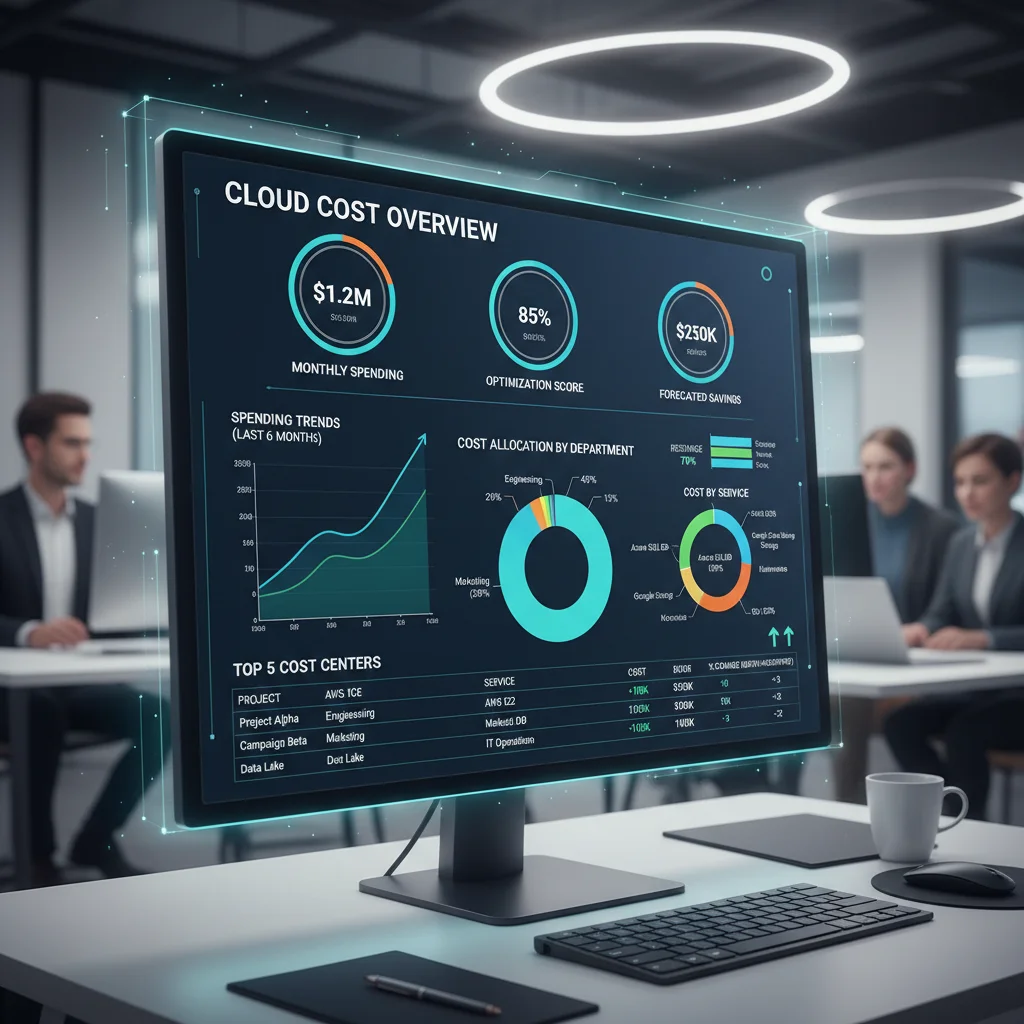
- Dashboard Creation: Develop custom dashboards (using cloud provider tools, FinOps platforms, or BI tools like Tableau/Power BI) to visualize key cost metrics, utilization trends, and savings achieved. These dashboards should be accessible to relevant stakeholders.
- Regular Reporting: Establish a cadence for reporting cloud spend to leadership and individual teams. Highlight savings achieved, areas of concern, and compliance with budget.
- Anomaly Detection: Implement tools or processes to detect unusual spikes in cloud spending, enabling quick investigation and remediation.
- Performance vs. Cost Analysis: Continuously evaluate if rightsizing efforts have impacted performance. Adjust resources as needed to maintain optimal performance while still being cost-effective.
- Review RI/Savings Plan Utilization: Monitor the utilization of your RIs and Savings Plans. Ensure they are being fully utilized to maximize discounts.
Deliverables for Month 3, Week 10: Operational cloud cost dashboards, established reporting cadence, and a review of RI/Savings Plan utilization.
Week 11-12: Strategic Planning and Long-Term Vision
Objective: To integrate cloud cost optimization into the long-term strategic planning of the organization and explore advanced optimization techniques.
- Vendor Relationship Management: Engage with cloud providers to discuss your usage patterns, future needs, and potential custom pricing agreements or enterprise discounts.
- Containerization and Serverless Adoption: Evaluate the potential for migrating suitable workloads to containerized platforms (Kubernetes, ECS, AKS, GKE) or serverless architectures (Lambda, Azure Functions, Cloud Functions). These often offer greater efficiency and cost savings for specific use cases.
- Advanced Data Management Strategies: Explore further data lifecycle management, data compression, and de-duplication techniques to reduce storage and transfer costs.
- Cross-Functional FinOps Team: Formalize a FinOps team or working group with representatives from finance, engineering, and operations to drive continuous cloud cost management.
- Establish a Feedback Loop: Create a mechanism for teams to provide feedback on cost optimization initiatives and suggest new ideas. Encourage innovation in cost-saving measures.
- Set Future Targets: Based on the achievements of the first three months, set new, ambitious but realistic targets for further cloud cost reduction by 2026 and beyond.
Deliverables for Month 3, Week 12: Long-term cloud cost optimization roadmap, FinOps team structure, and updated cost-saving targets for the coming year.
Key Principles for Sustained Cloud Cost Optimization
Achieving and sustaining a 10% reduction in cloud spending by 2026, and even going beyond, requires adherence to several core principles:
- Visibility is Paramount: You cannot manage what you cannot see. Invest in tools and processes that provide clear, granular visibility into your cloud spend.
- Accountability Drives Action: Assign ownership of cloud costs to specific teams or individuals. When teams are accountable for their spend, they are more likely to make cost-conscious decisions.
- Automation is Your Ally: Manual optimization is unsustainable. Automate as many cost control measures as possible, from resource scheduling to tagging enforcement.
- Culture of Cost Awareness: Foster a FinOps culture where everyone, from developers to executives, understands the financial impact of their cloud decisions.
- Continuous Improvement: Cloud environments are dynamic. What’s optimized today might not be tomorrow. Regularly review, adapt, and refine your strategy.
- Balance Cost and Performance: Optimization is not about blindly cutting costs. It’s about finding the optimal balance between performance, reliability, and expenditure.
- Leverage Cloud Provider Tools: Make full use of the cost management and optimization tools offered by AWS, Azure, and GCP. They are often powerful and integrated.
Common Pitfalls to Avoid
While striving to optimize cloud spending, be mindful of these common traps:
- One-Time Optimization Mindset: Viewing cost optimization as a one-off project rather than an ongoing process.
- Ignoring Tagging: Underestimating the importance of a robust tagging strategy for cost allocation and visibility.
- Lack of Stakeholder Buy-in: Proceeding with optimizations without getting agreement from the teams affected, leading to resistance.
- Over-Aggressive Cost Cutting: Reducing resources too much, leading to performance degradation and impacting user experience.
- Forgetting to Monitor: Implementing changes but failing to monitor their impact on both cost and performance.
- Vendor Lock-in Fear: Avoiding cost-saving commitments (like RIs/Savings Plans) due to an exaggerated fear of vendor lock-in, missing out on significant discounts.
Conclusion: A Path to Sustainable Cloud Financial Health
Optimizing cloud spending is not just a financial exercise; it’s a strategic imperative for any organization leveraging cloud technology. By diligently following this 3-month strategy – from initial assessment and discovery to active implementation, automation, and continuous monitoring – your organization can realistically achieve a 10% reduction in cloud expenditures by 2026. This isn’t just about saving money in the short term; it’s about building a foundation for sustainable cloud financial health, fostering a culture of cost awareness, and ensuring that your cloud investments consistently deliver maximum value. Start today, and transform your cloud spend from a burden into a competitive advantage.
The journey to effectively optimize cloud spending is continuous, but with a structured approach and commitment, significant and lasting results are well within reach. Embrace the principles of FinOps, empower your teams, and watch your cloud efficiency soar.