Kubernetes in the Cloud: Achieving 99.99% Uptime and Scalability by 2026

Kubernetes in the Cloud: Achieving 99.99% Uptime and Scalability by 2026
In the rapidly evolving landscape of modern application deployment, the demand for unparalleled reliability and elastic scalability has never been higher. Businesses across the globe are striving to deliver seamless experiences to their users, and any downtime can translate into significant financial losses and reputational damage. This is where Kubernetes cloud uptime becomes a critical differentiator. By early 2026, the industry is setting its sights on achieving an ambitious 99.99% uptime for applications running on Kubernetes in the cloud, a testament to the platform’s robust capabilities and continuous advancements.
This comprehensive guide will delve into the intricacies of leveraging Kubernetes in cloud environments to not only meet but exceed these stringent uptime requirements. We’ll explore the foundational principles, architectural considerations, best practices, and emerging trends that are paving the way for a new era of highly available and scalable cloud-native applications.
The Foundation: Understanding Kubernetes and Cloud Synergy
Kubernetes, often abbreviated as K8s, is an open-source container orchestration system for automating deployment, scaling, and management of containerized applications. Developed by Google and now maintained by the Cloud Native Computing Foundation (CNCF), Kubernetes has become the de facto standard for managing microservices architectures.
When combined with the inherent advantages of cloud computing – elasticity, on-demand resources, and global reach – Kubernetes unlocks an unprecedented level of agility and resilience. Cloud providers like AWS, Azure, and Google Cloud Platform (GCP) offer managed Kubernetes services (EKS, AKS, GKE, respectively) that abstract away much of the operational overhead, allowing organizations to focus on application development rather than infrastructure management. This synergy is fundamental to achieving high Kubernetes cloud uptime.
Key Concepts for High Availability
- Containerization: Packaging applications and their dependencies into lightweight, portable containers (e.g., Docker) ensures consistency across different environments.
- Declarative Configuration: Kubernetes uses YAML files to define the desired state of applications, allowing the system to automatically reconcile any deviations.
- Self-Healing: Kubernetes can automatically restart failed containers, reschedule them on healthy nodes, and even replace unhealthy nodes, contributing significantly to Kubernetes cloud uptime.
- Load Balancing: Distributes incoming traffic across multiple instances of an application, preventing single points of failure and improving responsiveness.
- Auto-Scaling: Automatically adjusts the number of application instances based on demand, ensuring optimal resource utilization and performance during traffic spikes.
Architecting for 99.99% Uptime: Best Practices and Strategies
Achieving four nines (99.99%) uptime translates to only about 52 minutes of downtime per year. This is an extremely challenging target that requires meticulous planning, robust architecture, and continuous operational excellence. Here are the core strategies for maximizing Kubernetes cloud uptime:
1. Multi-Zone and Multi-Region Deployments
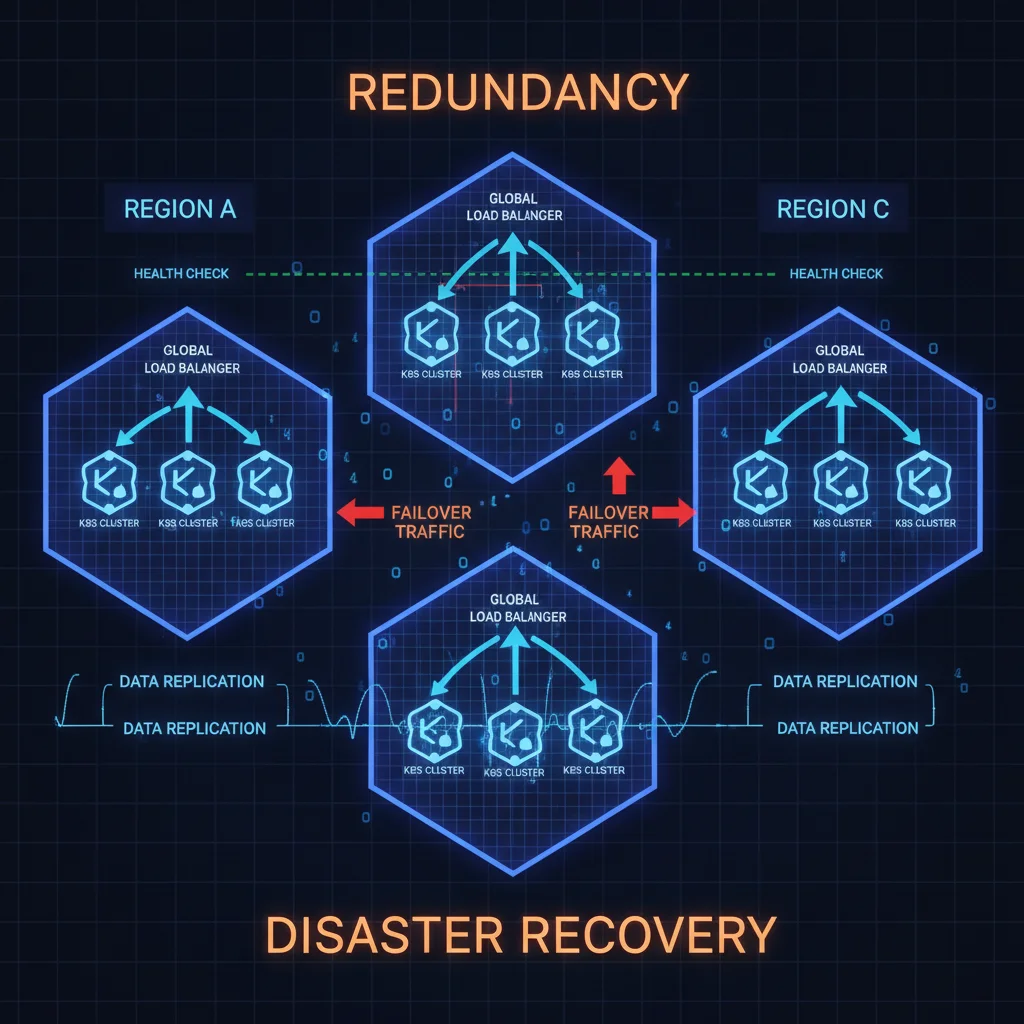
The most fundamental strategy for high availability is distributing your Kubernetes clusters and applications across multiple availability zones within a single cloud region, and ideally, across multiple geographical regions. This protects against localized failures, such as power outages or network disruptions affecting a single data center.
- Availability Zones (AZs): Within a cloud region, AZs are physically isolated locations with independent power, cooling, and networking. Deploying application replicas across multiple AZs ensures that if one AZ goes down, your application remains accessible.
- Multi-Region: For ultimate resilience against region-wide disasters (e.g., natural disasters, major cloud provider outages), deploying across multiple cloud regions is essential. This often involves active-active or active-passive setups with robust data replication strategies.
2. Robust Control Plane Management
The Kubernetes control plane (kube-apiserver, etcd, kube-scheduler, kube-controller-manager) is the brain of your cluster. Its availability is paramount. Managed Kubernetes services typically handle control plane redundancy for you, but understanding how it works is crucial.
- Highly Available etcd: etcd is the distributed key-value store that holds all cluster data. It must be deployed in a highly available configuration (e.g., 3 or 5 nodes) with proper backup and restore procedures.
- Multiple API Servers: Running multiple instances of the kube-apiserver behind a load balancer ensures that client requests can always reach the control plane.
3. Application Resilience and Design Patterns
High Kubernetes cloud uptime isn’t solely about infrastructure; application design plays a significant role.
- Stateless Microservices: Design applications to be stateless where possible. This allows any instance of a service to handle a request, making scaling and recovery much simpler.
- Persistent Storage Considerations: For stateful applications, use highly available and replicated storage solutions provided by your cloud provider (e.g., managed databases, distributed file systems) or stateful sets with appropriate volume claim templates.
- Graceful Shutdowns: Configure your applications to gracefully shut down when Kubernetes terminates a pod, allowing in-flight requests to complete and preventing data loss.
- Circuit Breakers and Retries: Implement patterns like circuit breakers and exponential backoff retries to prevent cascading failures between microservices.
- Health Checks: Define accurate liveness and readiness probes for your containers. Liveness probes detect if a container is unhealthy and needs to be restarted, while readiness probes determine if a container is ready to serve traffic.
4. Advanced Networking and Load Balancing
Efficient and resilient networking is crucial for maintaining high Kubernetes cloud uptime.
- Ingress Controllers: Use robust Ingress controllers (e.g., NGINX Ingress, Traefik, cloud provider-specific load balancers) to manage external access to your services, often with features like SSL termination, path-based routing, and rate limiting.
- Service Meshes: Implement a service mesh (e.g., Istio, Linkerd) for advanced traffic management, observability, and security features like intelligent routing, circuit breaking, and mTLS, which enhance resilience.
- DNS Management: Leverage highly available DNS services with failover capabilities to direct traffic to the healthiest cluster or region.
5. Observability: Monitoring, Logging, and Alerting
You can’t fix what you can’t see. Comprehensive observability is non-negotiable for achieving and maintaining high Kubernetes cloud uptime.
- Centralized Logging: Aggregate logs from all pods, nodes, and cluster components into a centralized system (e.g., ELK stack, Grafana Loki, cloud provider logging services).
- Distributed Tracing: Implement distributed tracing (e.g., Jaeger, Zipkin) to understand the flow of requests across microservices and identify bottlenecks or failures.
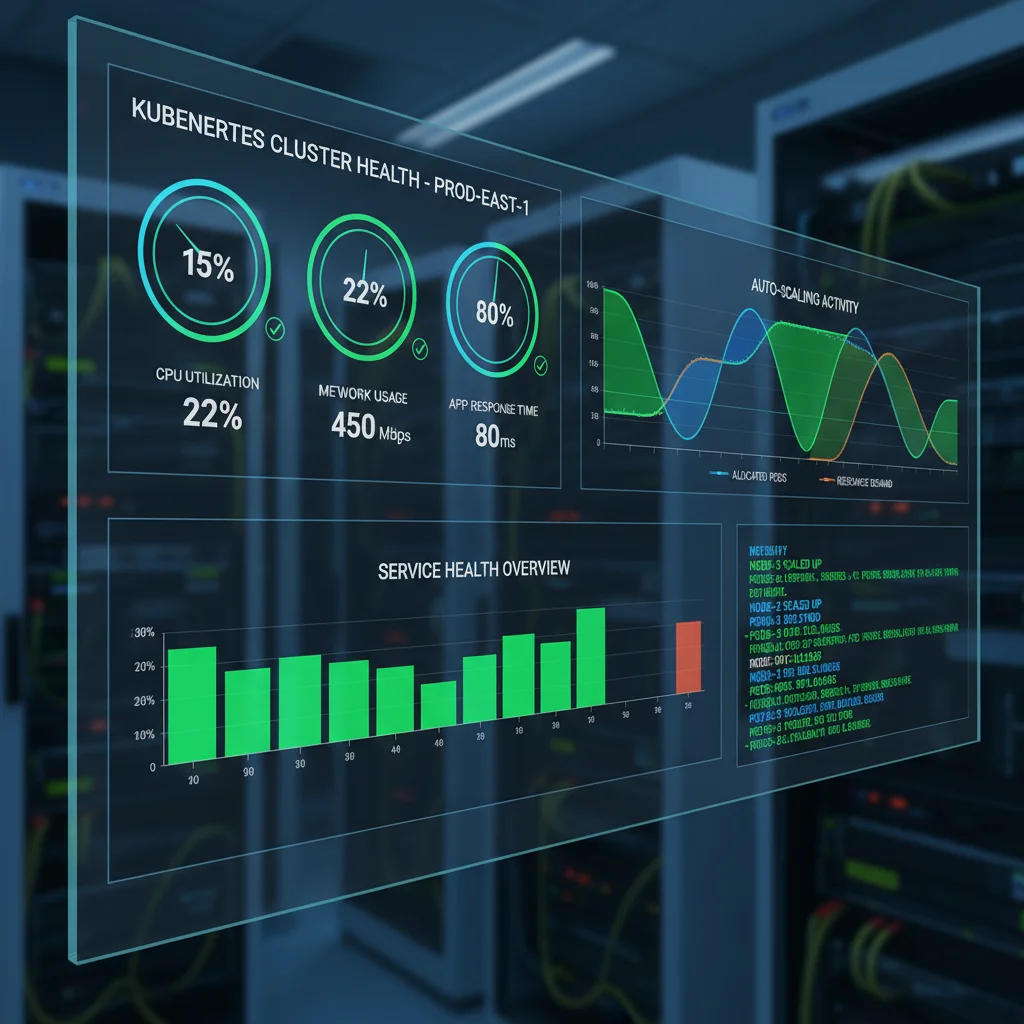
- Metrics and Monitoring: Collect a wide range of metrics (CPU, memory, network I/O, application-specific metrics) using tools like Prometheus and visualize them with Grafana. Set up dashboards that provide a holistic view of cluster health and application performance.
- Proactive Alerting: Configure alerts for critical thresholds, anomalies, and potential issues (e.g., node not ready, pod crash loops, high error rates). Integrate alerts with communication channels like Slack, PagerDuty, or email.
6. Automation and GitOps
Manual operations are prone to errors and slow down recovery. Automation is key to consistent and reliable deployments.
- CI/CD Pipelines: Automate the entire software delivery lifecycle, from code commit to deployment in Kubernetes, ensuring consistent and repeatable processes.
- GitOps: Adopt GitOps principles where the desired state of your Kubernetes cluster and applications is declared in Git repositories. Tools like Argo CD or Flux CD continuously reconcile the actual state with the desired state, providing an auditable and reliable deployment mechanism.
- Infrastructure as Code (IaC): Manage your cloud infrastructure (VPCs, subnets, load balancers, managed Kubernetes clusters) using IaC tools like Terraform or CloudFormation for consistency and version control.
7. Security Best Practices
Security vulnerabilities can lead to outages or data breaches, directly impacting uptime.
- Least Privilege: Apply the principle of least privilege to all Kubernetes resources, service accounts, and users.
- Network Policies: Use Kubernetes Network Policies to restrict traffic between pods, enforcing segmentation and reducing the attack surface.
- Image Security: Scan container images for vulnerabilities and use trusted registries.
- Regular Updates: Keep Kubernetes components and underlying operating systems patched and up-to-date to mitigate known vulnerabilities.
Challenges on the Path to 99.99% Uptime
While the goal of 99.99% Kubernetes cloud uptime is achievable, it comes with its share of challenges:
- Complexity: Kubernetes itself is complex, and managing highly available, multi-region deployments adds significant operational overhead.
- Cost: Running redundant infrastructure across multiple zones and regions can be expensive. Careful resource planning and optimization are crucial.
- Data Consistency: Ensuring data consistency across distributed databases in multi-region setups is a non-trivial problem that requires advanced replication and conflict resolution strategies.
- Testing Disaster Recovery: Regularly testing disaster recovery scenarios is vital but can be disruptive and resource-intensive.
- Talent Gap: Finding and retaining skilled Kubernetes and cloud-native engineers is a constant challenge.
The Role of Managed Kubernetes Services
Managed Kubernetes services (GKE, EKS, AKS) significantly reduce the operational burden of running Kubernetes at scale, making high Kubernetes cloud uptime more attainable. These services typically handle:
- Control Plane Management: They manage and maintain the control plane, including upgrades, patching, and ensuring its high availability.
- Node Provisioning: Automate the provisioning and scaling of worker nodes.
- Integration with Cloud Services: Seamless integration with other cloud services like load balancers, databases, and monitoring tools.
- Security Updates: Apply security patches to the underlying infrastructure.
While managed services simplify operations, organizations still need expertise in designing resilient applications, configuring networking, and implementing robust observability to truly maximize their Kubernetes cloud uptime.
Future Trends and Innovations in Kubernetes Uptime
The journey towards even higher Kubernetes cloud uptime is continuous. Several trends and innovations are shaping the future:
1. Edge Computing Integration
Extending Kubernetes to the edge will bring applications closer to users, reducing latency and creating more resilient, distributed systems. This will involve managing clusters that are smaller, more numerous, and potentially less connected, requiring new approaches to synchronization and fault tolerance.
2. AI/ML-Driven Operations (AIOps)
AIOps will play an increasing role in predicting potential issues before they impact services, automating anomaly detection, root cause analysis, and even self-healing actions. This proactive approach will be instrumental in pushing Kubernetes cloud uptime even higher.
3. Enhanced Multi-Cluster Management
As organizations adopt more complex multi-cluster and multi-cloud strategies, tools for unified management, global load balancing, and seamless traffic failover across disparate clusters will become more sophisticated. Projects like Cluster API and various multi-cluster ingress solutions are already paving the way.
4. Serverless Kubernetes
The rise of serverless computing offerings (e.g., Google Cloud Run, AWS Fargate with EKS) abstracts away the underlying infrastructure even further, allowing developers to focus purely on code. While not traditional Kubernetes, these platforms leverage Kubernetes concepts and offer inherent high availability and scalability, contributing to the broader goal of resilient cloud-native applications.
5. Advanced Chaos Engineering
Regularly injecting failures into production systems (Chaos Engineering) will become an even more ingrained practice to proactively identify weaknesses and validate the resilience of highly available Kubernetes deployments. Tools like LitmusChaos and Chaos Mesh will continue to evolve, offering more sophisticated ways to test system robustness.
Conclusion
Achieving 99.99% uptime for applications running on Kubernetes in the cloud by early 2026 is an ambitious yet attainable goal. It demands a holistic approach that encompasses robust architectural design, diligent operational practices, comprehensive observability, and a commitment to continuous improvement. By embracing multi-zone and multi-region deployments, designing resilient applications, leveraging advanced networking, and investing in automation and AIOps, organizations can build cloud-native platforms that deliver exceptional reliability and scalability.
The journey is complex, but the rewards – unparalleled user experience, operational efficiency, and business continuity – are well worth the effort. As Kubernetes and cloud technologies continue to mature, the vision of near-perfect uptime for critical applications is steadily becoming a reality.