Google Cloud Serverless Innovations: Cut Operational Costs 20% by 2026
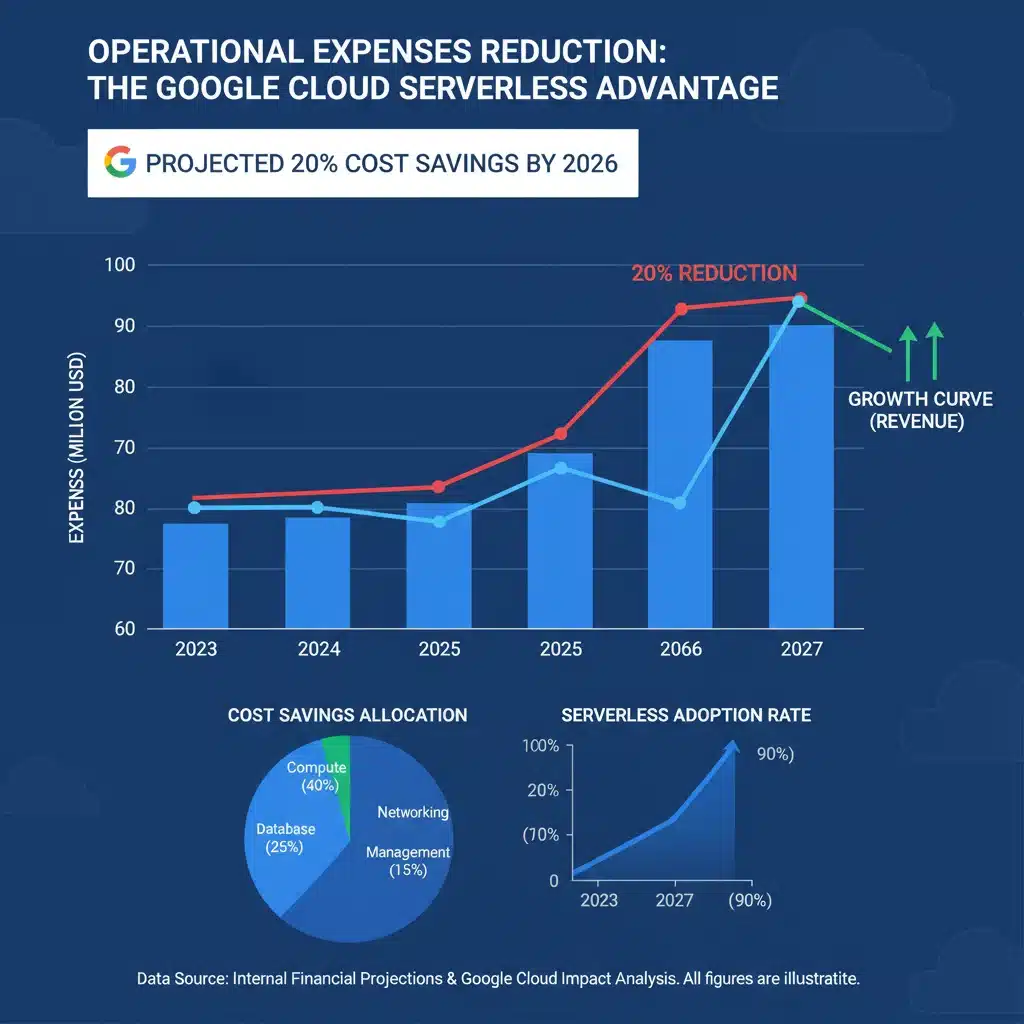
In the rapidly evolving landscape of cloud computing, organizations are constantly seeking innovative ways to optimize their infrastructure, enhance developer productivity, and, crucially, reduce operational overhead. Google Cloud has been at the forefront of this transformation, particularly with its robust and expanding serverless offerings. The latest wave of serverless innovations from Google Cloud is not just about abstract technological advancements; it’s about delivering tangible, measurable benefits, with a clear projection: a potential 20% reduction in operational overhead for adopters by 2026. This is a significant claim, and one that warrants a deep dive into how Google Cloud’s serverless strategy is poised to achieve such impactful results.
Understanding the core appeal of serverless computing is essential to grasping these projections. Serverless abstracts away the underlying infrastructure, allowing developers to focus solely on writing code. This paradigm shift eliminates the need for provisioning, scaling, and managing servers, leading to substantial savings in both time and resources. However, Google Cloud’s latest innovations go beyond these foundational benefits, introducing sophisticated tools and services that refine the serverless experience, making it even more cost-effective and powerful. Our focus today is on how these advancements specifically target and reduce Google Cloud Serverless Costs, setting a new benchmark for efficiency in the cloud.
The promise of a 20% reduction in operational overhead by 2026 is not a mere aspiration; it’s a strategic target driven by several key developments within the Google Cloud serverless ecosystem. These developments span improvements in existing services, the introduction of new capabilities, and a more integrated, intelligent approach to resource management and cost optimization. For businesses navigating the complexities of cloud spending, these innovations represent a critical pathway to achieving greater financial agility and competitive advantage.
The Evolution of Google Cloud’s Serverless Portfolio and Its Impact on Google Cloud Serverless Costs
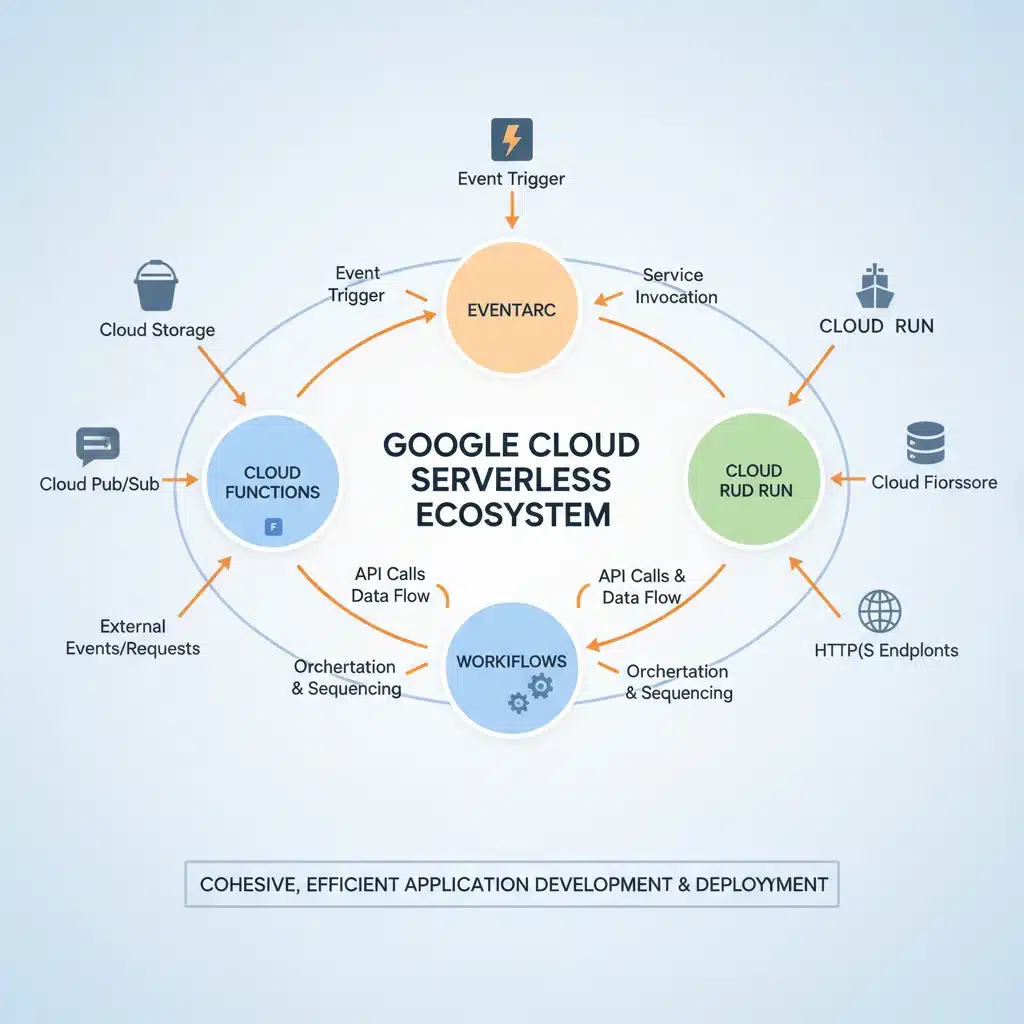
Google Cloud’s serverless journey began with foundational services like Cloud Functions, offering event-driven compute for microservices and APIs. Over time, this portfolio has expanded dramatically to include Cloud Run for containerized applications, Eventarc for universal event delivery, and Workflows for orchestrating complex business processes. The continuous refinement and expansion of these services are directly contributing to the projected cost savings.
Cloud Functions: Smarter, Faster, and Cheaper
Cloud Functions, Google Cloud’s Function-as-a-Service (FaaS) offering, has seen significant enhancements aimed at improving cold start times and reducing idle costs. Recent updates include support for newer runtimes and improved concurrency controls, which allow a single function instance to handle multiple requests simultaneously. This means fewer instances are needed to handle peak loads, directly translating to lower compute costs. Furthermore, optimizations in resource allocation and billing granularity ensure that customers pay only for the exact compute resources consumed, down to milliseconds, making Google Cloud Serverless Costs more predictable and efficient.
The introduction of features like ‘minimum instances’ for Cloud Functions (2nd gen) allows for pre-warmed instances, effectively eliminating cold starts for critical workloads while still maintaining the serverless pay-per-use model. While this might seem counterintuitive to cost reduction at first glance, for applications requiring extremely low latency, the improved user experience and reduction in potential downtime or failed requests can lead to significant indirect cost savings and increased revenue. The ability to fine-tune these settings provides organizations with greater control over performance-cost tradeoffs.
Cloud Run: The Power of Containers, the Simplicity of Serverless
Cloud Run has emerged as a cornerstone of Google Cloud’s serverless strategy, bridging the gap between traditional container orchestration and pure FaaS. Its ability to run stateless containers on a fully managed serverless platform offers immense flexibility. Recent innovations in Cloud Run focus on further optimizing resource usage and enhancing developer experience, both of which have a direct bearing on Google Cloud Serverless Costs.
One notable advancement is the introduction of CPU allocation controls, allowing users to specify how much CPU is allocated to an instance during idle periods or when processing requests. This fine-grained control prevents over-provisioning and ensures that compute resources are precisely matched to workload demands. Additionally, improvements in startup times for container images and faster scaling capabilities mean applications can respond to traffic spikes more efficiently, minimizing the need for continuously running, expensive instances.
Furthermore, Cloud Run’s integration with other Google Cloud services, such as Cloud SQL and VPC Access, has been streamlined. This reduces the complexity and overhead associated with connecting serverless applications to managed databases and private networks, eliminating the need for custom networking solutions or additional compute resources to act as proxies or gateways. This holistic approach to integration not only simplifies deployment but also drives down operational costs by reducing architectural complexity.
Eventarc and Workflows: Orchestration for Cost Efficiency
Serverless architectures thrive on event-driven patterns and robust orchestration. Eventarc and Workflows are Google Cloud’s answers to these needs, and their continuous evolution plays a crucial role in optimizing Google Cloud Serverless Costs. Eventarc provides a universal event delivery service, allowing events from over 100 Google Cloud sources (and even custom sources) to trigger serverless workloads without complex integrations. This eliminates the need for developers to build and maintain custom event routing logic, saving development time and reducing potential error points.
Workflows, on the other hand, allows developers to orchestrate and automate sequences of serverless services. By defining complex processes as a series of steps, Workflows ensures that resources are invoked only when needed, in the correct sequence, and with appropriate error handling. This prevents idle compute resources, reduces redundant operations, and provides a clear, auditable trail of execution. For instance, a multi-step data processing pipeline can be defined in Workflows, triggering Cloud Functions or Cloud Run services only when specific data arrives, thus minimizing continuous polling or always-on listeners which can incur unnecessary costs.
The combined power of Eventarc and Workflows enables the creation of highly efficient, reactive serverless applications. By ensuring that compute resources are only utilized precisely when an event occurs or a workflow step is executed, organizations can significantly reduce the ‘always-on’ component of their cloud spending, contributing directly to the projected 20% operational overhead reduction.
Key Strategies for Achieving 20% Operational Overhead Reduction with Google Cloud Serverless
The 20% operational overhead reduction by 2026 isn’t just about Google Cloud’s innovations; it also hinges on how organizations strategically adopt and implement these technologies. Here are some key strategies:
1. Embrace Event-Driven Architectures
Moving away from traditional request-response models towards event-driven architectures is fundamental to maximizing serverless cost savings. By leveraging Eventarc, organizations can build systems where components only activate in response to specific events, eliminating idle compute time. This paradigm shift ensures that resources are consumed only when actual work needs to be done, directly impacting Google Cloud Serverless Costs positively.
2. Granular Resource Allocation and Autoscaling
Google Cloud’s serverless offerings excel at automatic scaling, but recent innovations provide even more granular control. Utilizing features like minimum and maximum instances for Cloud Functions and Cloud Run, along with fine-tuned CPU allocation, allows organizations to precisely match resources to demand. This prevents both under-provisioning (leading to performance issues) and over-provisioning (leading to unnecessary costs). Regular monitoring and adjustment of these parameters are crucial for continuous optimization.
3. Optimize Code for Serverless Environments
The efficiency of serverless functions is heavily dependent on the code itself. Developers should focus on writing lean, efficient code with fast startup times. Minimizing external dependencies, optimizing library imports, and ensuring functions are designed for statelessness and idempotency can significantly reduce execution duration and memory consumption, thereby lowering Google Cloud Serverless Costs. Google Cloud’s continuous integration/continuous deployment (CI/CD) tools can help automate code quality checks and deployment best practices for serverless functions.
4. Leverage Managed Services and Integrations
Google Cloud offers a vast array of managed services – from databases like Cloud SQL and Firestore to messaging queues like Cloud Pub/Sub. Integrating serverless applications with these managed services reduces the operational burden of managing infrastructure components. For instance, instead of running a self-managed database on a VM, using Cloud SQL eliminates patching, backups, and scaling concerns, freeing up engineering resources and reducing overall operational costs. The seamless integration capabilities within the Google Cloud ecosystem make this approach particularly effective.
5. Implement Robust Monitoring and Cost Management Tools
To truly achieve and sustain a 20% reduction, organizations must have clear visibility into their cloud spending. Google Cloud provides powerful tools like Cloud Monitoring, Cloud Logging, and Cloud Billing reports. Utilizing these tools to track serverless function invocations, execution times, memory usage, and associated costs is vital. Setting up custom dashboards and alerts for budget thresholds allows for proactive management of Google Cloud Serverless Costs and identifies areas for further optimization. Furthermore, leveraging cost anomaly detection can quickly flag unexpected spending patterns, enabling swift corrective action.
6. Embrace Hybrid and Multi-Cloud Serverless Strategies
While this article focuses on Google Cloud, the broader serverless landscape often involves hybrid or multi-cloud strategies. Google Cloud’s commitment to open standards and technologies, such as Knative (the open-source foundation of Cloud Run), facilitates portability. This allows organizations to strategically deploy workloads where they are most cost-effective and performant, potentially leveraging existing investments or specialized services from other providers, further contributing to overall operational efficiency and cost management across their entire cloud footprint.
7. Continuous Learning and Adoption of New Features
The serverless landscape is dynamic. Google Cloud consistently releases new features, optimizations, and best practices. Organizations that commit to continuous learning and prompt adoption of these advancements will be best positioned to capitalize on the ongoing cost reduction opportunities. Subscribing to Google Cloud blogs, attending webinars, and participating in developer communities can help stay abreast of the latest developments that impact Google Cloud Serverless Costs.
Beyond Cost Savings: The Broader Impact of Google Cloud Serverless Innovations
While the 20% operational overhead reduction is a compelling headline, the benefits of Google Cloud’s serverless innovations extend far beyond just cost savings. These advancements foster a more agile, productive, and resilient development environment:
- Increased Developer Velocity: By abstracting infrastructure management, developers can focus entirely on writing business logic. This accelerates development cycles, allowing new features and applications to be brought to market faster. The ease of deployment and iteration inherent in serverless platforms empowers developers to experiment and innovate without the overhead of provisioning servers or configuring complex environments.
- Enhanced Scalability and Reliability: Google Cloud’s serverless offerings are designed for automatic, elastic scaling, capable of handling extreme fluctuations in demand without manual intervention. This inherent scalability contributes to higher application availability and a more robust user experience, even during unexpected traffic surges. The underlying infrastructure is managed by Google, benefiting from their global network and operational expertise, ensuring high reliability.
- Reduced Operational Burden: Beyond direct cost savings, the elimination of server management tasks (patching, security updates, scaling, load balancing) frees up valuable DevOps and operations teams. These teams can then focus on higher-value activities such as architectural design, security posture, and optimizing application performance, rather than routine infrastructure maintenance. This shift in focus is a significant component of the ‘operational overhead’ reduction.
- Improved Security Posture: Google Cloud’s serverless services are built with security deeply integrated. They run on Google’s secure global infrastructure, benefiting from continuous security updates, isolation, and fine-grained access controls via Identity and Access Management (IAM). This reduces the attack surface and the burden of securing individual servers, contributing to a more secure overall application environment.
- Greater Sustainability: Serverless computing, by its very nature, is more energy-efficient. Resources are only consumed when needed, leading to less wasted energy from idle servers. This aligns with corporate sustainability goals and contributes to a smaller carbon footprint for cloud operations, an increasingly important consideration for environmentally conscious organizations.
The Road Ahead: What to Expect from Google Cloud Serverless
The journey towards serverless excellence and optimal cost efficiency is continuous. Google Cloud’s commitment to innovation suggests that further advancements are on the horizon. We can anticipate even greater intelligence in autoscaling, more sophisticated cost optimization tools that leverage AI and machine learning, and deeper integrations across the entire Google Cloud ecosystem. The focus will likely remain on empowering developers, simplifying operations, and providing more granular control over resource consumption, all while keeping Google Cloud Serverless Costs in check.
As organizations continue to migrate and build new applications in the cloud, serverless will undoubtedly play an increasingly central role. The projected 20% reduction in operational overhead by 2026 is not just a statistical forecast; it’s a testament to the maturity and strategic importance of serverless computing within Google Cloud. Businesses that embrace these innovations, adopt best practices, and continuously optimize their serverless deployments will be well-positioned to reap significant financial and operational benefits in the coming years.
Conclusion
Google Cloud’s latest serverless innovations are a game-changer for businesses aiming to optimize their cloud spending and streamline operations. The projected 20% reduction in operational overhead by 2026 is an ambitious yet achievable goal, driven by enhancements in Cloud Functions, Cloud Run, Eventarc, and Workflows. These advancements, coupled with strategic adoption practices, empower organizations to significantly lower their Google Cloud Serverless Costs while simultaneously boosting developer productivity, enhancing scalability, and improving overall operational efficiency.
The shift to serverless is more than just a technological upgrade; it’s a fundamental change in how applications are built, deployed, and managed. By embracing the full potential of Google Cloud’s serverless ecosystem, businesses can not only achieve substantial cost savings but also unlock new levels of agility, innovation, and resilience in their cloud journey. The future of cloud computing is undeniably serverless, and Google Cloud is paving the way for a more efficient and cost-effective operational landscape.