Cloud FinOps: Achieve 20% Cost Reduction by 2026 with Smart Governance

The relentless march towards digital transformation has firmly established cloud computing as the backbone of modern enterprise IT. Organizations worldwide are leveraging the cloud’s agility, scalability, and innovation potential to drive business growth and enhance operational efficiency. However, this transformative power comes with a significant challenge: managing cloud costs effectively. Without robust financial oversight, cloud spending can spiral out of control, eroding the very benefits it promises. This is where Cloud FinOps Governance emerges as a critical discipline, offering a structured approach to bring financial accountability to the variable spend model of the cloud.
Our objective with this comprehensive guide is to illuminate how a strategic implementation of Cloud FinOps Governance can lead to a remarkable 20% reduction in operational costs by the year 2026. We will delve into the core principles, best practices, and actionable strategies that organizations can adopt to not only control but optimize their cloud expenditures, fostering a culture of cost awareness and shared responsibility across engineering, finance, and business teams. The journey to cloud financial excellence is not merely about cutting costs; it’s about maximizing business value from every dollar spent in the cloud.
The Imperative of Cloud FinOps Governance in Today’s Enterprise
The shift from traditional, capital-expenditure-heavy on-premise infrastructure to an operational-expenditure-driven cloud model has fundamentally changed how IT resources are consumed and paid for. While this offers unprecedented flexibility, it also introduces complexities in cost management. Traditional IT budgeting and forecasting methods often fall short in the dynamic cloud environment where resources can be provisioned and de-provisioned in minutes, leading to unpredictable and often higher-than-anticipated bills.
Cloud FinOps Governance provides the framework to address these challenges head-on. It’s not just a set of tools or a one-time project; it’s an ongoing cultural practice that brings financial accountability to the variable spend model of cloud, enabling organizations to make business trade-offs between speed, cost, and quality. By embedding financial discipline into cloud operations, FinOps ensures that every team member understands the cost implications of their decisions and is empowered to optimize spending without compromising innovation or performance.
The need for effective Cloud FinOps Governance is underscored by several factors:
- Exploding Cloud Spend: Many organizations find their cloud bills growing faster than anticipated, often due to unused resources, inefficient configurations, or lack of visibility.
- Lack of Cost Visibility: Without proper tagging, allocation, and reporting, it’s challenging to attribute cloud costs to specific teams, projects, or business units.
- Resource Sprawl: Easy provisioning can lead to an accumulation of unmonitored or underutilized resources, known as ‘cloud sprawl,’ which directly translates to wasted expenditure.
- Skills Gap: A lack of personnel with combined cloud technical expertise and financial acumen can hinder effective cost management.
- Regulatory Compliance: Certain industries require stringent financial reporting and accountability, which extends to cloud expenditures.
By establishing clear governance policies, processes, and tools, organizations can gain granular visibility into their cloud spending, identify areas for optimization, and enforce best practices across their cloud footprint. This proactive approach is essential for achieving the ambitious target of a 20% cost reduction by 2026, transforming cloud from a potential cost center into a strategic enabler of business value.
Understanding the Core Principles of FinOps
Before diving into governance specifics, it’s crucial to grasp the foundational principles of FinOps. The FinOps Foundation outlines six core principles that guide effective cloud financial management:
- Collaboration: Break down silos between engineering, finance, and business teams. FinOps thrives on shared responsibility and collective decision-making.
- Ownership: Teams are accountable for their cloud usage and costs. This empowers engineers to make cost-conscious decisions.
- Centralized and Accessible Reporting: Provide timely, accurate, and easily consumable cost data to all stakeholders. Transparency is key.
- Decisions Drive Business Value: Optimize cloud spend to maximize business value, not just to cut costs. Understand the trade-offs between cost, speed, and quality.
- The FinOps Team Drives Cloud Cost Management: A dedicated FinOps team or practice champions the principles and facilitates their adoption across the organization.
- Take Advantage of the Variable Spend Model: Leverage the cloud’s flexibility to optimize spending through elasticity, rightsizing, and leveraging various pricing models.
These principles form the bedrock upon which effective Cloud FinOps Governance is built. They emphasize a cultural shift towards financial accountability, moving beyond mere technical optimization to a holistic, business-driven approach to cloud economics.
Laying the Foundation: Key Pillars of Cloud FinOps Governance
Achieving a 20% cost reduction requires a structured and systematic approach to Cloud FinOps Governance. This involves establishing several key pillars that work in concert to provide visibility, control, and optimization capabilities.
1. Cost Visibility and Allocation
You can’t manage what you can’t see. The first step in any effective FinOps strategy is gaining comprehensive visibility into cloud costs. This means understanding where every dollar is spent and who is responsible for it.
- Tagging Strategy: Implement a robust tagging strategy across all cloud resources. Tags (e.g., project, owner, environment, cost center) are essential for granular cost allocation and reporting. Ensure consistency and enforce compliance with automated tools.
- Cost Allocation Units: Define clear cost allocation units (e.g., business units, applications, teams) to accurately attribute costs. This enables showback and chargeback models, fostering accountability.
- Centralized Reporting Tools: Utilize native cloud provider tools (e.g., AWS Cost Explorer, Azure Cost Management) and third-party FinOps platforms to aggregate, analyze, and visualize cost data. These tools should provide customizable dashboards and reports relevant to different stakeholders.
- Anomaly Detection: Implement systems to detect unusual spikes or unexpected increases in cloud spending. Early detection allows for swift investigation and remediation, preventing significant cost overruns.
Without accurate and timely cost visibility, any governance efforts will be akin to flying blind. This foundational pillar empowers teams with the data they need to make informed decisions and take ownership of their cloud spend.
2. Budgeting and Forecasting
Effective financial planning is paramount. In the dynamic cloud environment, traditional annual budgeting cycles are often insufficient. Cloud FinOps Governance necessitates agile budgeting and continuous forecasting.
- Dynamic Budgeting: Move towards rolling forecasts and dynamic budgets that can adapt to changing business needs and cloud consumption patterns.
- Forecasting Models: Develop predictive models based on historical usage, planned initiatives, and business growth. Leverage machine learning capabilities within FinOps platforms to improve forecast accuracy.
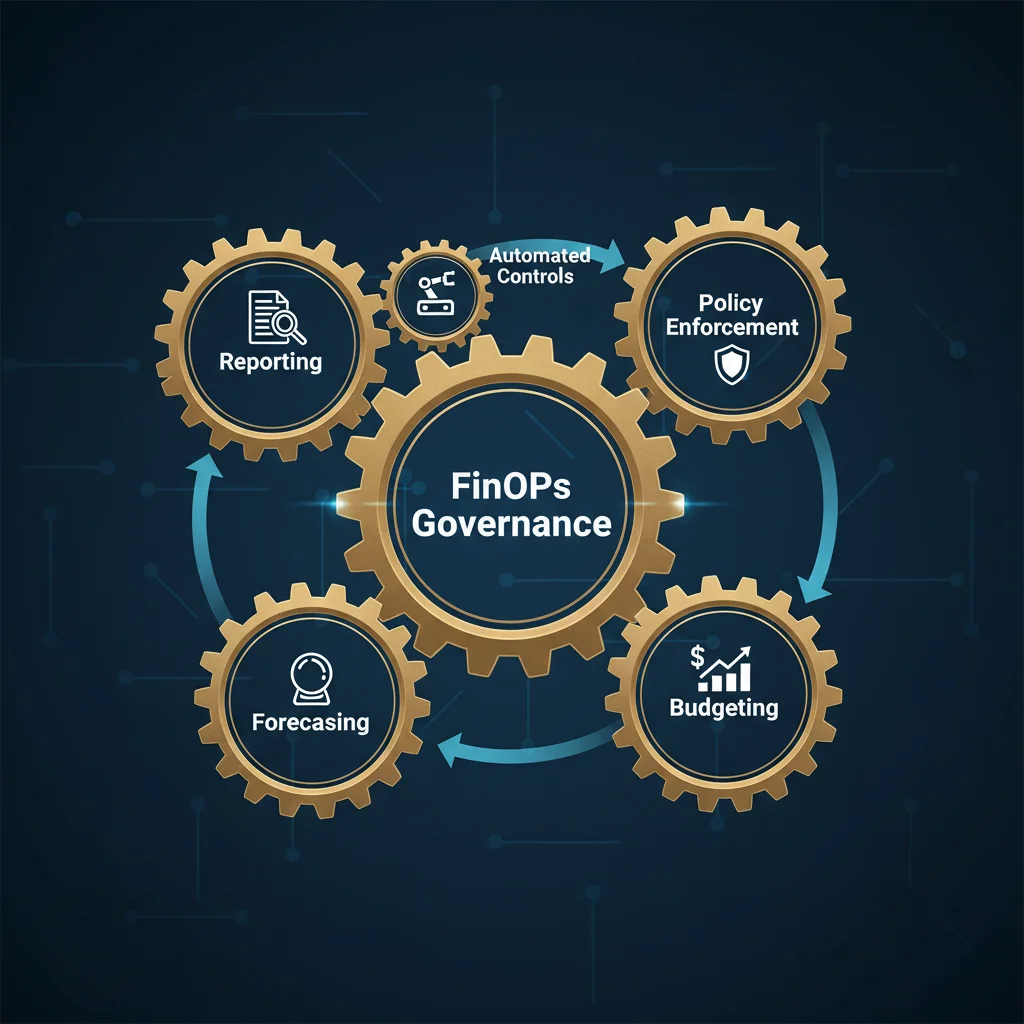
- Thresholds and Alerts: Set spending thresholds at various levels (e.g., project, department, overall cloud account) and configure automated alerts to notify stakeholders when budgets are approached or exceeded.
- Variance Analysis: Regularly compare actual spend against budgets and forecasts, identifying variances and their root causes. This feedback loop is crucial for refining future planning.
By establishing a robust budgeting and forecasting framework, organizations can maintain control over their cloud spend, avoid surprises, and proactively plan for future resource needs, all while aligning with the target of 20% cost reduction.
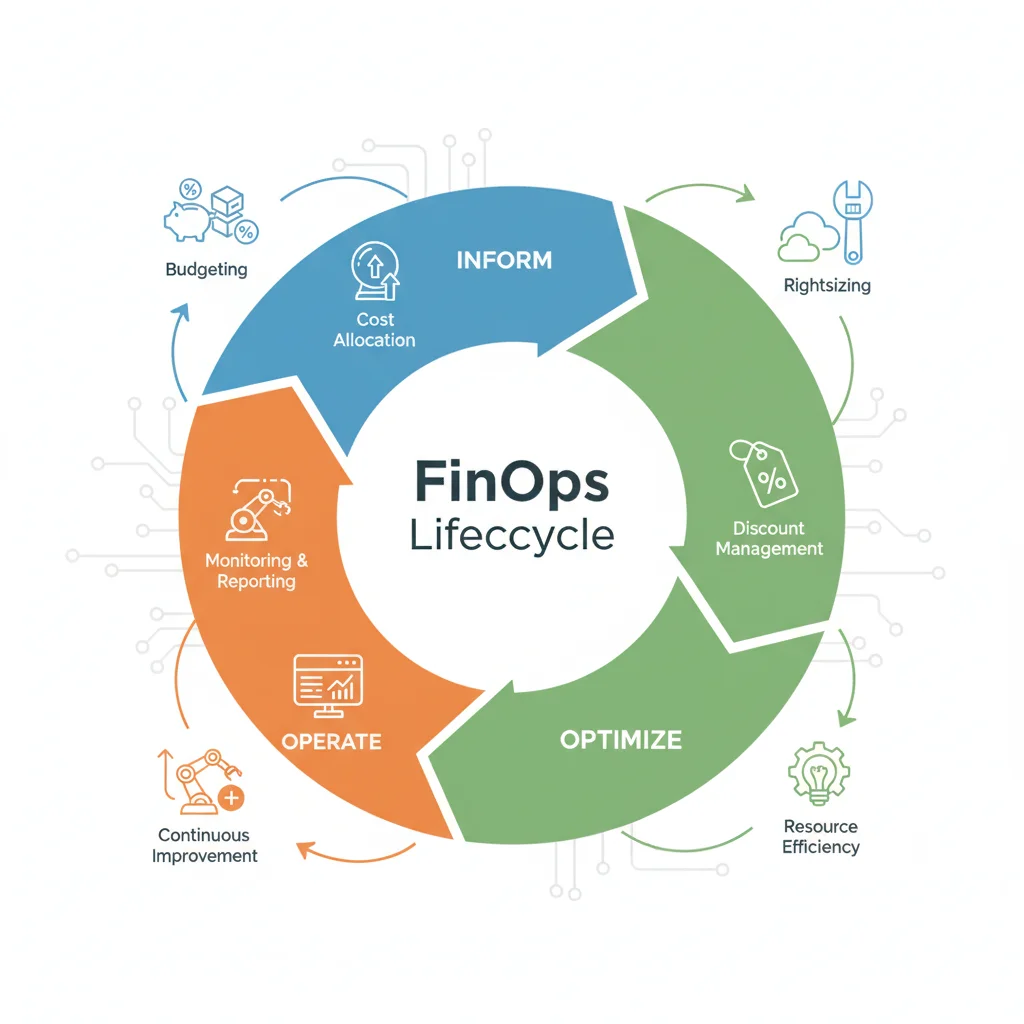
3. Resource Optimization and Efficiency
Optimization is at the heart of FinOps. This pillar focuses on ensuring that cloud resources are utilized efficiently and cost-effectively, directly contributing to significant savings.
- Rightsizing: Continuously monitor resource utilization (CPU, memory, disk I/O, network) and adjust instance types, storage, and other services to match actual workload requirements. Eliminate over-provisioning.
- Elasticity and Automation: Leverage cloud elasticity by automatically scaling resources up or down based on demand. Implement auto-shutdown policies for non-production environments during off-hours.
- Cost-Effective Pricing Models: Strategically utilize Reserved Instances (RIs), Savings Plans, and Spot Instances where appropriate. Develop a centralized strategy for purchasing and managing these commitment-based discounts.
- Storage Optimization: Implement lifecycle policies for object storage, moving less frequently accessed data to colder, cheaper tiers. Identify and delete orphaned snapshots and unattached volumes.
- Network Optimization: Monitor data transfer costs, identify unnecessary cross-region or internet egress traffic, and optimize network architectures.
- Serverless and Container Adoption: Explore serverless computing (e.g., AWS Lambda, Azure Functions) and containerization (e.g., Kubernetes) for workloads that can benefit from their inherent cost efficiencies and reduced operational overhead.
These optimization tactics, when applied consistently and systematically, can unlock substantial savings and are critical drivers for achieving the ambitious 20% cost reduction goal. Effective Cloud FinOps Governance ensures these practices are not ad-hoc but ingrained into daily operations.
4. Policy and Compliance Enforcement
Governance means establishing rules and ensuring adherence. This pillar focuses on defining and enforcing policies that guide cloud consumption and cost management.
- Naming Conventions and Tagging Policies: Mandate standardized naming conventions and tagging policies for all cloud resources. Automate enforcement where possible to ensure compliance.
- Resource Provisioning Policies: Define guardrails for resource provisioning, limiting the types, sizes, and regions of resources that can be deployed by different teams. Implement approval workflows for exceptions.
- Security and Compliance Policies: Ensure that cost optimization efforts do not compromise security or regulatory compliance. Integrate FinOps policies with existing security and compliance frameworks.
- Cost Center and Business Unit Allocation: Formalize how cloud costs are allocated to specific business units or cost centers, providing transparency and accountability.
- Audit and Review: Regularly audit cloud environments for policy violations and non-compliant resources. Conduct periodic reviews of spending patterns and optimization opportunities.
Strong policy enforcement prevents ‘rogue’ spending and ensures that all cloud activities align with the organization’s financial objectives. This is a crucial aspect of sustainable Cloud FinOps Governance.
5. Cultural Transformation and Collaboration
FinOps is as much about people and culture as it is about technology and processes. A successful Cloud FinOps Governance initiative requires a significant cultural shift.
- Cross-Functional Teams: Establish a dedicated FinOps team or working group comprising representatives from finance, engineering, operations, and business units.
- Education and Training: Provide ongoing training and education to all stakeholders on FinOps principles, tools, and best practices. Empower engineers with financial literacy.
- Shared Goals and Incentives: Align individual and team goals with FinOps objectives. Consider incorporating cost efficiency metrics into performance reviews or departmental KPIs.
- Communication Channels: Create open communication channels to share cost insights, optimization opportunities, and best practices. Foster a culture where cost awareness is a shared responsibility.
- Executive Sponsorship: Secure strong executive sponsorship to champion the FinOps initiative, provide resources, and drive organizational change.
Without a cultural shift towards shared financial responsibility, even the most sophisticated tools and policies will fall short. Nurturing this collaborative environment is fundamental to the long-term success of Cloud FinOps Governance.
Strategic Roadmap to 20% Cost Reduction by 2026
Achieving a 20% operational cost reduction by 2026 through Cloud FinOps Governance is an ambitious but attainable goal. Here’s a strategic roadmap to guide your journey:
Year 1: Foundation and Visibility (2024)
- Q1: Assessment and Strategy Definition: Conduct a comprehensive audit of current cloud spend. Define FinOps goals, establish KPIs, and secure executive buy-in. Form the core FinOps team.
- Q2: Implement Basic Tagging and Cost Allocation: Develop and enforce a standardized tagging strategy. Implement initial cost allocation rules and integrate with financial reporting.
- Q3: Centralized Reporting and Baseline Establishment: Deploy a FinOps platform or configure native cloud tools for centralized cost visibility. Establish baseline cloud spend metrics.
- Q4: Initial Optimization & Education: Identify and implement quick-win optimizations (e.g., rightsizing idle resources). Begin FinOps training for engineering and finance teams. Focus on understanding current spend patterns.
Expected Impact: 3-5% cost reduction through increased visibility and initial waste elimination. Laying the groundwork for future, larger savings.
Year 2: Optimization and Automation (2025)
- Q1: Advanced Optimization Initiatives: Roll out a comprehensive rightsizing program. Implement automated shutdown schedules for non-production environments.
- Q2: Commitment-Based Discounts Strategy: Develop and execute a strategy for Reserved Instances (RIs) and Savings Plans. Centralize their management and utilization.
- Q3: Policy Enforcement & Governance Automation: Implement automated policy enforcement for tagging, resource provisioning, and security. Integrate FinOps into CI/CD pipelines.
- Q4: Continuous Forecasting & Budgeting: Mature dynamic budgeting and forecasting processes. Establish regular variance analysis and feedback loops.
Expected Impact: Additional 7-10% cost reduction through systematic optimization and automation, bringing total reduction to 10-15%. Governance practices become more ingrained.
Year 3: Maturity and Continuous Improvement (2026)
- Q1: Advanced Cloud Architecture Optimization: Explore and implement serverless architectures, containerization, and data tiering strategies for suitable workloads.
- Q2: Vendor Negotiation & Multi-Cloud Optimization: Leverage increased visibility and forecasting accuracy for better negotiations with cloud providers. Optimize spend across multi-cloud environments if applicable.
- Q3: Performance-Cost Trade-offs & Business Value Alignment: Deepen the understanding of performance-cost trade-offs. Optimize cloud spend not just for cost, but for maximum business value and agility.
- Q4: FinOps Culture Reinforcement & Innovation: Continuously refine FinOps processes, tools, and training. Foster a culture of continuous improvement and innovation in cloud financial management.
Expected Impact: Final 5-8% cost reduction, achieving or exceeding the 20% target. Cloud FinOps Governance becomes a mature, self-sustaining practice within the organization.
Challenges and How to Overcome Them
While the benefits of Cloud FinOps Governance are clear, organizations often encounter challenges during implementation. Recognizing these obstacles and planning for them is key to success.
- Resistance to Change: Engineers may resist new processes or perceived additional workloads. Overcome this through clear communication of benefits, education, and involving them in decision-making. Emphasize that FinOps empowers them, not restricts them.
- Data Granularity and Accuracy: Inconsistent tagging or lack of detailed billing data can hinder cost allocation. Address this by enforcing strict tagging policies and investing in robust FinOps tools.
- Tool Sprawl: Relying on too many disparate tools for cost management can create complexity. Aim for an integrated platform or a streamlined set of tools that work together effectively.
- Lack of Skills: A shortage of individuals with both cloud technical expertise and financial acumen can slow progress. Invest in training existing staff or hire specialized FinOps professionals.
- Balancing Innovation and Cost Control: The fear that FinOps will stifle innovation is common. Emphasize that FinOps is about optimizing for business value, not just cutting costs, allowing for calculated risks and experimentation.
- Executive Buy-in and Sustained Support: Without ongoing support from leadership, FinOps initiatives can lose momentum. Regularly demonstrate ROI and communicate progress to maintain executive sponsorship.
By proactively addressing these challenges, organizations can ensure a smoother transition and more successful adoption of Cloud FinOps Governance, paving the way for sustained cost reduction and enhanced business value.
The Future of Cloud FinOps Governance
As cloud environments continue to evolve, so too will the practices of Cloud FinOps Governance. We can anticipate several trends shaping its future:
- AI and Machine Learning Integration: Greater reliance on AI/ML for predictive analytics, anomaly detection, automated optimization recommendations, and even autonomous cost control actions.
- Sustainability FinOps: An increased focus on the environmental impact of cloud usage, integrating carbon footprint metrics alongside financial costs, driving ‘Green FinOps.’
- Advanced Multi-Cloud and Hybrid Cloud Management: More sophisticated tools and strategies to manage costs and governance across complex multi-cloud and hybrid cloud environments seamlessly.
- Shift-Left FinOps: Embedding cost awareness and optimization earlier in the development lifecycle, allowing engineers to design cost-efficient architectures from the outset.
- Enhanced Business Value Alignment: FinOps will increasingly move beyond pure cost optimization to focus on maximizing the business value derived from every cloud investment, directly tying cloud spend to strategic outcomes.
These developments will further solidify FinOps as an indispensable discipline for any organization leveraging the cloud, ensuring that financial accountability and optimization remain central to their digital strategy.
Conclusion: Realizing the 20% Cost Reduction Goal with Cloud FinOps Governance
The journey to achieving a 20% reduction in operational costs by 2026 through Cloud FinOps Governance is not a sprint, but a marathon. It demands a commitment to cultural change, continuous learning, and strategic implementation of best practices across technology, finance, and business teams. By fostering a collaborative environment where everyone takes ownership of cloud spend, organizations can transform their relationship with the cloud from one of unpredictable expenditure to one of strategic investment.
Embracing the principles of FinOps – collaboration, ownership, visibility, and business value alignment – and systematically building out the pillars of governance, organizations can unlock significant efficiencies. From robust tagging and dynamic budgeting to continuous optimization and automated policy enforcement, every step contributes to a more financially disciplined and value-driven cloud operation. The 20% cost reduction target is not just an arbitrary number; it represents a tangible outcome of intelligent cloud financial management, freeing up resources for innovation and driving sustainable business growth.
Start your Cloud FinOps Governance journey today. The benefits of financial clarity, optimized spending, and enhanced business value are within reach, setting your organization on a path to sustained success in the cloud era.