Cloud Security Posture Management: 5 Steps to Mitigate Risks by Q3 2026
In today’s rapidly evolving digital landscape, cloud adoption has become an imperative for businesses seeking agility, scalability, and innovation. However, this shift to the cloud also introduces a new frontier of security challenges. Misconfigurations, compliance gaps, and an ever-expanding attack surface demand a proactive and robust approach to security. This is where Cloud Security Posture Management (CSPM) emerges as a critical discipline. As organizations accelerate their cloud journeys, the need to effectively manage and secure their cloud environments has never been more pressing. The objective for many forward-thinking enterprises is clear: to significantly mitigate cloud security risks by Q3 2026.
The complexity of modern cloud environments, often spanning multiple providers and services, makes manual security management virtually impossible. This is precisely why CSPM solutions are gaining traction. They offer automated visibility, continuous monitoring, and actionable insights to ensure that cloud resources adhere to security best practices and regulatory requirements. Without a comprehensive CSPM strategy, organizations risk data breaches, compliance penalties, and significant reputational damage.
This article will delve into the core tenets of Cloud Security Posture Management, outlining five essential steps that organizations must undertake to effectively mitigate risks and fortify their cloud defenses. By following these steps, businesses can move towards a more secure cloud future, achieving their risk mitigation goals by the ambitious target of Q3 2026.
Understanding the Cloud Security Landscape and the Role of CSPM
Before we dive into the steps, it’s crucial to grasp the current state of cloud security and the fundamental role CSPM plays. The shared responsibility model, a cornerstone of cloud security, often leads to confusion. While cloud providers are responsible for the security of the cloud (e.g., infrastructure, physical security), customers are responsible for security in the cloud (e.g., configurations, data, access control). It’s in this ‘security in the cloud’ domain that misconfigurations frequently occur, creating vulnerabilities that attackers can exploit.
The Evolving Threat Landscape in the Cloud
The threats to cloud environments are diverse and sophisticated. They include:
- Misconfigurations: Incorrectly configured storage buckets, overly permissive access controls, and unpatched systems are common entry points for attackers.
- Identity and Access Management (IAM) Issues: Weak IAM policies, compromised credentials, and lack of multi-factor authentication can lead to unauthorized access.
- Data Breaches: Exposure of sensitive data due to inadequate encryption, insecure APIs, or misconfigured databases.
- Compliance Violations: Failure to meet regulatory requirements like GDPR, HIPAA, or PCI DSS, leading to hefty fines and legal repercussions.
- Shadow IT: Unsanctioned cloud services or applications deployed without IT oversight, creating blind spots for security teams.
- Advanced Persistent Threats (APTs): Sophisticated attacks that remain undetected for long periods, often targeting specific organizations.
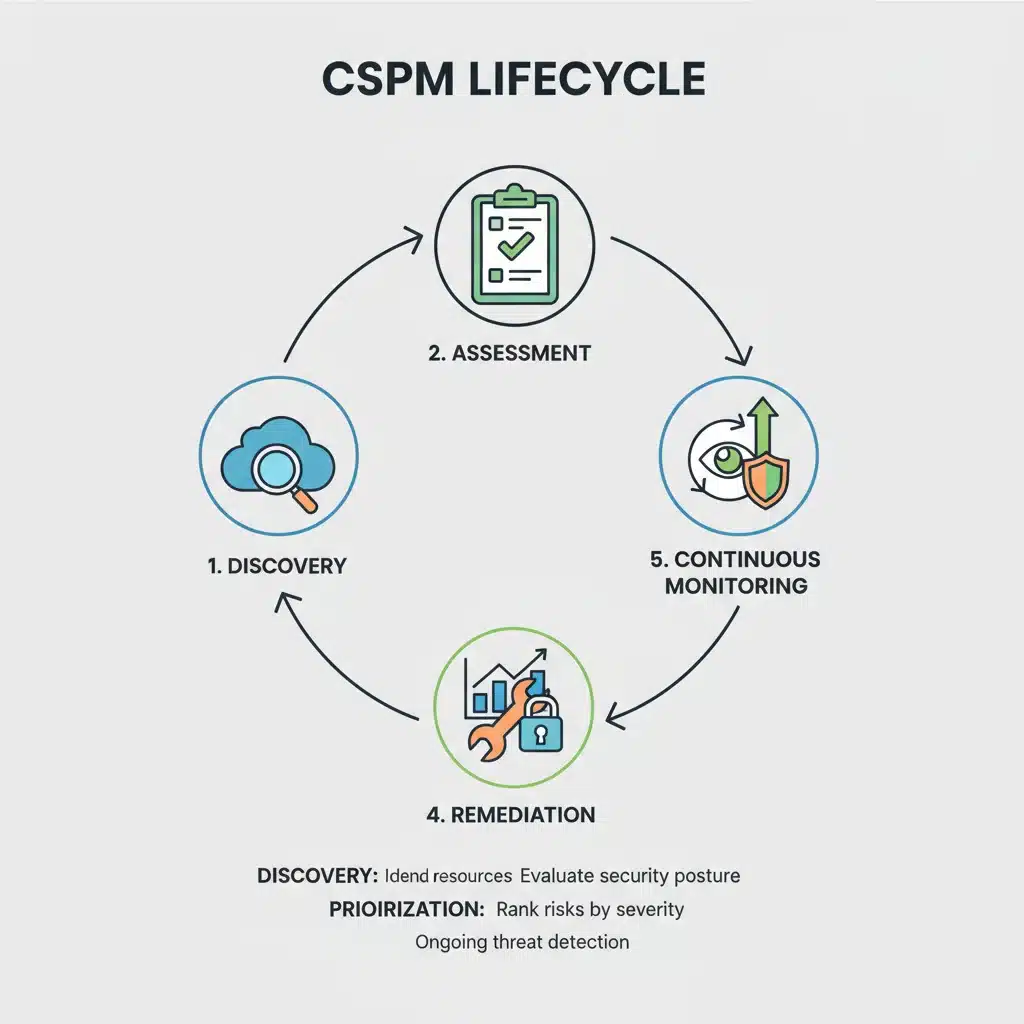
Given this complex threat landscape, traditional on-premise security tools often fall short in the dynamic, API-driven world of cloud computing. This is where Cloud Security Posture Management (CSPM) comes into its own. CSPM solutions are designed specifically for cloud environments, providing continuous monitoring, automated assessment, and remediation guidance for security and compliance issues across various cloud service providers (CSPs).
What Exactly Does Cloud Security Posture Management Do?
At its core, Cloud Security Posture Management involves:
- Visibility: Gaining a complete and real-time view of all cloud assets, configurations, and their security status across multi-cloud environments.
- Continuous Monitoring: Automatically scanning cloud resources for misconfigurations, vulnerabilities, and compliance deviations against predefined policies and benchmarks.
- Risk Assessment and Prioritization: Identifying, quantifying, and prioritizing security risks based on their potential impact and likelihood of exploitation.
- Compliance Assurance: Mapping cloud configurations against various regulatory frameworks (e.g., NIST, ISO 27001, SOC 2) to ensure continuous compliance.
- Automated Remediation: Providing guided or automated remediation steps to fix identified security issues, often integrating with existing ticketing or orchestration systems.
Implementing a robust CSPM strategy is no longer a luxury but a necessity for any organization operating in the cloud. It’s the proactive shield that helps prevent security incidents before they occur, ensuring that your cloud environment remains secure and compliant.
Step 1: Establish Comprehensive Cloud Asset Inventory and Visibility
The first and most fundamental step in effective Cloud Security Posture Management is to gain complete visibility into your cloud environment. You cannot protect what you don’t know exists. In dynamic cloud infrastructures, assets are constantly being provisioned, de-provisioned, and modified. This fluidity makes maintaining an accurate inventory a significant challenge without the right tools.
Why is Comprehensive Inventory Crucial?
- Eliminate Shadow IT: Discovering unauthorized or forgotten cloud resources that could be exposing your organization to risk.
- Understand Your Attack Surface: Knowing exactly which assets are accessible from the internet and what data they contain.
- Foundation for Policy Enforcement: You need to know all assets before you can apply security policies to them.
- Compliance Requirements: Many regulatory frameworks require organizations to maintain an up-to-date inventory of their IT assets.
How to Achieve Comprehensive Visibility:
- Utilize CSPM Tools: Modern CSPM solutions automatically discover and catalog all cloud resources across your multi-cloud environment (AWS, Azure, Google Cloud, etc.). They integrate with cloud provider APIs to pull configuration data in real-time.
- Integrate with Cloud Native Tools: Leverage cloud provider services like AWS Config, Azure Security Center, and Google Cloud Security Command Center to enhance visibility and data collection.
- Map Relationships and Dependencies: Understand how different cloud resources are interconnected. For instance, which EC2 instances are connected to which S3 buckets, and what security groups are applied? This helps in understanding the blast radius of a potential compromise.
- Tagging Strategy: Implement a consistent and comprehensive tagging strategy for all cloud resources. Tags can help categorize resources by owner, environment (dev, test, prod), application, and criticality, making inventory management and policy enforcement much more manageable.
- Regular Audits and Reconciliation: Even with automated tools, periodic manual audits and reconciliation processes are vital to ensure the accuracy and completeness of your asset inventory.
By establishing a clear and continuously updated inventory, organizations lay the groundwork for effective Cloud Security Posture Management, ensuring that no stone is left unturned in their quest for a secure cloud environment by Q3 2026.
Step 2: Define and Enforce Security Baselines and Policies
Once you have a clear understanding of your cloud assets, the next critical step in Cloud Security Posture Management is to define and rigorously enforce security baselines and policies. These baselines serve as the gold standard for how your cloud resources should be configured, ensuring they meet both internal security requirements and external regulatory mandates.
Why are Baselines and Policies Essential?
- Standardization: Ensure consistent security configurations across all cloud resources, reducing the likelihood of human error.
- Proactive Risk Reduction: Prevent misconfigurations that could lead to vulnerabilities.
- Compliance Adherence: Map configurations directly to regulatory requirements, making compliance audits smoother.
- Faster Remediation: When deviations occur, you have a clear standard to compare against, simplifying the remediation process.
Key Elements of Defining and Enforcing Policies:
- Leverage Industry Best Practices and Frameworks: Start with established security frameworks like NIST, CIS Benchmarks, ISO 27001, and cloud provider best practices (e.g., AWS Well-Architected Framework, Azure Security Benchmark). These provide a solid foundation for your security policies.
- Customize Policies to Your Organization’s Needs: While industry benchmarks are a great starting point, tailor them to your specific business requirements, risk tolerance, and compliance obligations. For example, you might have stricter data residency requirements or specific encryption standards.
- Automate Policy Definition and Deployment: Use Infrastructure as Code (IaC) tools (e.g., Terraform, CloudFormation, Azure Resource Manager) to define security policies and configurations programmatically. This ensures consistency and repeatability.
- Implement Policy-as-Code: Integrate security policies directly into your CI/CD pipelines. This allows for security checks to be performed early in the development lifecycle, preventing misconfigurations from ever reaching production.
- Continuous Policy Enforcement with CSPM Tools: Your chosen CSPM solution should continuously monitor your cloud environment against these defined policies. It should alert you in real-time when deviations occur, indicating potential misconfigurations or compliance gaps.
- Establish a Governance Framework: Define clear roles and responsibilities for policy creation, review, approval, and enforcement. Regular reviews of policies are necessary to adapt to new threats and evolving business needs.
By diligently defining and enforcing security baselines and policies, organizations can significantly strengthen their Cloud Security Posture Management, creating a resilient defense against common cloud vulnerabilities and moving closer to their Q3 2026 risk mitigation target.
Step 3: Implement Continuous Monitoring and Anomaly Detection
Establishing security baselines is only part of the equation; maintaining that posture requires vigilance. Therefore, the third essential step in Cloud Security Posture Management is the implementation of continuous monitoring and anomaly detection. Cloud environments are dynamic, and configurations can change rapidly, either intentionally or accidentally, potentially introducing new vulnerabilities.
The Imperative of Continuous Monitoring:
- Real-time Threat Detection: Identify security incidents, misconfigurations, and policy violations as they happen, minimizing the window of exposure.
- Proactive Compliance: Ensure continuous adherence to regulatory requirements by flagging any deviations immediately.
- Operational Visibility: Gain insights into the health and security status of your cloud infrastructure at all times.
- Adaptability: Respond quickly to changes in the threat landscape or internal operational adjustments.
Strategies for Effective Continuous Monitoring and Anomaly Detection:
- Deploy a Robust CSPM Solution: A core function of CSPM tools is continuous scanning of your cloud environment. They constantly compare your current configurations against your defined security baselines and policies, flagging any discrepancies.
- Integrate with Cloud Native Monitoring Tools: Utilize services like AWS CloudWatch, Azure Monitor, and Google Cloud Operations Suite. These tools provide logs, metrics, and alerts that can be fed into your CSPM or SIEM (Security Information and Event Management) system for a holistic view.
- Leverage Anomaly Detection: Beyond simple policy violations, look for unusual patterns of behavior. This could include:
- Unusual API calls or resource access patterns.
- Spikes in network traffic to or from unusual locations.
- Changes in resource configurations outside of approved change management processes.
- Unusual login attempts or access from suspicious IP addresses.
Machine learning-powered anomaly detection within CSPM or SIEM platforms can be invaluable here.
- Set Up Granular Alerting: Configure alerts for critical security events and policy violations. These alerts should be routed to the appropriate security teams or automated remediation workflows. Ensure alerts are actionable and provide sufficient context.
- Log Management and Analysis: Centralize and analyze logs from all cloud resources. This includes audit logs, access logs, and application logs. Tools like SIEMs or cloud-native log analytics services are essential for correlating events and detecting sophisticated attacks.
- Regular Review of Monitoring Rules: The threat landscape evolves, and so should your monitoring rules. Regularly review and update your detection rules and anomaly thresholds to ensure they remain effective and relevant.
By embedding continuous monitoring and anomaly detection into your Cloud Security Posture Management strategy, organizations can maintain a proactive stance, swiftly identify potential threats, and ensure the ongoing integrity and security of their cloud assets, keeping them on track for mitigating risks by Q3 2026.
Step 4: Prioritize and Automate Remediation of Identified Risks
Identifying misconfigurations and vulnerabilities through continuous monitoring is crucial, but it’s only half the battle. The true value of Cloud Security Posture Management lies in the ability to effectively remediate these issues. Step four focuses on prioritizing identified risks and, where possible, automating their remediation to maintain a secure posture and achieve the Q3 2026 mitigation target.
The Challenge of Remediation and Why Prioritization Matters:
Cloud environments can generate a vast number of security alerts. Without proper prioritization, security teams can become overwhelmed, leading to alert fatigue and critical issues being overlooked. Effective prioritization ensures that resources are allocated to address the most impactful risks first.
Key Aspects of Prioritization and Automated Remediation:
- Risk-Based Prioritization: Not all security findings are equal. Prioritize remediation efforts based on several factors:
- Severity: How critical is the vulnerability or misconfiguration (e.g., exposed RDP port vs. minor logging issue)?
- Impact: What is the potential business impact if this issue is exploited (e.g., data breach, service outage, compliance fine)?
- Likelihood: How likely is this vulnerability to be exploited? Is it publicly known, or does it require specific conditions?
- Asset Criticality: Is the affected resource critical to business operations or sensitive data?
- Compliance Requirements: Does the finding violate a critical regulatory mandate?
CSPM tools often provide risk scoring and prioritization capabilities to help streamline this process.
- Integrate with Existing Workflows: Seamlessly integrate CSPM findings and remediation actions into your existing IT service management (ITSM) or ticketing systems (e.g., Jira, ServiceNow). This ensures that security issues are treated as operational tasks and assigned to the relevant teams.
- Automated Remediation for Common Issues: For recurring and low-risk misconfigurations, consider implementing automated remediation. Many CSPM platforms offer playbooks or integrations with cloud native services (e.g., AWS Lambda, Azure Functions) to automatically correct common issues, such as:
- Blocking public access to S3 buckets that should be private.
- Disabling overly permissive security group rules.
- Enforcing encryption for unencrypted storage volumes.
- Enabling logging for services where it’s disabled.
Automated remediation significantly reduces the burden on security teams and ensures faster resolution times.
- Guided Remediation for Complex Issues: For more complex or sensitive issues, CSPM tools should provide clear, step-by-step guidance on how to manually remediate the problem. This includes links to relevant documentation, command-line instructions, or console screenshots.
- Feedback Loop and Verification: After remediation, it’s crucial to verify that the issue has been resolved and that no new issues were introduced. Your continuous monitoring (Step 3) should confirm the fix. Establish a feedback loop to improve remediation processes and prevent recurrence.
- Leverage Infrastructure as Code (IaC) for Proactive Remediation: Encourage development and operations teams to fix issues at the source by updating their IaC templates. This prevents the same misconfiguration from being deployed again in the future.
By prioritizing risks and embracing automation in remediation, organizations can dramatically improve their security posture, reduce their mean time to remediation (MTTR), and ensure their Cloud Security Posture Management efforts are highly effective in mitigating risks by Q3 2026.
Step 5: Foster a Culture of Security and Continuous Improvement
The final, yet ongoing, step in effective Cloud Security Posture Management is to cultivate a strong culture of security within the organization and commit to continuous improvement. Technology alone cannot solve all security challenges; human factors, processes, and ongoing adaptation are equally critical for maintaining a robust cloud security posture and meeting the Q3 2026 target.
Why Culture and Continuous Improvement are Paramount:
- Human Element: Many cloud security incidents stem from human error or lack of awareness. A strong security culture mitigates this risk.
- Evolving Threat Landscape: The cloud security landscape is constantly changing. Continuous improvement ensures your defenses adapt.
- Shared Responsibility: Security is everyone’s responsibility, not just the security team’s.
- Sustained Compliance: Maintaining compliance requires ongoing effort and adaptation to new regulations.
Strategies for Building a Security Culture and Continuous Improvement:
- Security Awareness Training: Regularly educate all employees, especially those working with cloud resources, on cloud security best practices, common threats (e.g., phishing, social engineering), and their role in maintaining security. Training should be engaging and relevant.
- DevSecOps Integration: Embed security practices into every stage of the software development and deployment lifecycle (SDLC). Shift security left by integrating security checks, policy enforcement, and vulnerability scanning into CI/CD pipelines. Empower developers with security knowledge and tools.
- Cross-Functional Collaboration: Foster strong collaboration between security, development, operations (DevOps), and compliance teams. Break down silos to ensure a unified approach to cloud security. Regular communication and shared goals are key.
- Regular Reviews and Audits: Conduct periodic internal and external security audits, penetration testing, and vulnerability assessments of your cloud environment. Use the findings to identify weaknesses and drive improvements.
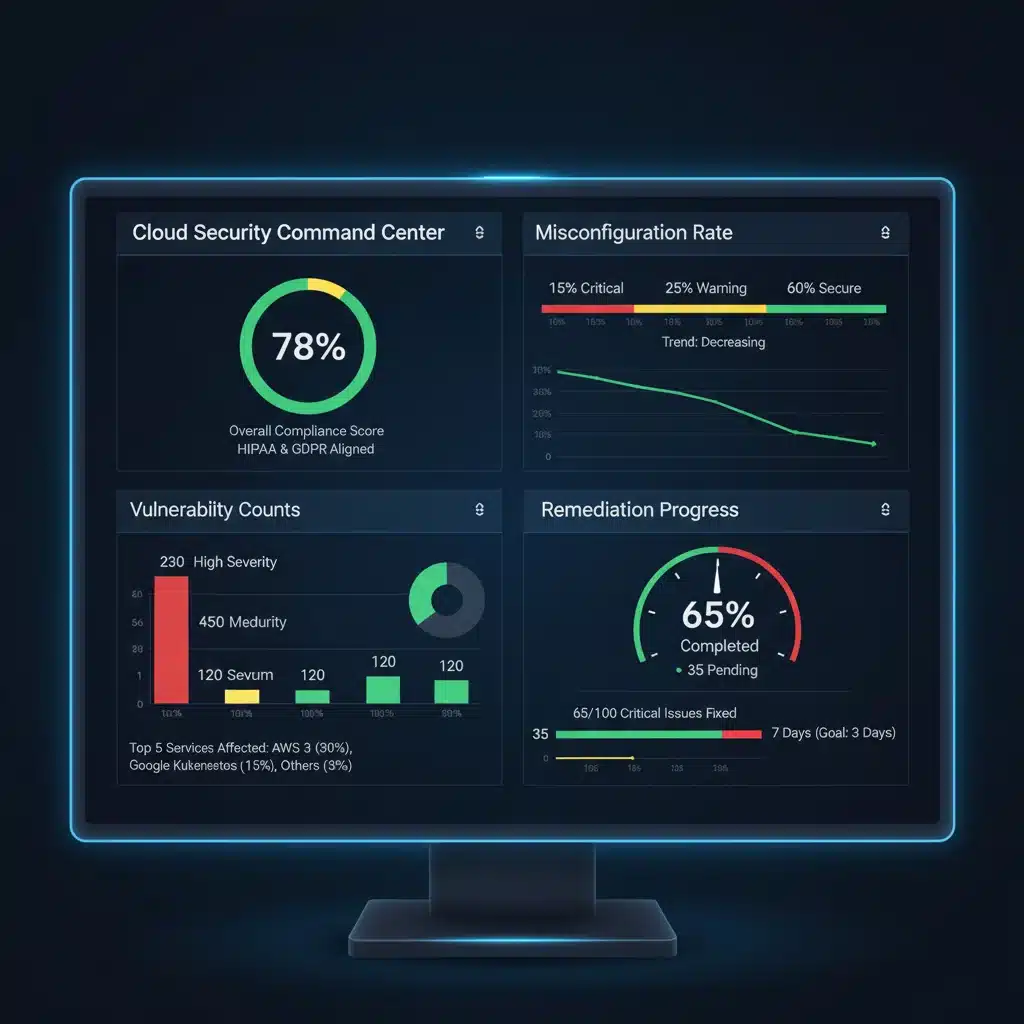
- Performance Metrics and Reporting: Establish key performance indicators (KPIs) and metrics for your Cloud Security Posture Management program. Track progress on risk mitigation, remediation rates, compliance scores, and incident response times. Regular reporting to leadership demonstrates value and highlights areas for improvement.
- Learn from Incidents and Near Misses: Every security incident or even a ‘near miss’ is an opportunity to learn and improve. Conduct post-incident reviews to identify root causes, update policies, and enhance detection and response capabilities.
- Stay Updated with Cloud Provider Innovations: Cloud providers constantly release new security features and services. Stay informed about these advancements and integrate relevant ones into your security strategy to continuously enhance your posture.
- Invest in Talent and Expertise: Continuously invest in training and upskilling your security team to keep pace with cloud technologies and emerging threats. Consider certifications and specialized courses in cloud security.
By embracing these principles, organizations can ensure their Cloud Security Posture Management is not just a one-time project but an ongoing, evolving program that effectively mitigates risks and builds a resilient, secure cloud environment well beyond the Q3 2026 target.
The Path Forward: Achieving Cloud Security Resilience by Q3 2026
The journey to a truly secure cloud environment is continuous, but by systematically implementing these five essential steps in Cloud Security Posture Management, organizations can make significant strides towards mitigating risks by Q3 2026. The increasing sophistication of cyber threats and the expanding complexity of cloud infrastructures necessitate a proactive, automated, and integrated approach to security.
Recap of the 5 Essential Steps:
- Establish Comprehensive Cloud Asset Inventory and Visibility: Know what you have in the cloud.
- Define and Enforce Security Baselines and Policies: Set the rules for how your cloud should be secured.
- Implement Continuous Monitoring and Anomaly Detection: Watch for deviations and suspicious activities in real-time.
- Prioritize and Automate Remediation of Identified Risks: Fix issues efficiently and effectively.
- Foster a Culture of Security and Continuous Improvement: Empower your people and evolve your processes.
Embracing a robust Cloud Security Posture Management strategy is not merely about avoiding fines or preventing breaches; it’s about enabling business innovation with confidence. It allows organizations to leverage the full potential of cloud computing without being held back by security concerns. By integrating CSPM into daily operations, fostering collaboration, and committing to continuous improvement, businesses can build a resilient and trustworthy cloud infrastructure that supports their strategic objectives.
The target of mitigating cloud security risks by Q3 2026 is ambitious yet achievable with a dedicated and structured approach to Cloud Security Posture Management. Start today, assess your current posture, and embark on this critical journey to secure your cloud future.