NIST Cloud Security: 2026 Guidelines & US Business Impact
The digital landscape is in a constant state of flux, with new technologies emerging and evolving at an unprecedented pace. Cloud computing, in particular, has become the backbone of modern business operations, offering unparalleled scalability, flexibility, and cost-efficiency. However, this transformative power comes with inherent security challenges. As organizations increasingly migrate their critical data and applications to the cloud, the need for robust and standardized security frameworks becomes paramount. The National Institute of Standards and Technology (NIST) has long been at the forefront of developing such frameworks, providing essential guidance for both government agencies and private sector entities. Their guidelines are not merely suggestions; they are often seen as the gold standard for cybersecurity practices, influencing regulatory requirements and industry best practices across the United States and beyond.
The anticipation surrounding the release of new NIST cloud security guidelines for 2026 is palpable within the cybersecurity community and among US businesses. These forthcoming guidelines are expected to address the latest threats, technological advancements, and evolving regulatory environments, setting a new benchmark for cloud security posture. For US businesses, understanding and preparing for these changes is not just a matter of compliance; it’s a strategic imperative for safeguarding assets, maintaining customer trust, and ensuring operational continuity. Failure to adapt could result in significant financial penalties, reputational damage, and severe operational disruptions. This comprehensive article delves into the projected scope of the 2026 NIST cloud security guidelines, analyzes their potential impact on US businesses, and provides actionable strategies for proactive preparation and enhancement of your overall cloud security posture.
Understanding the Evolution of NIST Cloud Security Guidelines
NIST’s journey in defining cybersecurity standards is a testament to its commitment to national security and economic prosperity. Over the years, NIST has published a series of influential documents, most notably the NIST Cybersecurity Framework (CSF) and various Special Publications (SPs) specifically tailored to cloud computing. These documents have provided foundational principles for risk management, incident response, and data protection in cloud environments. The existing guidelines, such as NIST SP 800-53, NIST SP 800-145, and NIST SP 800-144, have served as crucial references for organizations navigating the complexities of cloud security.
However, the threat landscape is dynamic. New vulnerabilities emerge daily, sophisticated attack vectors are developed, and the very architecture of cloud services continues to evolve. What was considered cutting-edge security a few years ago might be insufficient today. This continuous evolution necessitates periodic updates to security guidelines to ensure they remain relevant, effective, and capable of addressing contemporary challenges. The 2026 NIST cloud security guidelines are anticipated to be a significant update, reflecting the latest advancements in cloud technology, emerging cyber threats, and the lessons learned from recent high-profile breaches. These updates are crucial for maintaining the integrity and resilience of cloud infrastructure across the nation.
Key drivers for these updates typically include:
- Advanced Persistent Threats (APTs): The increasing sophistication of state-sponsored and organized cybercrime groups demands more stringent security measures.
- Supply Chain Risks: Dependencies on third-party cloud service providers (CSPs) introduce complex supply chain vulnerabilities that need to be addressed comprehensively.
- Emerging Technologies: The integration of artificial intelligence (AI), machine learning (ML), serverless computing, and edge computing into cloud environments creates new attack surfaces and unique security considerations.
- Regulatory Harmonization: A continuous effort to align with other global and domestic regulatory frameworks to reduce compliance burdens and improve overall security posture.
- Increased Cloud Adoption: As more critical systems migrate to the cloud, the potential impact of a security breach escalates, requiring more robust and comprehensive security controls.
The 2026 guidelines are expected to build upon the strong foundation of previous NIST publications while introducing new controls, updated risk management strategies, and enhanced guidance for emerging cloud paradigms. This proactive approach ensures that US businesses remain equipped to face the challenges of an ever-changing cyber world.
Anticipated Key Areas of Focus in the 2026 NIST Cloud Security Guidelines
While the exact details of the 2026 NIST cloud security guidelines are still under wraps, based on current trends, ongoing discussions within the cybersecurity community, and NIST’s historical approach, several key areas are highly likely to receive significant attention. These areas represent critical frontiers in cloud security that businesses must proactively address.
Enhanced Focus on Zero Trust Architecture (ZTA)
The concept of Zero Trust has gained significant traction, moving away from perimeter-based security to a model that assumes no user or device can be trusted by default, regardless of whether they are inside or outside the network. The 2026 guidelines are expected to strongly emphasize the implementation of ZTA principles across all cloud environments. This will likely include more specific guidance on:
- Micro-segmentation: Implementing granular network segmentation to isolate workloads and data, limiting the blast radius of a breach.
- Continuous Verification: Requiring continuous authentication and authorization for every access request, based on context such as user identity, device health, location, and data sensitivity.
- Least Privilege Access: Ensuring users and systems only have the minimum necessary access rights to perform their tasks.
- Identity and Access Management (IAM): Strengthening IAM practices with multi-factor authentication (MFA), adaptive access policies, and robust identity governance.
Supply Chain Security and Third-Party Risk Management
The interconnected nature of cloud ecosystems means that an organization’s security posture is only as strong as its weakest link, which often lies within its supply chain. The SolarWinds attack and other similar incidents have highlighted the critical vulnerabilities introduced by third-party vendors and software components. The 2026 guidelines will likely provide more prescriptive guidance on:
- Vendor Due Diligence: More rigorous processes for assessing the security practices of CSPs and other third-party providers.
- Software Bill of Materials (SBOMs): Requiring detailed SBOMs for software used in cloud environments to enhance transparency and vulnerability management.
- Contractual Obligations: Establishing clearer contractual requirements for security controls, incident response, and audit rights with CSPs.
- Continuous Monitoring of Third Parties: Implementing mechanisms to continuously monitor the security posture of supply chain partners.
Data Governance and Privacy in Hybrid and Multi-Cloud Environments
As businesses increasingly adopt hybrid and multi-cloud strategies, managing data across disparate environments becomes incredibly complex. Ensuring data privacy, residency, and compliance with various regulations (e.g., GDPR, CCPA, HIPAA) is a monumental task. The new guidelines are expected to offer more specific recommendations on:
- Data Classification: Robust frameworks for classifying data based on sensitivity and regulatory requirements.
- Data Loss Prevention (DLP): Enhanced controls and strategies for preventing unauthorized data exfiltration.
- Encryption Key Management: Best practices for managing encryption keys across multiple cloud providers and on-premises infrastructure.
- Cross-Cloud Data Flow Management: Securely managing the movement and processing of data between different cloud environments.
Automation and Orchestration for Security Operations
The scale and complexity of cloud environments make manual security processes unsustainable. Automation and orchestration are becoming essential for efficient and effective security operations. The 2026 guidelines will likely encourage and provide guidance on:
- Security Orchestration, Automation, and Response (SOAR): Implementing SOAR platforms to automate incident response, threat hunting, and vulnerability management.
- Infrastructure as Code (IaC) Security: Integrating security into IaC development and deployment pipelines to ensure secure configurations from the outset.
- Continuous Compliance Monitoring: Automating the monitoring and reporting of compliance against security policies and regulatory requirements.
Cloud Native Security and Containerization
The rise of cloud-native applications, microservices, and containerization technologies like Docker and Kubernetes introduces unique security considerations. The guidelines are expected to offer specific recommendations for:
- Container Security: Secure image building, vulnerability scanning, runtime protection, and network segmentation for containers.
- Kubernetes Security: Best practices for securing Kubernetes clusters, including access control, network policies, and API server protection.
- Serverless Function Security: Addressing the unique security challenges of serverless computing, such as function-level access control and vulnerability management.
Impact on US Businesses: Challenges and Opportunities
The new NIST cloud security guidelines for 2026 will undoubtedly present both challenges and opportunities for US businesses across all sectors. Proactive engagement with these changes will be crucial for navigating the evolving regulatory and threat landscape.
Challenges for US Businesses
- Increased Compliance Burden: Businesses, particularly those in regulated industries (e.g., finance, healthcare, government contracting), will face a heightened compliance burden. Adhering to more stringent NIST cloud security standards will require significant investment in resources, technology, and personnel.
- Resource Allocation: Implementing new security controls and processes demands substantial financial investment for new tools, training, and potentially hiring specialized cybersecurity professionals. Smaller businesses with limited budgets may find this particularly challenging.
- Complexity of Implementation: The technical complexity of integrating advanced security measures like Zero Trust architectures or comprehensive supply chain security protocols can be daunting, requiring specialized expertise that is often in short supply.
- Legacy System Integration: Many businesses still rely on legacy systems that may not be easily adaptable to newer cloud-native security paradigms. Integrating these older systems with modern NIST cloud security requirements will be a significant hurdle.
- Cultural Shift: Achieving robust security isn’t just about technology; it requires a cultural shift towards security-first thinking across the entire organization. This can be challenging to instill and maintain.
Opportunities for US Businesses
- Enhanced Security Posture: The most direct benefit is a significantly improved cloud security posture. Adhering to the new guidelines will make businesses more resilient against cyberattacks, reducing the risk of data breaches and their associated costs.
- Competitive Advantage: Businesses that proactively adopt and demonstrate compliance with the new NIST cloud security standards can gain a competitive edge. This can be a strong selling point for customers who prioritize data security and privacy.
- Reduced Risk and Cost Savings: While initial investment may be high, a robust security posture ultimately leads to reduced financial losses from breaches, regulatory fines, and reputational damage. Proactive security is often more cost-effective than reactive incident response.
- Improved Customer Trust: In an era where data breaches are common, demonstrating a strong commitment to security builds trust with customers, partners, and stakeholders.
- Innovation and Efficiency: Implementing advanced security automation and orchestration can streamline security operations, freeing up resources and enabling faster, more secure deployment of new applications and services. This fosters innovation within the organization.
- Alignment with Global Standards: NIST guidelines often influence international security standards. Compliance with the 2026 guidelines can facilitate easier expansion into global markets and simplify compliance with other international regulations.
Strategies for Proactive Preparation and Enhanced Cloud Security Posture
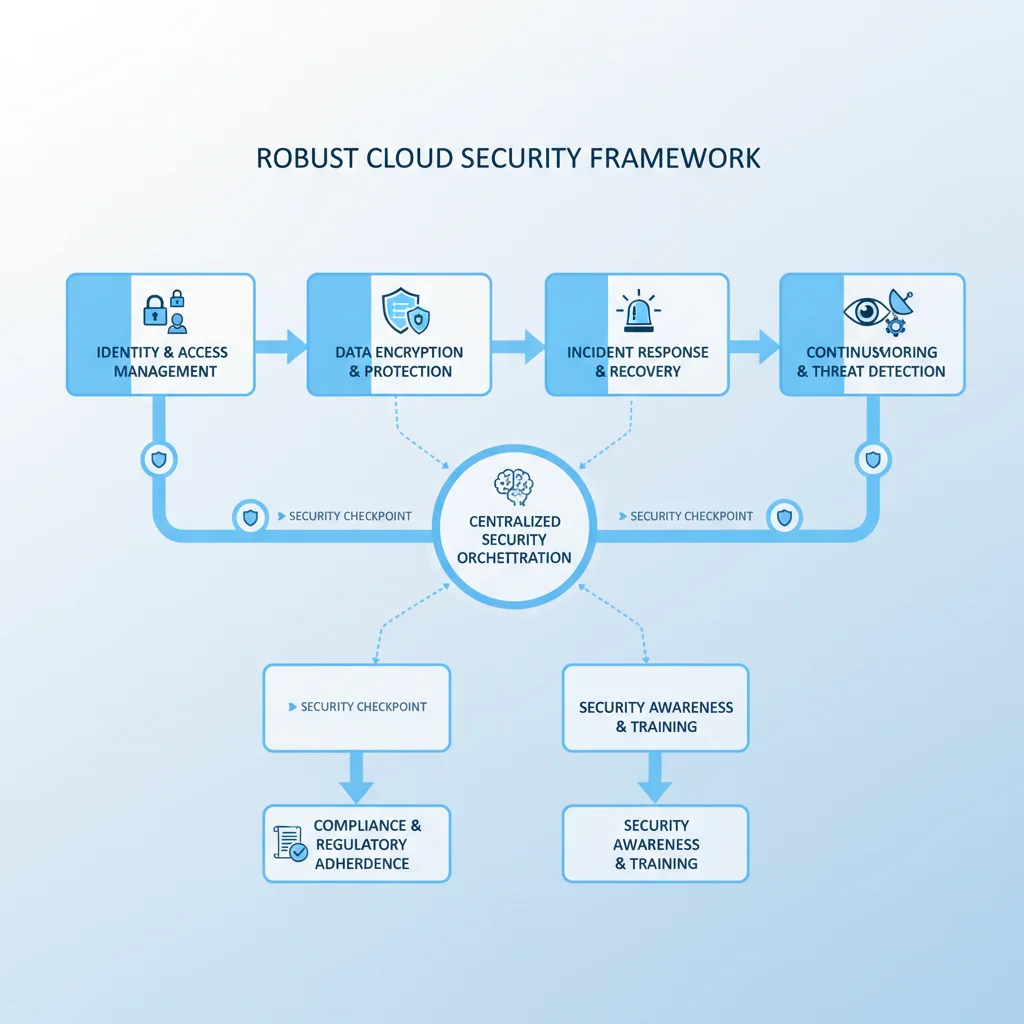
To effectively navigate the upcoming changes and leverage the opportunities presented by the 2026 NIST cloud security guidelines, US businesses should adopt a proactive and strategic approach. Here are key strategies to enhance your cloud security posture:
1. Conduct a Comprehensive Cloud Security Assessment
Before you can improve, you need to know where you stand. Begin with a thorough assessment of your current cloud security posture against existing NIST guidelines (e.g., CSF, SP 800-53) and industry best practices. This assessment should identify:
- Current Gaps: Identify areas where your current controls fall short of existing or anticipated NIST cloud security requirements.
- Asset Inventory: Document all cloud assets, data classifications, and their criticality.
- Risk Profile: Evaluate potential threats and vulnerabilities specific to your cloud environment.
- Compliance Status: Understand your current compliance with relevant regulations and frameworks.
This assessment will provide a baseline and highlight areas requiring immediate attention as you prepare for the 2026 updates.
2. Embrace Zero Trust Principles
Given the anticipated emphasis on Zero Trust Architecture (ZTA), businesses should start integrating ZTA principles into their cloud security strategy now. This involves:
- Implementing Strong IAM: Deploy multi-factor authentication (MFA) everywhere, enforce least privilege access, and regularly review user permissions.
- Micro-segmentation: Begin segmenting your cloud networks to isolate critical applications and data, reducing lateral movement for attackers.
- Continuous Monitoring: Implement tools for continuous monitoring of user behavior, device health, and network traffic for anomalies.
3. Strengthen Supply Chain and Third-Party Risk Management
Proactively address supply chain vulnerabilities by:
- Enhanced Vendor Vetting: Develop a more rigorous due diligence process for all cloud service providers and third-party vendors, including security audits and assessments.
- Contractual Security Requirements: Ensure your contracts with CSPs clearly define security responsibilities, incident response protocols, and audit rights.
- SBOM Integration: Request and review Software Bill of Materials (SBOMs) from your software vendors to understand potential vulnerabilities in your software stack.
4. Invest in Cloud-Native Security Tools and Expertise
As cloud environments become more complex, traditional security tools often fall short. Businesses should invest in cloud-native security solutions that offer:
- Cloud Security Posture Management (CSPM): To continuously monitor and improve your cloud configurations against security benchmarks.
- Cloud Workload Protection Platforms (CWPP): For runtime protection of virtual machines, containers, and serverless functions.
- Cloud Access Security Brokers (CASB): To enforce security policies for cloud applications and data.
- Training and Skill Development: Train your IT and security teams on cloud-native security best practices and the specific security features of your chosen cloud platforms. Consider hiring specialized cloud security architects and engineers.
5. Prioritize Data Governance and Encryption
Data is the crown jewel, and its protection is paramount. Implement robust data governance strategies by:
- Data Classification Policies: Develop and enforce clear policies for classifying data based on its sensitivity and regulatory requirements.
- Encryption Everywhere: Ensure data is encrypted both in transit and at rest across all cloud environments. Implement strong key management practices.
- DLP Solutions: Deploy Data Loss Prevention (DLP) tools to detect and prevent unauthorized data transfers.
6. Automate Security Operations and Compliance
Leverage automation to improve efficiency and reduce human error in security operations:
- Security Automation and Orchestration: Implement SOAR platforms to automate routine security tasks, incident response workflows, and threat intelligence integration.
- DevSecOps Integration: Integrate security checks and controls directly into your development and deployment pipelines (DevSecOps) to build security in from the start.
- Automated Compliance Checks: Use tools that can automatically assess and report on your compliance against NIST cloud security guidelines and other relevant regulations.
7. Develop and Test an Incident Response Plan
Despite the best preventative measures, breaches can occur. A well-defined and regularly tested incident response plan is critical.
- Cloud-Specific IR Plan: Tailor your incident response plan to address the unique challenges of cloud environments, including coordination with CSPs.
- Regular Drills: Conduct tabletop exercises and simulated breach drills to ensure your team is prepared to respond effectively and efficiently.
8. Stay Informed and Engage with NIST
Keep a close watch on NIST publications, workshops, and public comment periods related to the 2026 guidelines. Engaging with NIST through these channels can provide valuable insights and allow your organization to contribute to the development process.

The Role of Cloud Service Providers (CSPs)
It’s important to remember the shared responsibility model in cloud security. While businesses are ultimately responsible for their data and configurations, CSPs play a crucial role in providing the underlying secure infrastructure. The new NIST cloud security guidelines will likely influence CSPs to:
- Enhance Their Offerings: CSPs will likely introduce new features and services to help customers meet the updated NIST requirements.
- Provide Clearer Documentation: Expect more detailed documentation and guidance from CSPs on how their services can be configured to achieve NIST compliance.
- Seek Certifications: CSPs will continue to pursue and highlight certifications and attestations (e.g., FedRAMP, ISO 27001) that demonstrate their adherence to robust security standards, often aligning with NIST.
Businesses should engage in open dialogue with their CSPs to understand how they plan to support the transition to the 2026 guidelines and leverage their security tools and expertise effectively.
Conclusion: A Secure Future with NIST Cloud Security
The release of the 2026 NIST cloud security guidelines marks a pivotal moment for cloud computing in the United States. These updates are not just regulatory hurdles but essential steps towards a more secure and resilient digital infrastructure. For US businesses, this means a renewed focus on proactive security measures, strategic investments in cloud-native security solutions, and a commitment to continuous improvement.
By embracing Zero Trust principles, fortifying supply chain security, prioritizing data governance, and leveraging automation, organizations can not only meet the forthcoming NIST cloud security requirements but also transform their security posture into a significant competitive advantage. The journey to enhanced cloud security is ongoing, but with NIST’s continued guidance and a proactive approach, US businesses can confidently navigate the complexities of the cloud and build a more secure future. Staying informed, investing wisely, and fostering a strong security culture will be the cornerstones of success in this evolving landscape. The time to prepare for 2026 is now, ensuring that your organization is not just compliant, but truly secure.