AI in Cybersecurity: Machine Learning for U.S. Threat Detection by 2026

AI in Cybersecurity: Leveraging Machine Learning in Security Software for U.S. Threat Detection by 2026
The digital frontier is constantly expanding, and with it, the sophistication and frequency of cyber threats. In the United States, the challenge of securing critical infrastructure, sensitive data, and national security interests has become paramount. Traditional cybersecurity measures, while essential, are increasingly struggling to keep pace with the rapid evolution of attack vectors. This is where the transformative power of Artificial Intelligence (AI) and Machine Learning (ML) steps in, poised to redefine the landscape of U.S. threat detection and response by 2026. The integration of AI Cybersecurity U.S. strategies is not just an enhancement; it’s a fundamental shift in how we perceive and combat digital adversaries.
The promise of AI in cybersecurity lies in its ability to process vast amounts of data, identify complex patterns, and make predictions at speeds and scales impossible for human analysts. From anomaly detection to predictive analytics, AI-driven security software is becoming the frontline defense against an ever-growing array of cyber threats. This article delves deep into the current state, future potential, and challenges associated with leveraging AI and ML in U.S. cybersecurity, offering a comprehensive outlook towards 2026.
The Escalating Cyber Threat Landscape in the U.S.
Before we explore the solutions, it’s crucial to understand the magnitude of the problem. The U.S. faces a relentless barrage of cyberattacks from state-sponsored actors, organized crime syndicates, and individual malicious entities. These attacks target everything from government agencies and critical infrastructure (energy grids, water systems, healthcare) to financial institutions and private corporations. The motivations are diverse, ranging from espionage and intellectual property theft to financial gain and geopolitical destabilization.
Recent years have seen a significant increase in ransomware attacks, supply chain compromises, and sophisticated phishing campaigns. The average cost of a data breach continues to rise, impacting not only the financial stability of organizations but also consumer trust and national security. The sheer volume of digital interactions, coupled with the proliferation of IoT devices and cloud computing, expands the attack surface exponentially, making traditional, signature-based detection methods increasingly inadequate. This challenging environment underscores the urgent need for more intelligent, adaptive, and proactive security solutions, making AI Cybersecurity U.S. initiatives a national imperative.
Why AI and Machine Learning are Game Changers for U.S. Threat Detection
The limitations of conventional security systems stem from their reactive nature. They often rely on known threat signatures or predefined rules, making them vulnerable to novel or polymorphic attacks. AI and machine learning offer a paradigm shift, enabling proactive and adaptive defense mechanisms. Here’s how:
1. Advanced Anomaly Detection
AI algorithms can establish baselines of normal network behavior by analyzing vast datasets of traffic, user activities, and system logs. Any deviation from these baselines, no matter how subtle, can be flagged as a potential anomaly, indicative of a new or evolving threat. This capability is crucial for detecting zero-day exploits and advanced persistent threats (APTs) that bypass traditional defenses. The power of AI Cybersecurity U.S. lies in its ability to learn and adapt, continuously refining its understanding of ‘normal’ and ‘malicious’ behavior.
2. Predictive Threat Intelligence
Machine learning models can analyze historical attack data, global threat intelligence feeds, and geopolitical events to predict future attack trends and vulnerabilities. This allows U.S. organizations to anticipate threats and implement preventative measures before an attack even occurs. Predictive analytics can identify potential targets, common attack vectors, and emerging malware families, providing invaluable foresight to security teams.
3. Automated Incident Response
Beyond detection, AI can automate significant portions of incident response. Upon identifying a threat, AI-powered systems can automatically isolate compromised systems, block malicious IPs, revoke user access, and even patch vulnerabilities. This drastically reduces response times, minimizes damage, and frees up human analysts to focus on more complex strategic tasks. The efficiency gained through automated responses is a cornerstone of effective AI Cybersecurity U.S. strategies.
4. Enhanced Malware Analysis
Traditional antivirus software relies on signatures, which are often outdated. ML algorithms can analyze the behavioral characteristics of files and code, identifying malicious intent even in previously unseen malware. This includes polymorphic and metamorphic malware that constantly changes its signature to evade detection. Deep learning techniques, in particular, are proving highly effective in discerning subtle malicious patterns.
5. User and Entity Behavior Analytics (UEBA)
AI-driven UEBA solutions monitor user and entity behavior within a network to detect suspicious activities that might indicate insider threats or compromised accounts. By analyzing login patterns, access times, data transfers, and application usage, AI can identify deviations from typical behavior, such as an employee accessing unusual files or an account logging in from an unfamiliar location. This is critical for internal threat detection, a growing concern for U.S. enterprises.
Current Applications of AI in U.S. Security Software
Several leading cybersecurity vendors and government agencies in the U.S. are already integrating AI and ML into their security software solutions. These applications span various domains:
- Endpoint Detection and Response (EDR): AI enhances EDR solutions by rapidly analyzing endpoint activities, identifying malicious processes, and automatically remediating threats on individual devices.
- Network Intrusion Detection Systems (NIDS) and Intrusion Prevention Systems (IPS): AI-powered NIDS/IPS can detect sophisticated network intrusions by analyzing traffic patterns for anomalies and known attack signatures at high speeds.
- Security Information and Event Management (SIEM): AI augments SIEM platforms by correlating events from disparate sources, identifying complex attack campaigns, and reducing false positives, allowing analysts to focus on genuine threats.
- Cloud Security: As more U.S. organizations move to the cloud, AI is crucial for securing cloud environments, detecting misconfigurations, identifying suspicious access patterns, and protecting sensitive data stored in cloud infrastructure.
- Threat Intelligence Platforms: AI helps aggregate, analyze, and disseminate threat intelligence, providing actionable insights to security teams and automating the enrichment of threat data.
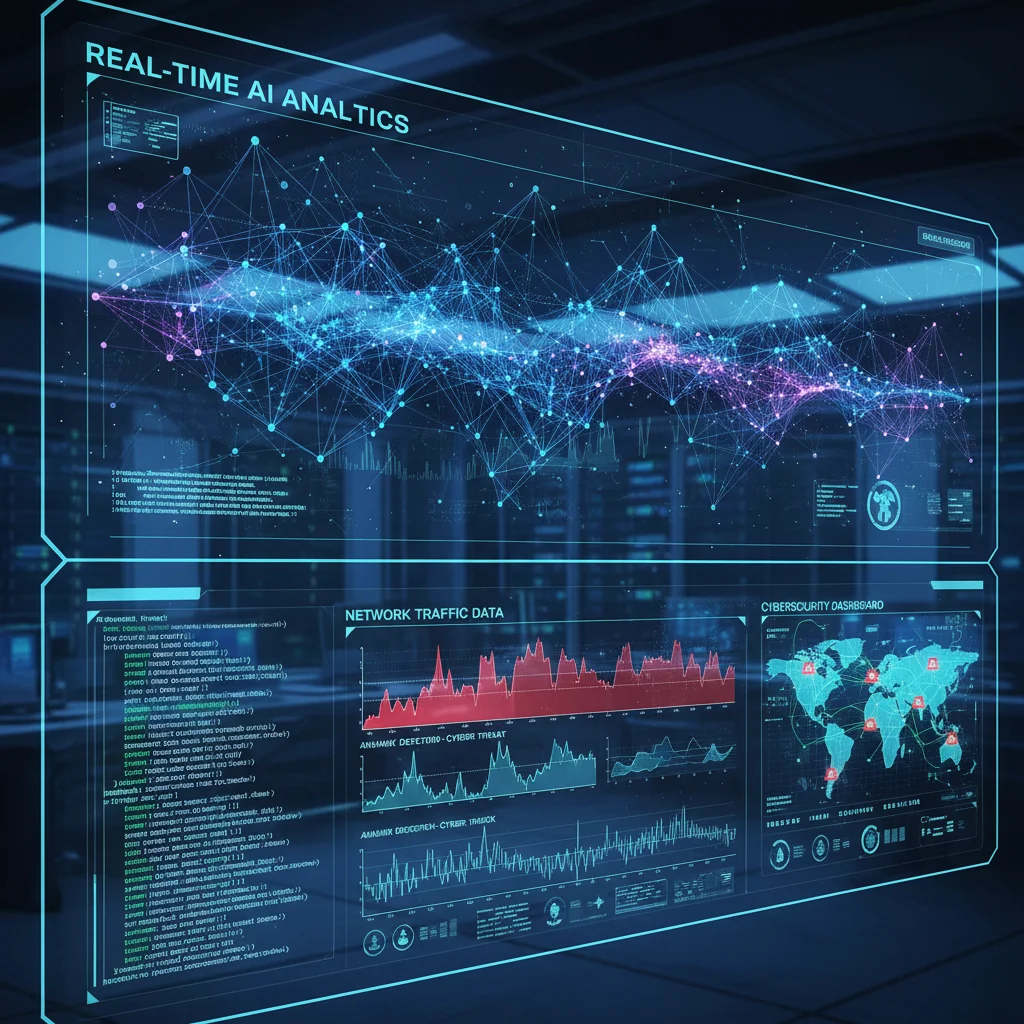
The Road to 2026: Predictions and Projections for AI Cybersecurity U.S.
By 2026, the integration of AI and ML into U.S. cybersecurity is expected to reach new levels of sophistication and ubiquity. Here are some key predictions:
1. Hyper-Automation of Security Operations
Security Operations Centers (SOCs) will increasingly rely on AI for hyper-automation, where routine tasks like alert triage, initial investigations, and threat containment are handled autonomously. This will allow human analysts to transition from reactive firefighting to proactive threat hunting, strategic planning, and complex incident resolution. The role of the human will shift from data processing to decision-making and ethical oversight of AI systems.
2. Adaptive and Self-Healing Security Architectures
Security infrastructures will become more adaptive, capable of learning from attacks and automatically reconfiguring defenses. This includes self-healing networks that can isolate compromised segments, dynamically adjust firewall rules, and even deploy honeypots to analyze attacker behavior. This level of resilience will be critical for protecting dynamic and distributed U.S. enterprise environments.
3. AI-Powered Deception Technologies
Deception technologies, which involve deploying fake systems and data to lure and trap attackers, will be significantly enhanced by AI. AI can dynamically generate realistic decoys, adapt their behavior to specific threats, and analyze attacker interactions to gather invaluable intelligence without risking actual assets. This proactive approach will be a vital component of AI Cybersecurity U.S. defense strategies.
4. Enhanced Supply Chain Security
Given the increasing number of supply chain attacks, AI will play a crucial role in monitoring the security posture of third-party vendors and partners. ML models can assess risk, detect anomalies in vendor software, and identify potential vulnerabilities introduced through the supply chain, providing a more holistic view of an organization’s attack surface.
5. The Rise of Explainable AI (XAI) in Security
As AI systems become more complex, the need for transparency and explainability will grow. By 2026, there will be a greater emphasis on Explainable AI (XAI) in cybersecurity. This means AI models will not only detect threats but also provide clear, understandable explanations for their decisions, helping human analysts trust and validate AI recommendations, particularly in critical U.S. national security contexts.
6. Quantum-Resistant AI Security
While still emerging, the threat of quantum computing breaking current encryption standards will drive research into quantum-resistant cryptographic solutions. AI will likely play a role in developing and validating these new cryptographic algorithms, as well as in identifying vulnerabilities in existing systems that could be exploited by quantum adversaries. This forward-looking aspect is crucial for the long-term resilience of AI Cybersecurity U.S. defenses.
Challenges and Considerations for AI Cybersecurity U.S. Adoption
Despite its immense potential, the widespread adoption of AI in U.S. cybersecurity is not without its challenges:
1. Data Quality and Bias
AI models are only as good as the data they are trained on. Biased or incomplete datasets can lead to flawed models that misidentify threats or generate excessive false positives. Ensuring access to clean, diverse, and representative cybersecurity data is crucial for effective AI deployment.
2. The AI Arms Race
As defenders increasingly use AI, attackers will also leverage AI and ML to develop more sophisticated and evasive attacks. This creates an AI arms race, where both sides continuously innovate, demanding constant vigilance and adaptation from U.S. security teams.
3. Skills Gap
There’s a significant shortage of cybersecurity professionals with expertise in AI and machine learning. Bridging this skills gap through education, training, and recruitment will be vital for maximizing the benefits of AI in security operations across the U.S.
4. Ethical and Legal Implications
The use of AI in monitoring and data analysis raises ethical concerns regarding privacy, surveillance, and accountability. Establishing clear ethical guidelines and legal frameworks for AI deployment in cybersecurity is essential, especially in government and sensitive sectors.
5. Cost and Complexity of Implementation
Implementing and maintaining advanced AI-powered security solutions can be costly and complex, requiring significant investment in infrastructure, talent, and ongoing research. This can be a barrier for smaller organizations or those with limited resources.
6. Explainability and Trust
The ‘black box’ nature of some AI models can make it difficult for human analysts to understand why a certain decision was made. This lack of explainability can hinder trust and adoption, especially in high-stakes environments where human oversight is critical. The push for XAI will be paramount.

Government Initiatives and Policy Towards AI Cybersecurity U.S.
The U.S. government recognizes the strategic importance of AI in cybersecurity. Various initiatives are underway to foster research, development, and responsible deployment of AI in national security and critical infrastructure protection. These include:
- NIST (National Institute of Standards and Technology) Frameworks: NIST continues to develop guidelines and frameworks for AI risk management and cybersecurity, aiming to provide a standardized approach for integrating AI securely and effectively.
- Department of Defense (DoD) AI Strategy: The DoD is heavily investing in AI for defensive and offensive cyber operations, aiming to enhance situational awareness, automate threat detection, and improve response capabilities.
- National AI Initiative: This broader initiative aims to ensure U.S. leadership in AI, with significant implications for cybersecurity research and workforce development.
- Public-Private Partnerships: Collaboration between government agencies, academia, and private industry is crucial for sharing threat intelligence, developing innovative AI solutions, and addressing the skills gap.
These policy efforts are designed to accelerate the adoption of AI Cybersecurity U.S. solutions while addressing the associated risks and ethical considerations. The goal is to create a robust ecosystem where AI can thrive as a force multiplier for national cyber defense.
The Human Element in AI-Powered Cybersecurity
While AI and ML promise to automate and enhance many aspects of cybersecurity, it’s crucial to remember that they are tools. The human element remains indispensable. By 2026, the role of cybersecurity professionals will evolve, not diminish. They will be responsible for:
- Training and Tuning AI Models: Ensuring AI systems are fed with high-quality data and continuously refined to adapt to new threats.
- Strategic Decision-Making: Interpreting AI insights, making high-level strategic decisions, and overseeing automated responses.
- Ethical Oversight: Ensuring AI systems operate within ethical boundaries and do not lead to unintended consequences.
- Creative Problem Solving: Addressing novel threats and complex attack scenarios that even advanced AI might struggle with.
- Threat Hunting: Utilizing AI as a powerful assistant to proactively search for threats that might evade automated detection.
The future of AI Cybersecurity U.S. is one of augmented intelligence, where humans and machines collaborate seamlessly to achieve a level of security far beyond what either could accomplish alone. Training programs and educational initiatives must adapt to prepare the next generation of cybersecurity professionals for this AI-driven future.
Conclusion: Securing the Digital Future with AI Cybersecurity U.S.
By 2026, Artificial Intelligence and Machine Learning will be deeply embedded in the fabric of U.S. cybersecurity, transforming threat detection, response, and prevention. These technologies offer an unparalleled ability to analyze vast data, identify complex patterns, and automate critical security functions, providing a much-needed edge against increasingly sophisticated adversaries. While challenges such as data quality, the AI arms race, and the skills gap need to be addressed, the strategic imperative to leverage AI is undeniable.
The journey towards a more secure digital future for the United States hinges on continued investment in AI research and development, fostering public-private collaboration, and cultivating a highly skilled cybersecurity workforce capable of harnessing the full potential of these transformative technologies. The proactive adoption of AI Cybersecurity U.S. strategies is not merely an option; it is an essential step towards safeguarding national security, economic stability, and individual privacy in an increasingly interconnected world. The era of intelligent defense is here, and its impact by 2026 will be profound.