Advanced Threat Protection: Next-Gen Security for US Businesses 2026
In the rapidly evolving digital landscape of 2026, the stakes for business cybersecurity have never been higher. U.S. businesses face a relentless barrage of sophisticated cyber threats, ranging from highly targeted ransomware attacks and advanced persistent threats (APTs) to increasingly cunning phishing campaigns and supply chain vulnerabilities. Traditional security measures, once considered robust, are often insufficient against these modern adversaries. This is where Advanced Threat Protection (ATP) emerges not just as an advantage, but as an absolute necessity. This comprehensive guide will delve deep into the world of next-generation security software and strategies, equipping U.S. businesses with the knowledge and tools required to fortify their digital defenses and navigate the complex threat landscape of the coming years.
The digital transformation accelerated by recent global events has expanded attack surfaces exponentially. Cloud adoption, remote workforces, and the proliferation of IoT devices have created new entry points for cybercriminals. Consequently, the financial and reputational costs of a successful breach are escalating, making proactive and sophisticated security paramount. This article will explore the core tenets of Advanced Threat Protection, examine the key technologies driving next-gen security, and provide actionable insights for U.S. businesses to implement and maintain a resilient cybersecurity posture in 2026 and beyond.
Understanding the Evolving Threat Landscape for U.S. Businesses in 2026
Before diving into the specifics of Advanced Threat Protection, it’s crucial to understand the nature of the threats U.S. businesses are up against. Cybercriminals are no longer relying on simple, opportunistic attacks. They are well-funded, highly organized, and often state-sponsored, employing advanced tactics, techniques, and procedures (TTPs) that bypass conventional security solutions.
Key Threat Vectors and Trends:
- Ransomware 2.0: Beyond encrypting data, modern ransomware often involves data exfiltration, threatening to publish sensitive information if the ransom isn’t paid. This ‘double extortion’ tactic significantly increases pressure on victims.
- Supply Chain Attacks: Compromising a single vendor can provide access to numerous downstream clients. These attacks are notoriously difficult to detect and defend against due to their indirect nature.
- Advanced Persistent Threats (APTs): These highly sophisticated, long-term attacks aim to gain persistent access to a network, often for espionage or intellectual property theft. They are characterized by low and slow techniques, making them hard to spot.
- Phishing and Spear-Phishing: These social engineering tactics are becoming increasingly sophisticated, using AI-generated content and highly personalized messages to trick employees into revealing credentials or installing malware.
- Cloud Vulnerabilities: Misconfigurations in cloud environments, insecure APIs, and insufficient access controls continue to be major weak points that attackers exploit.
- IoT and Edge Device Exploitation: The growing number of interconnected devices, from smart sensors to industrial control systems, presents a vast and often unsecured attack surface.
- AI-Powered Attacks: Adversaries are leveraging artificial intelligence and machine learning to automate attacks, develop more convincing phishing lures, and evade detection.
These evolving threats necessitate a shift from reactive, signature-based security to a proactive, intelligent, and adaptive approach, which is precisely what Advanced Threat Protection aims to deliver.
What is Advanced Threat Protection (ATP)?
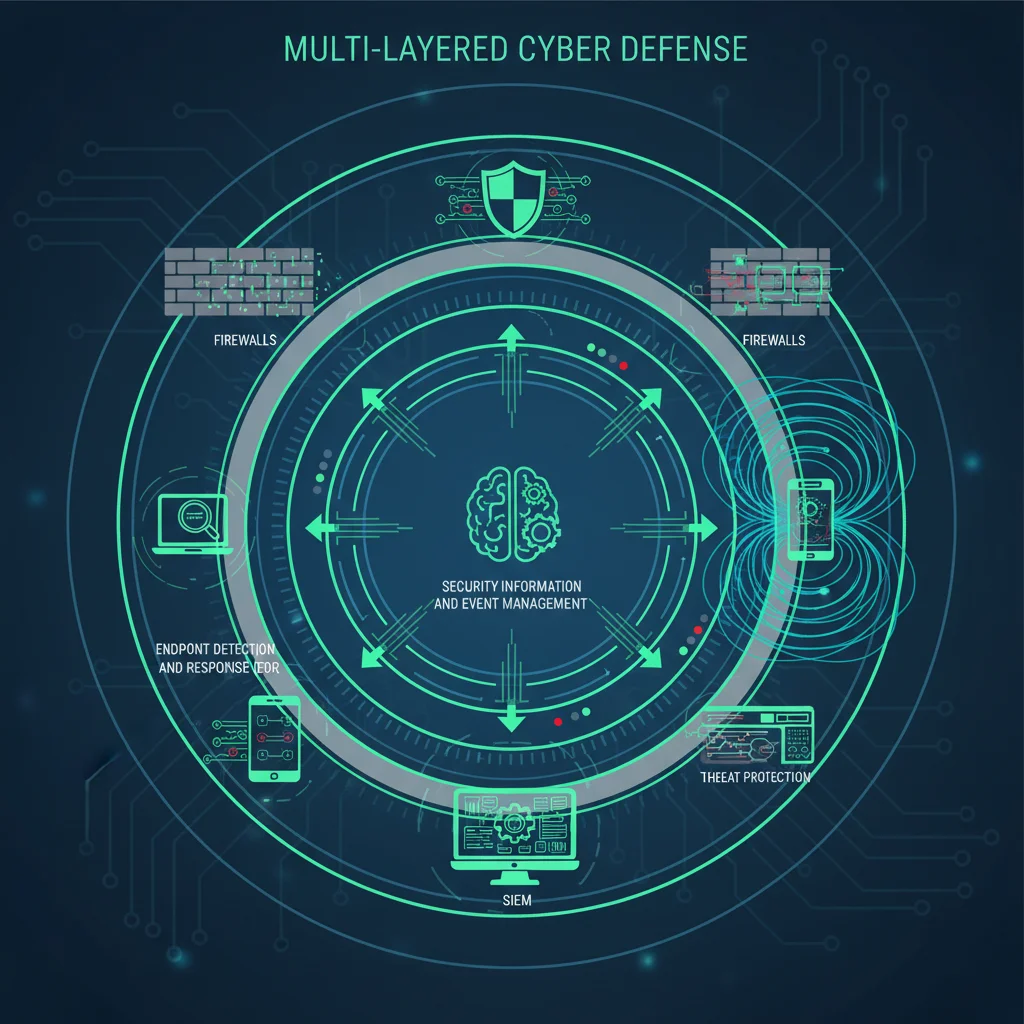
Advanced Threat Protection (ATP) refers to a category of cybersecurity solutions that defend against sophisticated malware and hacking attempts that bypass traditional security measures such as firewalls, antivirus software, and intrusion prevention systems. Unlike traditional security, which primarily relies on known threat signatures, ATP employs a multi-layered approach using advanced analytics, behavioral analysis, machine learning, and threat intelligence to detect and prevent unknown and emerging threats.
Core Principles of ATP:
- Preventative Measures: While no solution can prevent 100% of attacks, ATP focuses on proactive measures to block threats before they can cause damage.
- Detection and Analysis: ATP excels at identifying anomalous behavior and indicators of compromise (IoCs) that signal a sophisticated attack in progress.
- Response and Remediation: Once a threat is detected, ATP solutions facilitate rapid response, containment, and remediation to minimize impact.
- Continuous Monitoring: Constant surveillance of network traffic, endpoints, and cloud environments is crucial for identifying stealthy attacks.
- Threat Intelligence Integration: Leveraging global and contextual threat intelligence to stay ahead of new attack vectors and TTPs.
Key Components of Next-Generation Advanced Threat Protection Software
A robust Advanced Threat Protection strategy in 2026 for U.S. businesses involves integrating several cutting-edge security technologies. These components work in concert to create a comprehensive defense posture.
1. Endpoint Detection and Response (EDR) and Extended Detection and Response (XDR)
- EDR: Focuses on endpoints (laptops, desktops, servers) to continuously monitor for malicious activity. EDR solutions collect and analyze endpoint data, detect suspicious behaviors, provide forensic capabilities, and enable rapid response to incidents. They move beyond traditional antivirus by offering deep visibility into endpoint processes and actions.
- XDR: Extends EDR capabilities across multiple security layers, including endpoints, networks, cloud environments, and email. XDR centralizes and correlates data from various sources, providing a unified view of threats and enabling faster, more effective detection and response across the entire IT ecosystem. This holistic approach is critical for combating sophisticated, multi-stage attacks.
2. Network Detection and Response (NDR)
NDR solutions monitor network traffic for suspicious patterns and anomalies that indicate an attack. By analyzing metadata and packet contents, NDR can detect lateral movement, command-and-control communications, data exfiltration, and other signs of compromise that might bypass endpoint-centric defenses. NDR plays a vital role in identifying threats that have already breached initial perimeters.
3. Security Information and Event Management (SIEM) and Security Orchestration, Automation, and Response (SOAR)
- SIEM: Gathers security logs and event data from across an organization’s IT infrastructure, including servers, network devices, applications, and security tools. It then normalizes, aggregates, and analyzes this data to identify security incidents and compliance violations. Modern SIEMs leverage AI and machine learning for more intelligent threat detection.
- SOAR: Integrates with SIEM and other security tools to automate incident response workflows. SOAR platforms help security teams manage and prioritize alerts, automate repetitive tasks (like blocking IPs or isolating compromised systems), and orchestrate complex response playbooks, significantly reducing response times and improving efficiency.
4. Cloud Access Security Brokers (CASB) and Secure Access Service Edge (SASE)
- CASB: Addresses the security challenges of cloud adoption by enforcing security policies across all cloud services, whether sanctioned or unsanctioned. CASBs provide visibility into cloud usage, data loss prevention (DLP), threat protection, and compliance assurance for cloud-based data and applications.
- SASE: A comprehensive cloud-native architecture that converges networking and security functions into a single, integrated service. SASE combines elements like SD-WAN, CASB, Zero Trust Network Access (ZTNA), and Firewall-as-a-Service (FWaaS) to provide secure, high-performance access to resources from anywhere, for any user or device. This is particularly relevant for distributed workforces and hybrid cloud environments.
5. Threat Intelligence Platforms (TIP)
TIPs aggregate, normalize, and analyze threat intelligence from various sources (open-source, commercial, government, internal). They provide actionable insights into current and emerging threats, adversary TTPs, and vulnerabilities, enabling organizations to proactively adjust their defenses and make informed security decisions. Integrating TIPs with other security tools enhances their ability to detect and respond to novel threats.
Implementing Advanced Threat Protection: A Strategic Roadmap for U.S. Businesses
Successfully implementing Advanced Threat Protection requires more than just purchasing software; it demands a strategic, phased approach that integrates technology with people and processes.
Phase 1: Assessment and Planning
- Risk Assessment: Identify critical assets, potential vulnerabilities, and the most likely threat vectors relevant to your specific industry and business operations. Understand your organization’s risk tolerance.
- Current Security Posture Review: Evaluate existing security tools, policies, and procedures. Identify gaps where traditional defenses fall short against advanced threats.
- Define Security Objectives: Clearly articulate what you aim to achieve with ATP (e.g., reduce dwell time, improve incident response, enhance compliance).
- Budget Allocation: Secure adequate resources, understanding that ATP is an ongoing investment, not a one-time purchase.
- Team Readiness: Assess your internal security team’s skills and capacity. Determine if you need to hire, train, or outsource.
Phase 2: Technology Selection and Integration
- Vendor Evaluation: Research leading ATP vendors. Look for solutions that offer comprehensive coverage, strong detection capabilities, ease of integration, and excellent support. Consider industry-specific compliance requirements.
- Phased Deployment: Implement ATP components incrementally. Start with critical areas (e.g., endpoints, email gateways) and expand gradually.
- Integration Strategy: Ensure new ATP solutions integrate seamlessly with your existing IT infrastructure and other security tools. A unified security platform or an XDR approach can simplify this.
- Proof of Concept (PoC): Conduct a PoC to test the effectiveness of chosen solutions in your environment before full-scale deployment.
Phase 3: Operations and Optimization
- Continuous Monitoring and Alert Management: Establish robust processes for monitoring alerts generated by ATP systems. Prioritize and investigate high-fidelity alerts.
- Incident Response Plan (IRP) Enhancement: Integrate ATP insights into your IRP. Ensure your team is trained to use ATP tools for rapid detection, containment, eradication, and recovery.
- Regular Testing and Drills: Conduct penetration testing, red team exercises, and tabletop drills to test the effectiveness of your ATP solutions and the readiness of your security team.
- Threat Intelligence Feed Integration: Continuously feed relevant threat intelligence into your ATP systems to keep them updated against new TTPs.
- Security Awareness Training: Educate employees about the latest phishing techniques and social engineering tactics. A strong human firewall is an essential complement to any technological solution.
- Performance Tuning: Regularly review and fine-tune ATP configurations to optimize performance, minimize false positives, and ensure maximum detection accuracy.
- Compliance and Reporting: Ensure your ATP strategy helps meet regulatory compliance requirements and generate regular reports on security posture and incident metrics.
Challenges and Considerations for U.S. Businesses
While the benefits of Advanced Threat Protection are clear, U.S. businesses must also be aware of potential challenges and key considerations:
1. Cost and Resource Constraints:
Implementing and maintaining advanced security solutions can be expensive. Small and medium-sized businesses (SMBs) may find it challenging to allocate sufficient budget and skilled personnel. Managed Security Service Providers (MSSPs) specializing in ATP can be a cost-effective alternative.
2. Skill Gap:
The cybersecurity talent shortage is a significant issue. Finding and retaining professionals with expertise in advanced threat detection, incident response, and security analytics is difficult. Automation through SOAR and leveraging MSSPs can help mitigate this.
3. Alert Fatigue:
ATP systems can generate a high volume of alerts. Without proper tuning and a robust security operations center (SOC) or MSSP, security teams can become overwhelmed, leading to missed critical incidents.
4. Integration Complexities:
Integrating disparate security tools can be complex and time-consuming. Opting for unified platforms like XDR or SASE can simplify management and improve overall efficacy.
5. Evolving Threat Landscape:
Cyber threats are constantly evolving. ATP solutions require continuous updates, monitoring, and adaptation to remain effective against new attack vectors. This necessitates a commitment to ongoing investment and vigilance.
6. Regulatory Compliance:
U.S. businesses operate under various compliance frameworks (e.g., HIPAA, CMMC, GDPR if dealing with EU data, CCPA). ATP solutions must be configured to help meet these specific regulatory requirements, which often involve data privacy, integrity, and availability.

The Future of Advanced Threat Protection: AI, ML, and Automation
Looking ahead to 2026 and beyond, the role of artificial intelligence (AI), machine learning (ML), and automation in Advanced Threat Protection will only intensify. These technologies are crucial for keeping pace with AI-powered attacks and managing the sheer volume of security data.
AI and ML in ATP:
- Behavioral Analytics: AI/ML algorithms can establish baselines of normal user and system behavior, enabling them to quickly identify deviations that signify a potential threat, even if it’s a zero-day exploit.
- Predictive Threat Intelligence: AI can analyze vast datasets of global threat intelligence to predict emerging attack trends and patterns, allowing organizations to pre-emptively strengthen defenses.
- Automated Malware Analysis: ML models can rapidly analyze suspicious files and code for malicious characteristics, significantly speeding up the identification of new malware variants.
- Anomaly Detection: AI excels at detecting subtle anomalies in network traffic, log data, and user activity that human analysts might miss.
Automation in ATP (SOAR):
- Faster Incident Response: Automating repetitive tasks and orchestrating response playbooks drastically reduces the time from detection to remediation, minimizing the impact of breaches.
- Reduced Human Error: Automated processes are less prone to human error, ensuring consistent and effective responses to security incidents.
- Improved Efficiency: Freeing up security analysts from manual tasks allows them to focus on more complex investigations and strategic security initiatives.
- Scalability: Automation enables security operations to scale more effectively, handling an increasing volume of alerts and incidents without a proportional increase in human resources.
The synergy between AI, ML, and automation will define the next generation of Advanced Threat Protection, enabling U.S. businesses to build more intelligent, resilient, and adaptive security infrastructures.
Choosing the Right Advanced Threat Protection Solution for Your U.S. Business
Selecting the optimal Advanced Threat Protection solution requires careful consideration of several factors specific to your organization:
1. Business Size and Industry:
SMBs might opt for integrated, simpler solutions or rely on MSSPs, while larger enterprises may require more customizable, multi-vendor approaches. Industry-specific compliance (e.g., healthcare, finance, defense) will heavily influence choices.
2. Existing Infrastructure:
Consider how new ATP solutions will integrate with your current IT environment, including cloud platforms, on-premises systems, and legacy applications.
3. Budget and Resources:
Be realistic about your financial and human resource capabilities. Balance the cost of solutions with the potential cost of a breach. MSSPs can often provide enterprise-grade security at a predictable operational cost.
4. Scalability:
Choose solutions that can scale with your business growth and adapt to future technological changes, such as increased cloud adoption or expansion of IoT devices.
5. Vendor Reputation and Support:
Select vendors with a proven track record, strong customer support, and a commitment to continuous innovation in the cybersecurity space.
6. Ease of Management:
Opt for solutions with intuitive interfaces and centralized management capabilities to reduce operational overhead for your security team.
7. Coverage Across Attack Vectors:
Ensure the chosen ATP solution provides comprehensive protection across all critical attack vectors: email, endpoints, network, cloud, and identity.
Conclusion: Securing the Digital Future with Advanced Threat Protection
For U.S. businesses navigating the complex and perilous digital landscape of 2026, Advanced Threat Protection is no longer a luxury but an indispensable foundation for resilience and continuity. The relentless evolution of cyber threats demands a proactive, multi-layered, and intelligent security strategy that goes far beyond traditional defenses. By embracing next-generation security software and methodologies—including EDR/XDR, NDR, SIEM/SOAR, CASB/SASE, and robust threat intelligence—organizations can build formidable defenses against even the most sophisticated adversaries.
The journey towards a truly secure enterprise is ongoing, requiring continuous investment, adaptation, and a strong commitment to cybersecurity at every level. While technological solutions are paramount, they must be supported by well-trained personnel, clear policies, and an organizational culture that prioritizes security awareness. By strategically implementing and optimizing Advanced Threat Protection, U.S. businesses can not only safeguard their critical assets and reputation but also foster trust, ensure compliance, and confidently innovate in the digital age.
The time to act is now. Proactively fortifying your defenses with cutting-edge ATP solutions will be the defining factor in protecting your business from the cyber challenges of today and tomorrow.