AI-Powered Cyber Threats: 2026 U.S. Business Readiness Checklist

In the rapidly evolving digital landscape, the year 2026 stands as a critical juncture for cybersecurity. The advent of artificial intelligence (AI) has not only revolutionized industries but has also introduced a new paradigm of threats. For U.S. businesses, understanding and preparing for these AI-powered cyber threats is no longer optional; it’s a fundamental requirement for survival and sustained growth. This comprehensive guide serves as your essential 2026 checklist, designed to help you assess whether your security software and overall cyber defenses are truly ready to face the sophisticated challenges ahead. Our focus on AI Cyber Threat Readiness will provide actionable insights and strategic recommendations.
The arms race between cyber defenders and attackers has always been intense, but AI has significantly raised the stakes. Attackers are leveraging AI to automate and scale their operations, create more convincing phishing attempts, discover vulnerabilities faster, and even develop self-modifying malware. On the other hand, AI is also a powerful tool for defense, offering capabilities like predictive analytics, anomaly detection, and automated incident response. The key for U.S. businesses lies in effectively harnessing AI for defense while simultaneously fortifying against AI-driven attacks.
This article will delve into the specific types of AI-powered threats, the essential security software components needed for robust protection, the strategic considerations for implementation, and the critical importance of compliance and continuous adaptation. By the end, you will have a clear roadmap to enhance your organization’s AI Cyber Threat Readiness, ensuring your business remains resilient in the face of an increasingly complex threat landscape.
The Evolving Landscape of AI-Powered Cyber Threats in 2026
To achieve true AI Cyber Threat Readiness, U.S. businesses must first comprehend the nature of the threats they face. AI is no longer just a tool for data analysis; it’s an enabler for unprecedented levels of sophistication in cyberattacks. Here are some of the key AI-powered threats that are expected to dominate the threat landscape by 2026:
1. Advanced Phishing and Social Engineering
AI-driven natural language processing (NLP) and machine learning (ML) allow attackers to craft highly personalized and contextually relevant phishing emails, messages, and voice impersonations. These attacks are virtually indistinguishable from legitimate communications, making traditional human-based detection methods less effective. AI can analyze vast amounts of publicly available information to create compelling narratives, exploit psychological vulnerabilities, and bypass even the most vigilant employees.
2. Polymorphic and Evasive Malware
AI is being used to develop malware that can dynamically alter its code and behavior to evade detection by traditional signature-based antivirus software. This polymorphic malware can learn from its environment, adapt to defensive measures, and continuously mutate, making it incredibly difficult to quarantine and eliminate. Such threats can lie dormant for extended periods, gathering intelligence before launching a targeted, devastating attack.
3. Automated Vulnerability Exploitation
AI systems can rapidly scan networks, identify vulnerabilities, and even develop custom exploits much faster than human attackers. This automation significantly reduces the time between a vulnerability’s discovery and its exploitation, shrinking the window for organizations to patch their systems. Zero-day exploits, once rare, could become more common as AI accelerates their discovery and deployment.
4. AI-Powered Distributed Denial of Service (DDoS) Attacks
While DDoS attacks are not new, AI can make them far more potent. AI can coordinate botnets more effectively, identify critical infrastructure points to target, and adapt attack patterns to bypass traditional DDoS mitigation techniques. These intelligent DDoS attacks can be more sustained, harder to attribute, and capable of causing more significant disruption to business operations.
5. Data Poisoning and Model Evasion Attacks
As businesses increasingly rely on AI and ML models for decision-making, new attack vectors emerge. Data poisoning involves injecting malicious data into training datasets, causing the AI model to learn incorrect or biased information, leading to flawed decisions or backdoors. Model evasion attacks involve subtly altering input data to trick an AI model into misclassifying it, allowing malicious content or actions to bypass AI-driven security controls.
6. Deepfakes and Synthetic Media
The rise of AI-generated deepfakes poses a significant threat to identity verification, corporate reputation, and even national security. Attackers can use deepfakes to impersonate executives for fraudulent transactions, spread misinformation, or manipulate public opinion. Businesses must consider how to verify the authenticity of digital communications and media in an era where anything can be convincingly faked.
2026 U.S. Business Checklist: Essential Security Software for AI Cyber Threat Readiness
Achieving robust AI Cyber Threat Readiness requires a multi-layered defense strategy underpinned by advanced security software. Here’s a checklist of essential software components U.S. businesses should have in place or be actively implementing by 2026:
1. AI-Powered Endpoint Detection and Response (EDR) / Extended Detection and Response (XDR)
Traditional antivirus is no longer sufficient. EDR and XDR solutions leverage AI and ML to continuously monitor endpoints (laptops, servers, mobile devices) for suspicious activity, detect advanced threats that bypass conventional defenses, and provide automated response capabilities. XDR expands this to integrate data from endpoints, networks, cloud environments, and identity systems for a more holistic view and faster threat correlation.
2. Next-Generation Firewalls (NGFW) with AI/ML Capabilities
NGFWs go beyond traditional port and protocol inspection, incorporating AI/ML to detect and block sophisticated threats, including encrypted traffic attacks and zero-day exploits. They offer deep packet inspection, intrusion prevention systems (IPS), and application control, all enhanced by AI-driven threat intelligence to identify anomalous network behavior.
3. Security Information and Event Management (SIEM) with AI/ML Integration
SIEM platforms collect and analyze security logs from across the entire IT infrastructure. When integrated with AI/ML, they can correlate events, identify complex attack patterns, and prioritize alerts more effectively than human analysts alone. AI-driven SIEM solutions are crucial for detecting subtle indicators of compromise that might otherwise go unnoticed.
4. Cloud Security Posture Management (CSPM) and Cloud Workload Protection Platforms (CWPP)
As more U.S. businesses migrate to the cloud, securing these environments becomes paramount. CSPM tools use AI to continuously monitor cloud configurations for misconfigurations and compliance violations, which are common entry points for attackers. CWPP solutions provide runtime protection for cloud workloads, leveraging AI to detect and prevent threats targeting virtual machines, containers, and serverless functions.
5. Advanced Email Security and Anti-Phishing Solutions
Given the rise of AI-powered phishing, businesses need advanced email security that uses AI/ML to analyze email content, sender behavior, and metadata to detect highly sophisticated phishing, spear-phishing, and business email compromise (BEC) attempts. These solutions should include capabilities like URL rewriting, attachment sandboxing, and DMARC enforcement.

6. Identity and Access Management (IAM) with Adaptive Authentication
Robust IAM is foundational. By 2026, IAM systems should incorporate AI-driven adaptive authentication, which adjusts authentication requirements based on user behavior, location, device, and other contextual factors. This helps prevent unauthorized access even if credentials are compromised by AI-powered credential stuffing or brute-force attacks.
7. Data Loss Prevention (DLP) Solutions with AI-Enhanced Content Inspection
DLP solutions prevent sensitive data from leaving the organization’s control. AI-enhanced DLP can more accurately identify and classify sensitive data across various formats and locations, reducing false positives and effectively preventing data exfiltration, whether accidental or malicious.
8. AI-Powered Threat Intelligence Platforms
These platforms aggregate and analyze vast amounts of threat data from global sources, using AI to identify emerging attack trends, attacker tactics, techniques, and procedures (TTPs). Integrating this intelligence into your security tools allows for proactive defense and better predictive capabilities against new AI-powered threats.
Strategic Considerations for Implementing AI Cyber Threat Readiness
Simply deploying advanced security software isn’t enough. U.S. businesses must adopt a strategic approach to achieve true AI Cyber Threat Readiness. Here are key strategic considerations:
1. Embrace a Zero Trust Architecture
The principle of “never trust, always verify” is more crucial than ever. A Zero Trust architecture assumes no user or device, inside or outside the network, should be trusted by default. Every access request is authenticated, authorized, and continuously validated. AI can significantly enhance Zero Trust by providing continuous behavioral analysis and anomaly detection.
2. Invest in Cybersecurity Talent and Training
While AI automates many tasks, human expertise remains indispensable. U.S. businesses must invest in training their cybersecurity teams to understand and operate AI-powered security tools, interpret AI-generated insights, and respond to sophisticated AI-driven attacks. Regular employee training on recognizing AI-enhanced social engineering tactics is also vital.
3. Develop an Incident Response Plan for AI-Driven Attacks
Your incident response plan must be updated to account for the unique characteristics of AI-powered attacks, such as their speed, stealth, and adaptive nature. This includes defining clear roles, communication protocols, and recovery procedures specifically tailored for incidents involving AI-generated threats or compromised AI systems.
4. Implement Robust Data Governance and AI Ethics
As you deploy AI for defense, ensure your data governance policies are sound. This includes securing the data used to train your AI models and adhering to ethical AI principles. Misconfigured or biased AI models can introduce new vulnerabilities or compliance risks. Maintaining transparency and accountability in AI deployment is crucial.
5. Regular Security Audits and Penetration Testing
Continuous assessment is key. Regular security audits, vulnerability assessments, and penetration testing (including red team exercises simulating AI-powered attacks) will help identify weaknesses in your defenses and validate the effectiveness of your security software against emerging threats. This proactive testing contributes significantly to your AI Cyber Threat Readiness.
6. Collaboration and Threat Intelligence Sharing
No organization can fight AI-powered threats alone. U.S. businesses should actively participate in industry threat intelligence sharing groups, collaborate with government agencies (like CISA), and leverage collective knowledge to stay ahead of adversaries. AI-powered threat intelligence platforms can facilitate this sharing and analysis.
Compliance and Regulatory Landscape in 2026
For U.S. businesses, achieving AI Cyber Threat Readiness also means navigating an increasingly complex regulatory environment. By 2026, expect heightened scrutiny and potentially new regulations concerning AI’s role in cybersecurity and data protection. Key areas of focus will include:
1. Data Privacy Regulations (e.g., CCPA, state-specific laws)
Existing and emerging state-level data privacy laws in the U.S. will continue to evolve, impacting how businesses collect, process, and secure personal data. AI-powered security solutions must comply with these regulations, particularly regarding data retention, consent, and breach notification. Non-compliance can lead to significant fines and reputational damage.
2. Industry-Specific Compliance (e.g., HIPAA, PCI DSS, CMMC)
Highly regulated industries will face even stricter requirements. Healthcare (HIPAA), financial services (GLBA), and defense contractors (CMMC) must ensure their AI-driven security measures meet specific compliance mandates for data integrity, confidentiality, and availability. The use of AI in these sectors will likely come with additional auditing and validation requirements.
3. Emerging AI Regulations and Guidelines
The U.S. government is actively exploring frameworks and regulations for AI, including its use in critical infrastructure and its ethical implications. Businesses must stay abreast of these developments, as future laws may dictate specific requirements for deploying AI in security systems, including transparency, explainability, and bias mitigation. Adhering to standards like NIST’s AI Risk Management Framework will become increasingly important.
4. Supply Chain Security
As AI becomes embedded in various software and hardware components, supply chain security will be a major concern. Businesses will need to vet their vendors more rigorously, ensuring that third-party AI-powered solutions do not introduce new vulnerabilities or compliance risks. This includes understanding the provenance of AI models and their training data.
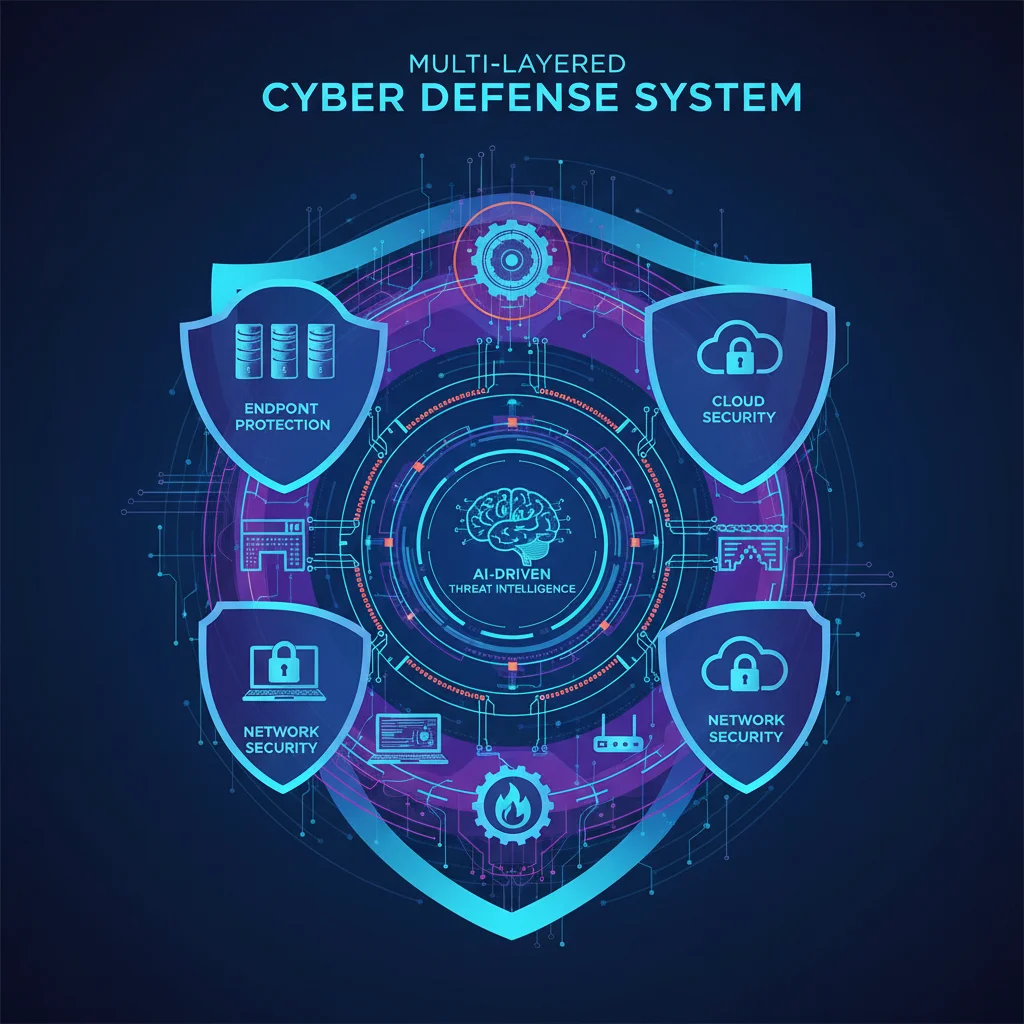
Building a Resilient Cybersecurity Posture for 2026 and Beyond
Achieving comprehensive AI Cyber Threat Readiness is not a one-time project but an ongoing commitment. The landscape of AI-powered threats is dynamic, requiring continuous adaptation and improvement of your security posture. Here’s how U.S. businesses can build long-term resilience:
1. Continuous Monitoring and Threat Hunting
Leverage your AI-powered SIEM and XDR solutions for continuous monitoring of your entire IT environment. Implement proactive threat hunting exercises, using AI to sift through vast datasets to uncover hidden threats and advanced persistent threats (APTs) that might have evaded initial detection. This proactive approach is crucial in the face of sophisticated, adaptive AI attacks.
2. Automation and Orchestration
To combat the speed of AI-powered attacks, businesses must embrace security automation and orchestration. Security Orchestration, Automation, and Response (SOAR) platforms, often enhanced with AI, can automate routine security tasks, orchestrate complex incident response workflows, and accelerate threat containment and remediation, freeing up human analysts for more strategic tasks.
3. Regular Software Updates and Patch Management
It’s a fundamental but often overlooked aspect: keeping all software, operating systems, and security tools updated with the latest patches is critical. Vulnerabilities are constantly discovered and exploited, and AI will only accelerate this process. Automated patch management systems can help ensure that your systems are always protected against known flaws.
4. Data Backup and Recovery Strategies
Even with the most robust defenses, breaches can occur. Having comprehensive, regularly tested data backup and recovery strategies is essential for business continuity. Ensure your backups are isolated, immutable, and protected from AI-powered ransomware and data-wiping attacks.
5. Security by Design Principles
Integrate security considerations from the very beginning of any new project, system, or application development. Adopting “security by design” and “privacy by design” principles ensures that security is built into the core of your systems, rather than being an afterthought. This is particularly important when developing or integrating new AI technologies into your business operations.
6. Board-Level Engagement and Investment
Cybersecurity is no longer just an IT issue; it’s a critical business risk. Ensure that your board of directors and executive leadership are fully aware of the evolving AI threat landscape and are committed to allocating the necessary resources for AI Cyber Threat Readiness. A strong cybersecurity culture starts at the top.
Conclusion: Your Path to AI Cyber Threat Readiness in 2026
The year 2026 represents a pivotal moment for U.S. businesses in the fight against cybercrime. AI-powered threats are transforming the attack surface, demanding a proactive, intelligent, and adaptive defense strategy. By meticulously working through this checklist, evaluating your current security software, and implementing the strategic recommendations, your organization can significantly bolster its AI Cyber Threat Readiness.
Remember, cybersecurity is a journey, not a destination. The threats will continue to evolve, and so too must your defenses. Embrace AI as both a challenge and an opportunity: understand its destructive potential in the hands of adversaries, but also harness its immense power to protect your most valuable assets. By prioritizing continuous improvement, investing in the right technologies and talent, and fostering a strong security culture, U.S. businesses can navigate the complexities of the 2026 threat landscape with confidence and resilience.
Don’t wait for a breach to act. Start assessing and fortifying your defenses today to ensure your business is not just surviving, but thriving in the age of AI.