2026 Cybersecurity Software: 5 Critical Trends for U.S. Businesses

The digital frontier for U.S. businesses is constantly expanding, bringing with it both unprecedented opportunities and evolving threats. As we approach 2026, the cybersecurity software trends are shifting dramatically, demanding proactive adaptation from organizations of all sizes. The landscape is no longer about merely reacting to attacks but about predicting, preventing, and building resilient infrastructures. Businesses that fail to keep pace with these critical developments risk not only financial losses and reputational damage but also severe operational disruptions.
In this comprehensive guide, we delve into the five most critical cybersecurity software trends that U.S. businesses must watch and strategically integrate into their defense mechanisms. From the pervasive influence of artificial intelligence to the imperative of zero trust, understanding these trends is paramount for securing your digital assets and ensuring business continuity in the coming years.
The Evolving Threat Landscape: Why 2026 Demands New Cybersecurity Approaches
Before we dive into the specific cybersecurity software trends, it’s crucial to understand the context. The threat landscape is characterized by increasing sophistication, automation, and a broader attack surface. Nation-state actors, organized crime syndicates, and even individual malicious actors are leveraging advanced techniques, making traditional perimeter-based security increasingly ineffective. Ransomware attacks continue to surge, supply chain vulnerabilities are being exploited with alarming frequency, and the line between physical and cyber threats is blurring, particularly with the proliferation of IoT devices and operational technology (OT).
For U.S. businesses, this means that a ‘set it and forget it’ approach to cybersecurity is a recipe for disaster. Compliance requirements are also becoming more stringent, with regulations like CCPA, HIPAA, and industry-specific mandates demanding robust data protection and privacy measures. The financial and legal repercussions of a data breach can be catastrophic, often leading to fines, lawsuits, loss of customer trust, and long-term damage to brand reputation. Therefore, investing in cutting-edge cybersecurity software trends is not an option but a strategic imperative.
The acceleration of digital transformation, spurred by remote work and cloud adoption, has further complicated security architectures. Employees access corporate resources from various locations and devices, often outside traditional network boundaries, creating new entry points for attackers. This distributed environment necessitates a shift from securing endpoints to securing identities, data, and applications wherever they reside. The upcoming cybersecurity software trends reflect this fundamental paradigm shift, emphasizing adaptability, intelligence, and a holistic view of security.
Trend 1: AI and Machine Learning for Predictive Threat Intelligence and Automated Response
Artificial Intelligence (AI) and Machine Learning (ML) are not just buzzwords; they are rapidly becoming the bedrock of modern cybersecurity. By 2026, their integration into cybersecurity software will be indispensable for U.S. businesses. AI and ML algorithms can analyze vast amounts of data at speeds and scales impossible for human analysts, identifying subtle patterns, anomalies, and emerging threats in real-time.
Predictive Threat Intelligence
One of the most significant applications of AI in cybersecurity is predictive threat intelligence. AI-powered systems can ingest global threat data, analyze attack vectors, and identify potential vulnerabilities even before they are exploited. This allows businesses to proactively patch systems, strengthen defenses, and allocate resources more effectively. For instance, AI can predict which employees are most susceptible to phishing attacks based on their online behavior or identify specific network segments that are likely targets for ransomware based on current global trends.
Automated Incident Response
Beyond prediction, AI and ML are revolutionizing incident response. Security Orchestration, Automation, and Response (SOAR) platforms, heavily reliant on AI, can automate repetitive tasks, triage alerts, and even initiate containment measures without human intervention. This drastically reduces response times, minimizing the impact of breaches. Imagine a system that can detect a malware infection, isolate the affected endpoint, and deploy a remediation script within seconds, all while notifying security personnel. This level of automation is becoming a reality and is a critical component of future cybersecurity software trends.
Behavioral Analytics and Anomaly Detection
AI’s ability to establish baselines of normal user and network behavior is another game-changer. User and Entity Behavior Analytics (UEBA) solutions leverage ML to detect deviations from these baselines, signaling potential insider threats or compromised accounts. If an employee suddenly tries to access sensitive files they’ve never touched before, or logs in from an unusual geographical location, a UEBA system can flag this as suspicious activity, preventing data exfiltration or unauthorized access. This proactive, behavior-centric approach is a cornerstone of advanced cybersecurity software strategies.

Trend 2: The Ubiquitous Adoption of Zero Trust Architectures
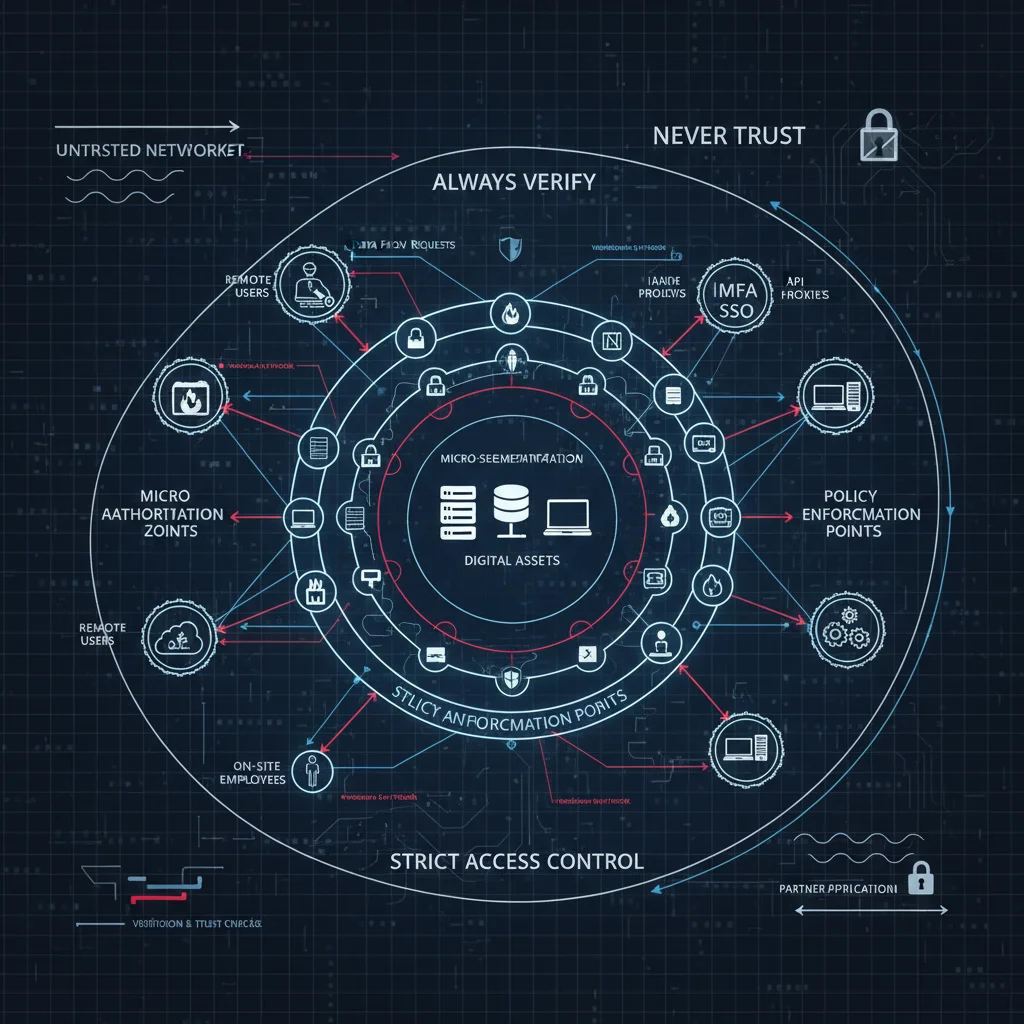
The traditional ‘trust but verify’ security model, where everything inside the network perimeter is inherently trusted, is obsolete. The ‘never trust, always verify’ principle of Zero Trust is rapidly becoming the gold standard for U.S. businesses. By 2026, Zero Trust will be a fundamental architectural requirement for robust cybersecurity software deployments.
What is Zero Trust?
Zero Trust operates on the assumption that no user, device, or application, whether inside or outside the network, should be implicitly trusted. Every access request must be authenticated, authorized, and continuously validated. This involves a multi-faceted approach:
- Strong Identity Verification: Multi-Factor Authentication (MFA) and adaptive authentication based on context (device, location, time) are mandatory.
- Least Privilege Access: Users and applications are granted only the minimum access necessary to perform their tasks.
- Microsegmentation: Networks are divided into small, isolated segments, limiting lateral movement for attackers.
- Continuous Monitoring: All network traffic and user activities are continuously monitored for suspicious behavior.
- Device Posture Checks: Devices attempting to access resources are verified for compliance with security policies (e.g., up-to-date patches, antivirus software).
Benefits for U.S. Businesses
Implementing Zero Trust significantly reduces the attack surface and minimizes the impact of a breach. If an attacker compromises one part of the network, microsegmentation prevents them from easily moving to other critical systems. This approach is particularly vital for businesses with remote workforces, cloud environments, and extensive supply chains, as it ensures consistent security policies regardless of location or infrastructure. The shift towards Zero Trust is a non-negotiable cybersecurity software trend that U.S. businesses must embrace to protect their sensitive data and intellectual property effectively.
Trend 3: Enhanced Cloud Security Posture Management (CSPM) and Cloud-Native Security
Cloud adoption continues unabated, with U.S. businesses increasingly relying on IaaS, PaaS, and SaaS offerings. However, this migration introduces unique security challenges, making robust cloud security solutions a critical cybersecurity software trend for 2026. Misconfigurations in cloud environments are a leading cause of data breaches, highlighting the need for specialized tools.
Cloud Security Posture Management (CSPM)
CSPM tools are essential for identifying and remediating security risks and compliance violations in cloud environments. They continuously monitor cloud configurations across various providers (AWS, Azure, Google Cloud) to ensure they align with security best practices and regulatory requirements. This includes detecting overly permissive access policies, unsecured storage buckets, and unencrypted data, which are common vulnerabilities. As businesses operate in multi-cloud and hybrid-cloud environments, a unified CSPM solution becomes indispensable for maintaining a strong security posture.
Cloud-Native Application Protection Platforms (CNAPP)
Beyond CSPM, the rise of Cloud-Native Application Protection Platforms (CNAPP) represents a holistic approach to securing cloud-native applications throughout their lifecycle. CNAPP solutions integrate various security capabilities, including:
- Cloud Workload Protection Platforms (CWPP): Securing compute instances, containers, and serverless functions.
- Cloud Security Posture Management (CSPM): As mentioned above, for identifying misconfigurations.
- Cloud Infrastructure Entitlement Management (CIEM): Managing and monitoring permissions for identities across cloud environments.
- Vulnerability Management: Scanning for vulnerabilities in container images and code.
By consolidating these functions, CNAPP platforms provide comprehensive visibility and control, simplifying cloud security management for U.S. businesses. This integrated approach is a key component of the evolving cybersecurity software trends, moving beyond fragmented security tools to a more unified and intelligent defense.
Trend 4: Supply Chain Security and Software Bill of Materials (SBOM)
The SolarWinds attack and numerous other incidents have starkly highlighted the vulnerabilities inherent in the software supply chain. U.S. businesses are increasingly reliant on third-party software components, open-source libraries, and outsourced development, making supply chain security a critical cybersecurity software trend for 2026. Attackers are targeting the weakest link in the chain, often injecting malicious code into legitimate software updates or components.
The Importance of SBOMs
A Software Bill of Materials (SBOM) is a formal, machine-readable inventory of components and dependencies within a software package. Think of it as a list of ingredients for your software. SBOMs provide transparency into the software supply chain, allowing organizations to understand the origin, licensing, and known vulnerabilities of every component they use. This is crucial for:
- Vulnerability Management: Quickly identifying and addressing vulnerabilities in third-party components when new threats emerge.
- Compliance: Meeting regulatory requirements for software transparency and risk management.
- Risk Assessment: Evaluating the security posture of third-party vendors and their software.
Government initiatives, such as Executive Order 14028 in the U.S., are pushing for wider adoption of SBOMs, making them a de facto standard for software procurement and development. Cybersecurity software solutions that can generate, manage, and analyze SBOMs will be indispensable for U.S. businesses seeking to mitigate supply chain risks. This trend signifies a move towards greater accountability and transparency in the software ecosystem, safeguarding against insidious attacks that bypass traditional perimeter defenses.
Securing the Entire Supply Chain
Beyond SBOMs, comprehensive supply chain security involves:
- Vendor Risk Management: Thoroughly vetting third-party vendors for their security practices.
- Code Signing and Integrity Checks: Ensuring that software has not been tampered with.
- Automated Security Testing: Integrating security testing throughout the development pipeline (DevSecOps).
The focus on supply chain security and SBOMs is a mature and necessary evolution in cybersecurity software trends, reflecting a deeper understanding of how modern attacks propagate and how to build more resilient digital products and services.
Trend 5: Data Privacy and Confidential Computing
With increasing data breaches and heightened awareness around privacy, data privacy remains a top concern for U.S. businesses. Regulations like GDPR, CCPA, and upcoming state-level privacy laws demand stringent controls over how personal data is collected, processed, and stored. By 2026, cybersecurity software will place an even greater emphasis on data privacy, with confidential computing emerging as a transformative technology.
Enhanced Data Privacy Controls
Traditional security focuses on protecting data at rest (storage) and in transit (network). However, data is most vulnerable when it’s actively being processed in memory. Confidential computing addresses this by protecting data in use. It leverages hardware-based trusted execution environments (TEEs) to create isolated, encrypted enclaves where sensitive data can be processed without being exposed to the operating system, hypervisor, or even cloud providers. This ensures that even if the underlying infrastructure is compromised, the data being processed remains secure and private.
Applications of Confidential Computing
Confidential computing has profound implications for U.S. businesses, particularly in sectors dealing with highly sensitive information such as healthcare, finance, and government. It enables secure multi-party computation, allowing organizations to collaborate on data analysis without exposing raw data to each other. For example, multiple banks could securely analyze aggregated fraud patterns without revealing individual customer transactions. This technology will be a cornerstone of future cybersecurity software trends, offering unprecedented levels of data privacy and trust in shared environments.
Privacy-Enhancing Technologies (PETs)
Beyond confidential computing, other Privacy-Enhancing Technologies (PETs) will also gain prominence:
- Homomorphic Encryption: Allows computations on encrypted data without decrypting it.
- Differential Privacy: Adds noise to data to obscure individual identities while preserving statistical patterns.
- Federated Learning: Enables AI models to be trained on decentralized datasets without centralizing raw data.
These technologies, integrated into cybersecurity software, will empower U.S. businesses to comply with evolving privacy regulations, build greater customer trust, and unlock new possibilities for data collaboration while maintaining confidentiality.
Integrating These Trends for a Resilient Future
The five cybersecurity software trends outlined above are not isolated; they are interconnected and mutually reinforcing. A robust cybersecurity strategy for 2026 for U.S. businesses will involve integrating these elements into a cohesive and adaptive defense system:
- AI as the Brain: AI and ML will power predictive threat intelligence, automate responses, and enhance behavioral analytics across all security layers.
- Zero Trust as the Foundation: Every access decision, whether on-premises or in the cloud, will be governed by Zero Trust principles, minimizing the impact of breaches.
- Cloud-Native Security as the Cloud Guardian: CSPM and CNAPP solutions will ensure secure configurations and protection for workloads across dynamic cloud environments.
- SBOMs and Supply Chain Security as the Trust Enabler: Transparency and rigorous vetting of software components will mitigate risks from third-party dependencies.
- Confidential Computing and PETs as the Privacy Shield: Protecting data even during processing will build trust and ensure compliance with stringent privacy regulations.
For U.S. businesses, the challenge lies in moving beyond point solutions to a unified, intelligent security fabric. This requires not only investing in the right cybersecurity software but also fostering a culture of security awareness, continuous training, and strategic partnerships with cybersecurity experts. The complexity of the modern threat landscape demands a multi-layered, proactive, and adaptive approach.
Strategic Implications for U.S. Businesses
Understanding these cybersecurity software trends is just the first step. U.S. businesses must translate this knowledge into actionable strategies. Here are key considerations:
Assess Your Current Security Posture
Conduct thorough security audits and penetration testing to identify existing vulnerabilities. Understand where your critical data resides, who has access to it, and how it is protected. This baseline assessment is crucial for prioritizing investments in new cybersecurity software.
Invest in Talent and Training
Even the most advanced cybersecurity software is only as effective as the people managing it. Invest in training your IT and security teams on these emerging technologies and threat landscapes. Consider hiring specialists in AI security, cloud security architecture, and Zero Trust implementation.
Embrace Automation
The sheer volume of security alerts and data makes manual analysis unsustainable. Leverage AI-powered automation to streamline security operations, reduce human error, and accelerate incident response. This is a recurring theme across all major cybersecurity software trends.
Prioritize Data Governance and Compliance
Integrate data privacy considerations into every aspect of your operations. Develop robust data governance frameworks and ensure your cybersecurity software solutions help you meet regulatory compliance requirements proactively.
Foster a Security-First Culture
Cybersecurity is everyone’s responsibility. Implement regular security awareness training for all employees, emphasizing best practices for phishing prevention, strong passwords, and data handling. A strong security culture complements technological defenses.
Partner with Experts
The cybersecurity landscape is too complex for most businesses to navigate alone. Consider partnering with Managed Security Service Providers (MSSPs) or cybersecurity consultants who specialize in these emerging trends. Their expertise can provide invaluable guidance and support in implementing advanced cybersecurity software solutions.
Conclusion: Securing the Digital Future
The year 2026 will mark a pivotal moment in cybersecurity. The convergence of advanced threats, rapid technological innovation, and heightened regulatory scrutiny demands a fundamental rethinking of security strategies for U.S. businesses. By proactively embracing the cybersecurity software trends discussed – AI and ML for predictive defense, ubiquitous Zero Trust, enhanced cloud-native security, robust supply chain protection with SBOMs, and the rise of confidential computing for data privacy – organizations can transform their security posture from reactive to resilient.
The future of business hinges on the ability to operate securely in an increasingly interconnected and threat-filled world. Those who adapt to these critical cybersecurity software trends will not only protect their assets but also gain a significant competitive advantage, building trust with customers and partners in an era where digital security is paramount. The time to act and strategically invest in these future-proof cybersecurity solutions is now.