Modern Cybersecurity for US Businesses: Beyond Antivirus 2026

The Evolution of Antivirus: Why Traditional Security Software Isn’t Enough for U.S. Businesses in 2026
In the rapidly accelerating digital landscape, the year 2026 marks a critical juncture for U.S. businesses. The cybersecurity threats of today are far more sophisticated, pervasive, and damaging than anything we’ve encountered before. For decades, the humble antivirus software was the cornerstone of digital defense, a trusted guardian against known malicious code. However, as cybercriminals evolve their tactics at an alarming rate, relying solely on traditional antivirus solutions has become akin to bringing a knife to a gunfight. This comprehensive article delves into why traditional antivirus is no longer sufficient and outlines the essential components of a robust, modern cybersecurity strategy for U.S. businesses.
The digital transformation has brought unprecedented opportunities for growth and innovation, but it has also expanded the attack surface exponentially. From small startups to multinational corporations, every U.S. business is a potential target. The financial, reputational, and operational costs of a cyberattack can be devastating, often leading to business closure for smaller entities. Understanding the limitations of legacy security and embracing a proactive, multi-layered approach to modern cybersecurity is not just advisable; it’s imperative for survival and sustained success in 2026 and beyond.
The Shifting Sands of Cyber Threats: Why Antivirus Falls Short
Traditional antivirus software operates primarily on a signature-based detection model. This means it identifies threats by comparing files against a database of known malware signatures. While effective against previously identified threats, this approach is inherently reactive and struggles against novel, polymorphic, and fileless attacks. The modern threat landscape is characterized by:
- Zero-Day Exploits: These are vulnerabilities in software or hardware that are unknown to the vendor and thus have no patch or signature available. Attackers exploit these weaknesses before developers can address them, rendering signature-based antivirus useless.
- Polymorphic Malware: This type of malware constantly changes its identifiable features (signatures) to evade detection. Each new iteration appears unique, making it incredibly difficult for traditional antivirus to keep up.
- Fileless Malware: Unlike traditional malware that resides in executable files, fileless malware operates directly in memory, leveraging legitimate system tools and processes. Since there’s no file to scan, antivirus often misses these sophisticated attacks.
- Ransomware 2.0: Modern ransomware not only encrypts data but also exfiltrates it, threatening to leak sensitive information if the ransom isn’t paid. This double extortion tactic amplifies the damage and pressure on businesses.
- Advanced Persistent Threats (APTs): These are stealthy, long-term attacks where adversaries gain unauthorized access to a network and remain undetected for extended periods, slowly exfiltrating data or causing damage. Traditional antivirus is ill-equipped to detect such persistent intrusions.
- Social Engineering and Phishing: Human error remains a significant vulnerability. Sophisticated phishing campaigns, often leveraging AI-generated content, trick employees into revealing credentials or installing malware, bypassing technical controls.
- Supply Chain Attacks: Attackers compromise a trusted vendor or software supplier to gain access to their customers’ systems. This expands the attack vector significantly, as businesses inherit the vulnerabilities of their entire supply chain.
These evolving threats demand a paradigm shift in how U.S. businesses approach their digital defenses. The reactive nature of traditional antivirus simply cannot keep pace with the speed and sophistication of modern cyber adversaries. A more dynamic, intelligent, and proactive approach to modern cybersecurity is essential.
The Pillars of Modern Cybersecurity for U.S. Businesses in 2026
Moving beyond the limitations of traditional antivirus requires a holistic and integrated approach. Here are the core pillars of a robust modern cybersecurity strategy:
1. Endpoint Detection and Response (EDR)
EDR solutions go far beyond basic antivirus by continuously monitoring endpoints (laptops, desktops, servers) for malicious activity. Instead of just looking for signatures, EDR collects and analyzes behavioral data, process activity, network connections, and file changes. This allows it to detect suspicious patterns, even from unknown threats, and provide detailed insights for rapid investigation and response. For U.S. businesses, EDR is crucial for identifying and containing advanced attacks that bypass traditional defenses.
2. Extended Detection and Response (XDR)
Building upon EDR, XDR extends visibility and analysis across multiple security layers, including endpoints, networks, cloud environments, email, and identity. By correlating data from various sources, XDR provides a more comprehensive view of potential threats, enabling faster detection and more effective incident response. This integrated approach minimizes blind spots and enhances the overall security posture, a vital component of modern cybersecurity.
3. Security Information and Event Management (SIEM)
SIEM systems aggregate and analyze log data from across an entire IT infrastructure, including servers, network devices, applications, and security tools. They use rules and machine learning to identify security incidents, compliance violations, and other anomalies that might indicate a cyberattack. For U.S. businesses, SIEM provides centralized visibility and helps meet regulatory compliance requirements.
4. Security Orchestration, Automation, and Response (SOAR)
SOAR platforms help security teams manage and automate security operations. They integrate various security tools, orchestrate workflows, and automate repetitive tasks like threat hunting, incident triage, and response actions. This significantly reduces response times, improves efficiency, and allows security analysts to focus on more complex threats, making it an indispensable part of modern cybersecurity.
5. Artificial Intelligence (AI) and Machine Learning (ML) in Cybersecurity
AI and ML are game-changers in the fight against cyber threats. They enable:
- Behavioral Analytics: AI can establish baselines of normal user and system behavior, then flag deviations that indicate malicious activity, even from novel threats.
- Predictive Threat Intelligence: ML algorithms can analyze vast amounts of global threat data to identify emerging attack patterns and predict future threats, allowing for proactive defense.
- Automated Threat Detection: AI can process and analyze security data at speeds and scales impossible for humans, identifying subtle indicators of compromise that would otherwise go unnoticed.
- Enhanced Phishing Detection: AI can analyze email content, sender behavior, and URL patterns to identify sophisticated phishing attempts that bypass traditional filters.
The integration of AI and ML is fundamental to building intelligent and adaptive modern cybersecurity defenses for U.S. businesses.
6. Zero-Trust Architecture (ZTA)
The traditional perimeter-based security model (trusting everything inside the network) is obsolete. Zero-Trust operates on the principle of ‘never trust, always verify.’ Every user, device, and application attempting to access resources, regardless of whether they are inside or outside the network perimeter, must be authenticated and authorized. This significantly reduces the risk of insider threats and lateral movement by attackers who have breached the initial perimeter. Implementing a Zero-Trust model is a cornerstone of modern cybersecurity.
7. Cloud Security Posture Management (CSPM) and Cloud Workload Protection Platforms (CWPP)
As more U.S. businesses migrate to the cloud, securing these environments becomes paramount. CSPM tools continuously monitor cloud configurations for misconfigurations and compliance violations, while CWPPs protect workloads (virtual machines, containers, serverless functions) running in cloud environments from vulnerabilities and threats. Cloud security is an integral part of any modern cybersecurity strategy.
8. Threat Intelligence Platforms (TIPs)
TIPs collect, process, and analyze threat data from various sources, providing actionable intelligence about current and emerging threats. This information helps U.S. businesses understand the tactics, techniques, and procedures (TTPs) of adversaries, enabling them to proactively strengthen their defenses and make informed security decisions. Integrating threat intelligence is key to staying ahead in modern cybersecurity.
9. Identity and Access Management (IAM) with Multi-Factor Authentication (MFA)
Strong identity management is foundational. IAM solutions manage user identities and control access to resources based on roles and policies. MFA adds an essential layer of security by requiring users to provide two or more verification factors to gain access, significantly reducing the risk of compromised credentials. Without robust IAM and MFA, even the most advanced modern cybersecurity tools can be undermined.
10. Employee Training and Awareness Programs
Technology alone is not enough. Employees are often the first line of defense and, unfortunately, also the weakest link. Regular, engaging, and relevant cybersecurity awareness training is crucial to educate staff about phishing, social engineering, strong password practices, and safe browsing habits. A security-aware workforce is an invaluable asset in a modern cybersecurity strategy.
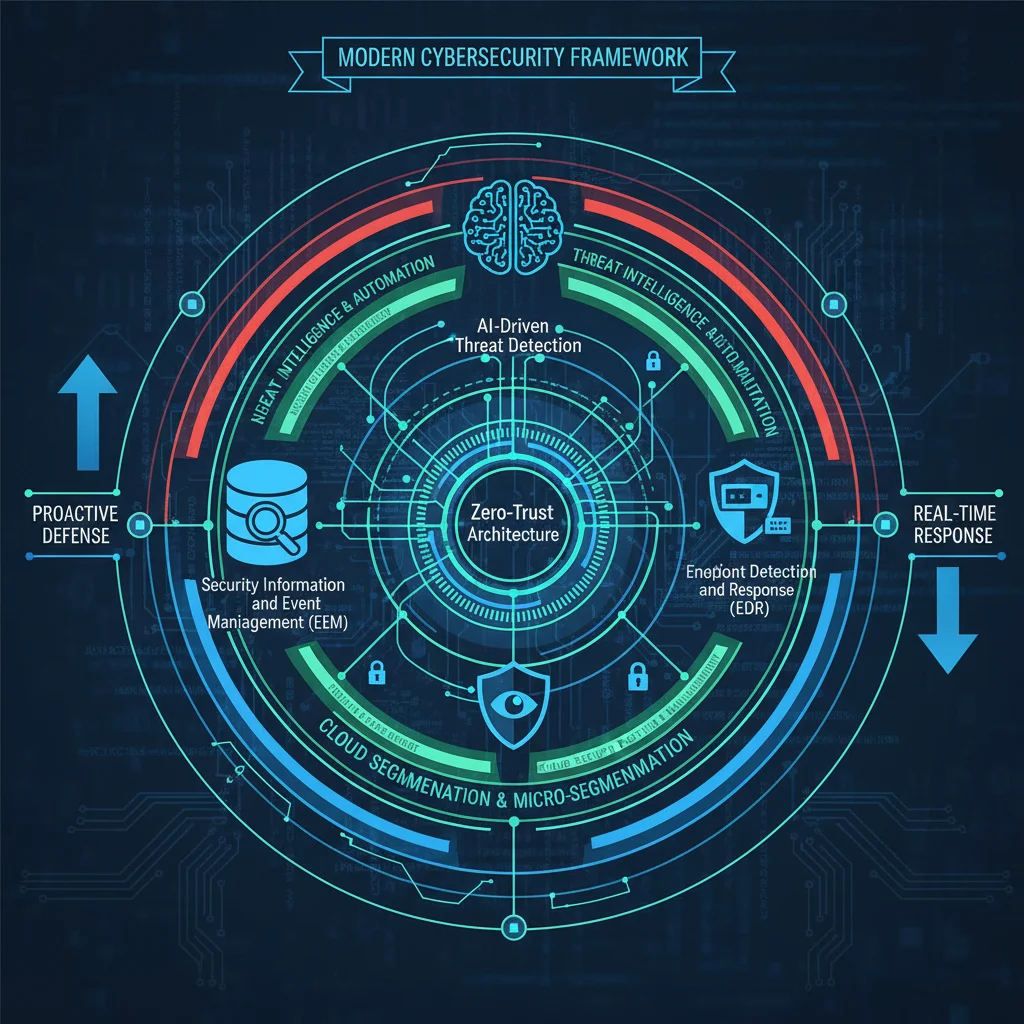
Implementing these pillars requires a strategic approach, often involving a combination of in-house expertise and partnerships with specialized cybersecurity vendors. For U.S. businesses, the investment in modern cybersecurity is an investment in business continuity and resilience.
The Cost of Inaction: Why Delaying Modern Cybersecurity is a Critical Error
The consequences of failing to adopt modern cybersecurity practices are severe and multifaceted:
- Financial Losses: These include direct costs like ransom payments, legal fees, regulatory fines (e.g., related to data breaches), forensic investigations, and system remediation. Indirect costs involve lost productivity, decreased customer trust, and potential stock price drops.
- Reputational Damage: A cyberattack can severely damage a company’s reputation, leading to loss of customer loyalty, difficulty attracting new clients, and erosion of public trust.
- Operational Disruption: Attacks can halt business operations, leading to significant downtime, supply chain interruptions, and inability to deliver services or products.
- Data Loss and Theft: Sensitive customer data, intellectual property, and proprietary business information can be stolen or destroyed, leading to competitive disadvantages and compliance issues.
- Legal and Regulatory Penalties: Non-compliance with data protection regulations (like HIPAA, CCPA, GDPR, sector-specific mandates) can result in substantial fines and legal action.
For U.S. businesses, especially those operating in critical infrastructure sectors or handling sensitive consumer data, the regulatory landscape is becoming increasingly stringent. Proactive investment in modern cybersecurity is not just good practice; it’s a regulatory necessity.
Building a Resilient Modern Cybersecurity Posture for 2026
Transitioning from a traditional antivirus mindset to a comprehensive modern cybersecurity posture involves several key steps:
1. Conduct a Thorough Risk Assessment
Understand your organization’s unique threat landscape, critical assets, vulnerabilities, and the potential impact of various cyberattacks. This assessment should inform your cybersecurity strategy and prioritize investments. What are the crown jewels of your U.S. business? Where are your biggest weaknesses?
2. Develop an Incident Response Plan
A well-defined and regularly tested incident response plan is crucial. This plan outlines the steps to take before, during, and after a cyber incident, minimizing damage and ensuring a swift recovery. This includes communication strategies, forensic procedures, and recovery protocols.
3. Embrace a Multi-Layered Security Approach
No single security solution is foolproof. Implement a defense-in-depth strategy that combines various technologies and controls (EDR, XDR, SIEM, ZTA, MFA, etc.) to create multiple barriers against attackers. This layered approach is the hallmark of effective modern cybersecurity.
4. Prioritize Continuous Monitoring and Threat Hunting
Active monitoring of your IT environment for suspicious activities and proactive threat hunting (searching for threats that have evaded initial defenses) are essential. This requires skilled personnel and advanced tools capable of real-time analysis, a core aspect of modern cybersecurity.
5. Foster a Culture of Security Awareness
Regular training, simulated phishing exercises, and clear security policies help embed security consciousness into the organizational culture. Employees must understand their role in protecting the business from cyber threats.
6. Stay Up-to-Date with Threat Intelligence
Leverage threat intelligence feeds and platforms to stay informed about the latest attack techniques, vulnerabilities, and adversary profiles. This enables proactive adjustments to your security controls and strategies, ensuring your modern cybersecurity remains relevant.
7. Partner with Cybersecurity Experts
Many U.S. businesses, particularly SMEs, lack the in-house resources and expertise to manage complex modern cybersecurity defenses. Partnering with Managed Security Service Providers (MSSPs) or cybersecurity consultants can provide access to specialized knowledge, advanced tools, and 24/7 monitoring, ensuring robust modern cybersecurity.
8. Regular Audits and Compliance Checks
Periodically audit your security controls and processes to ensure they are effective and compliant with relevant industry standards and regulatory requirements. This continuous improvement cycle is vital for maintaining a strong modern cybersecurity posture.

The journey to a resilient modern cybersecurity posture is ongoing. The threat landscape is dynamic, and so too must be your defenses. For U.S. businesses, adapting to this new reality is not an option but a strategic imperative.
The Future of Modern Cybersecurity: Beyond 2026
Looking beyond 2026, the evolution of modern cybersecurity will be shaped by several emerging trends:
- Quantum-Resistant Cryptography: As quantum computing advances, current encryption methods may become vulnerable. Businesses will need to prepare for a transition to quantum-resistant algorithms to protect sensitive data.
- AI-Driven Autonomous Security: The role of AI will expand to include more autonomous decision-making in threat detection, response, and even proactive defense, reducing human intervention for routine tasks.
- Homomorphic Encryption: This advanced encryption technique allows computations to be performed on encrypted data without decrypting it, offering unprecedented privacy and security for data in use.
- Digital Twin Security: Creating digital replicas of IT infrastructure to simulate attacks and test defenses in a safe environment, allowing for proactive vulnerability identification and patching.
- Human-Centric Security: A greater focus on understanding human behavior and psychology to build more intuitive and less disruptive security measures, while also enhancing training to counter advanced social engineering.
- Regulatory Harmonization and Global Standards: As cyber threats transcend borders, there will be a push for more harmonized international cybersecurity regulations and standards, impacting U.S. businesses with global operations.
These advancements underscore the continuous need for U.S. businesses to remain agile, informed, and proactive in their modern cybersecurity strategies. The foundational shift from simple antivirus to a sophisticated, multi-layered defense is just the beginning.
Conclusion: Embracing Modern Cybersecurity for a Secure Future
For U.S. businesses, the era of relying solely on traditional antivirus is firmly in the past. The year 2026 demands a sophisticated, proactive, and intelligent approach to modern cybersecurity. The evolving threat landscape, characterized by zero-day exploits, fileless malware, advanced ransomware, and AI-powered phishing, necessitates a comprehensive defense-in-depth strategy. By integrating Endpoint Detection and Response (EDR), Extended Detection and Response (XDR), Security Information and Event Management (SIEM), Security Orchestration, Automation, and Response (SOAR), Artificial Intelligence (AI) and Machine Learning (ML), Zero-Trust Architecture (ZTA), robust Cloud Security, Threat Intelligence, and strong Identity and Access Management (IAM) with Multi-Factor Authentication (MFA), businesses can build a resilient shield against the most formidable cyber threats.
Furthermore, investing in continuous employee training and fostering a security-aware culture are paramount. The financial, reputational, and operational costs of a cyberattack far outweigh the investment in a robust modern cybersecurity framework. For U.S. businesses, embracing these advanced security paradigms is not merely a technical upgrade; it’s a strategic imperative for safeguarding assets, ensuring business continuity, and maintaining competitive advantage in an increasingly digital and dangerous world. The future of your business hinges on your commitment to modern cybersecurity.