Edge Computing Cloud Integration: 5 Future Trends 2026
The digital landscape is evolving at an unprecedented pace, driven by the relentless demand for faster, more efficient, and more intelligent data processing. At the forefront of this transformation are Edge Cloud Integration and its symbiotic relationship with cloud computing. As we look towards 2026, the synergy between these two powerful paradigms is set to redefine how businesses operate, innovate, and deliver services. This article delves into the five most impactful trends that will shape the future of Edge Cloud Integration, offering insights into what to expect and how organizations can prepare.
For years, cloud computing has been the undisputed king of scalability, storage, and processing power. However, the proliferation of IoT devices, the rise of real-time applications, and the increasing need for low-latency processing have highlighted the limitations of a purely centralized cloud model. This is where edge computing steps in, bringing computation and data storage closer to the sources of data. The true power, however, lies in their integration. Edge Cloud Integration is not about choosing one over the other; it’s about creating a cohesive, distributed computing environment that leverages the strengths of both.
By 2026, we anticipate a more mature and sophisticated approach to this integration, moving beyond mere data offloading to a truly intelligent and adaptive ecosystem. This evolution will be driven by advancements in AI, networking, and software architectures, leading to a new era of distributed intelligence. Let’s explore the five critical trends that will define this exciting future.
1. Hyper-Distributed Architectures with Intelligent Orchestration
One of the most significant trends in Edge Cloud Integration will be the emergence of hyper-distributed architectures. This goes beyond the traditional edge-to-cloud model, envisioning multiple layers of compute, from tiny IoT devices at the far edge, through micro-edge data centers, all the way to regional edge nodes and ultimately, the centralized cloud. Each layer will have specific roles, processing capabilities, and data governance policies, forming a complex yet highly efficient mesh network.
The key to making this intricate system function seamlessly will be intelligent orchestration. Current orchestration tools often focus on managing workloads within a single cloud or a few edge locations. By 2026, we will see advanced AI-driven orchestration platforms capable of dynamically allocating resources, managing workloads, and optimizing data flow across this hyper-distributed landscape. These platforms will leverage machine learning to predict resource needs, detect anomalies, and even autonomously reconfigure the network to maintain optimal performance and security. Think of it as a highly sophisticated air traffic control system for data and compute, ensuring that every packet and every process lands in the most efficient and appropriate location.
This trend will enable unprecedented levels of resilience and fault tolerance. If one edge node fails, the intelligent orchestrator can swiftly re-route tasks to another, minimizing downtime and ensuring business continuity. Furthermore, it will facilitate localized processing for compliance and privacy regulations, allowing sensitive data to remain within specific geographical boundaries while still benefiting from cloud-based analytics on anonymized or aggregated data. The complexity of managing such an environment will necessitate a new generation of tools and skill sets, pushing organizations to invest in robust automation and AI capabilities to fully harness the power of Edge Cloud Integration.
2. AI and Machine Learning at the Edge Becomes Mainstream
While AI has largely been a cloud-centric phenomenon, the trend of bringing AI and machine learning (ML) capabilities to the edge is accelerating rapidly. By 2026, AI at the edge will no longer be a niche application but a mainstream component of most enterprise architectures. This shift is driven by several factors: the need for real-time inference, reduced bandwidth requirements, enhanced privacy, and improved reliability in disconnected environments.
Imagine smart factories where AI models deployed on edge devices analyze video feeds for quality control, predict machinery failures, or optimize production lines in real-time, without sending massive amounts of data to the cloud. In healthcare, edge AI can power intelligent medical devices that provide immediate diagnostics or monitor patient vitals, alerting practitioners to critical changes instantly. These scenarios are already emerging, but by 2026, they will be commonplace, transforming industries from manufacturing to retail, and from smart cities to autonomous vehicles.
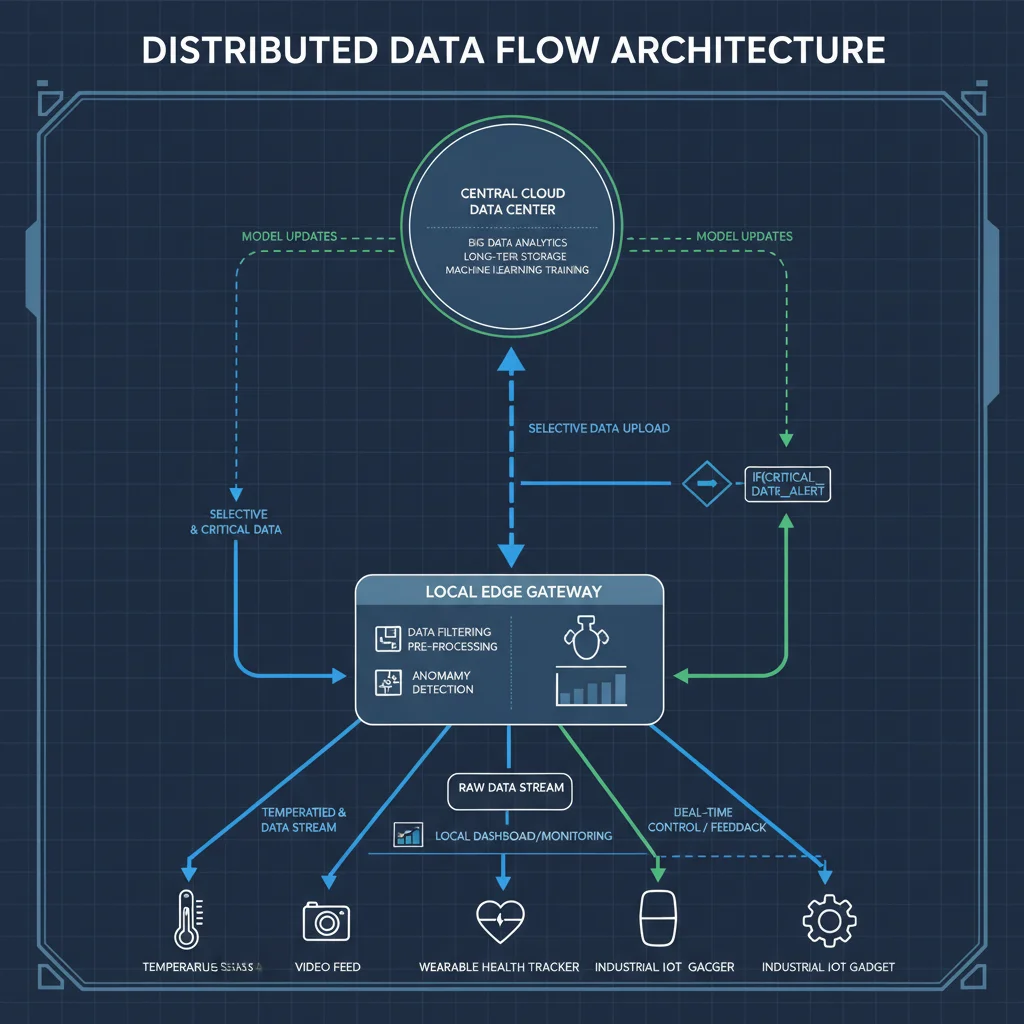
The integration aspect comes into play with the lifecycle management of these AI models. Training large, complex AI models will still primarily occur in the cloud, leveraging its vast computational resources. However, these trained models will then be optimized and deployed to edge devices for inference. Continuous learning and model updates will also require a sophisticated Edge Cloud Integration strategy, where edge devices periodically send relevant data back to the cloud for re-training, and updated models are seamlessly pushed back to the edge. This creates a powerful, iterative loop of intelligence, where the cloud provides the brainpower for development and optimization, and the edge provides the eyes, ears, and immediate decision-making capabilities.
3. Enhanced Security and Trust Frameworks for Distributed Environments
As Edge Cloud Integration becomes more prevalent, the attack surface for cyber threats expands significantly. Securing a hyper-distributed environment with countless edge devices, gateways, and cloud connections presents unique challenges. Therefore, a major trend by 2026 will be the development and adoption of enhanced security and trust frameworks specifically designed for these complex ecosystems.
Traditional perimeter-based security models are inadequate for edge environments. Instead, we will see a greater emphasis on zero-trust architectures, where every device, user, and application must be authenticated and authorized, regardless of its location. This will involve robust identity and access management (IAM) solutions extending to the farthest edge, coupled with micro-segmentation to isolate workloads and limit lateral movement of threats.
Hardware-level security will also play a crucial role. Trusted Platform Modules (TPMs) and hardware-rooted trust will become standard in edge devices, ensuring the integrity of the boot process and cryptographic operations. Furthermore, blockchain and distributed ledger technologies (DLT) could be leveraged to create immutable audit trails and enhance the trustworthiness of data originating from the edge, providing verifiable provenance and integrity for critical data streams that flow from the edge to the cloud. This comprehensive approach to security, spanning hardware, software, and network layers, will be essential to foster trust and accelerate the adoption of Edge Cloud Integration solutions across sensitive industries.
4. Serverless and Containerization Dominance Across Edge and Cloud
The agility and scalability offered by serverless computing and containerization have made them staples in cloud environments. By 2026, this paradigm will extend its dominance to the edge, becoming a cornerstone of Edge Cloud Integration. The ability to deploy functions and microservices in lightweight containers or as serverless functions will be critical for managing the diverse and resource-constrained nature of edge devices.
Containerization, exemplified by Docker and Kubernetes, allows applications to be packaged with all their dependencies, ensuring consistent execution across different environments, from the cloud to various edge nodes. This simplifies deployment, scaling, and management of applications in a distributed setting. Serverless computing, on the other hand, enables developers to focus solely on their code, with the underlying infrastructure managed automatically. At the edge, serverless functions can be triggered by local events, processing data on-site without the overhead of managing virtual machines or servers.
The trend will be towards a unified development and deployment experience, where developers can write code once and deploy it seamlessly across cloud and edge platforms, leveraging the same tools and workflows. This will significantly accelerate application development and innovation for Edge Cloud Integration. Cloud providers are already offering edge-specific serverless and container services, and this trend will only intensify, leading to highly efficient, scalable, and portable applications that can dynamically adapt to the available compute resources, whether in the cloud or at the farthest reaches of the network.
5. Industry-Specific Edge Cloud Solutions and Vertical Integration
While the foundational technologies of Edge Cloud Integration are general-purpose, a significant trend by 2026 will be the proliferation of highly specialized, industry-specific solutions. Different sectors have unique requirements regarding latency, data privacy, regulatory compliance, and environmental conditions. Generic edge solutions often fall short in addressing these nuanced needs.
For instance, in manufacturing, Edge Cloud Integration will manifest as solutions tailored for predictive maintenance of industrial robots, real-time quality control on assembly lines, and optimization of energy consumption. These solutions will integrate with specific industrial protocols (e.g., OPC UA, Modbus) and integrate with existing operational technology (OT) systems. In healthcare, specialized edge solutions will focus on remote patient monitoring, AI-powered diagnostics in clinics, and secure processing of sensitive patient data at the point of care, adhering strictly to regulations like HIPAA.
Retail will see Edge Cloud Integration driving smart stores with real-time inventory management, personalized customer experiences, and loss prevention through AI-powered video analytics. Agriculture will benefit from edge devices monitoring soil conditions, crop health, and livestock, with data integrated into cloud platforms for large-scale analysis and optimized farming strategies. This vertical integration will lead to a deeper understanding of industry-specific challenges and the development of purpose-built hardware, software, and services that unlock maximum value from Edge Cloud Integration.
The growth of these vertical solutions will also foster a new ecosystem of specialized vendors and integrators, offering turnkey solutions that combine edge hardware, software, connectivity, and cloud services. This will simplify adoption for businesses that lack deep technical expertise in distributed computing, democratizing access to the benefits of Edge Cloud Integration and accelerating digital transformation across diverse sectors.
The Road Ahead: Preparing for 2026 and Beyond
The trends outlined above paint a clear picture: Edge Cloud Integration is not just a technological evolution; it’s a fundamental shift in how we conceive and implement computing infrastructure. Organizations that embrace these trends will be better positioned to innovate, optimize operations, and gain a competitive edge. Conversely, those that lag will find themselves struggling to keep pace with the demands of an increasingly data-intensive and real-time world.
Key Considerations for Businesses:
- Strategic Planning: Develop a clear strategy for how edge computing fits into your overall cloud strategy. Identify use cases where low-latency processing, data sovereignty, or offline capabilities are critical.
- Talent Development: Invest in upskilling your workforce in areas like distributed systems, container orchestration, edge AI, and advanced cybersecurity.
- Security First: Design your Edge Cloud Integration architecture with security as a foundational principle, adopting zero-trust models and hardware-rooted security.
- Vendor Partnerships: Evaluate and partner with vendors who offer robust, scalable, and secure edge-to-cloud solutions that align with your industry-specific needs.
- Pilot Projects: Start with small, manageable pilot projects to gain experience and demonstrate the value of Edge Cloud Integration before scaling up.
- Data Governance: Establish clear policies for data collection, processing, storage, and transfer between the edge and the cloud, ensuring compliance with relevant regulations.
- Automation and Orchestration: Prioritize investments in intelligent orchestration and automation tools to manage the complexity of hyper-distributed environments.
The journey towards a fully integrated edge-cloud future will be complex, but the rewards are substantial. From enabling truly autonomous systems to delivering hyper-personalized services, the potential of Edge Cloud Integration is immense. By understanding and proactively addressing these five key trends, businesses can strategically position themselves to thrive in the digital economy of 2026 and beyond.
Conclusion: The Converging Future of Edge and Cloud
The future of computing is undeniably distributed, and the symbiotic relationship between edge and cloud is at its core. As we approach 2026, the trends of hyper-distributed architectures, mainstream AI at the edge, enhanced security frameworks, serverless and containerization dominance, and industry-specific solutions will converge to create a powerful, intelligent, and resilient digital infrastructure. Edge Cloud Integration will move from a concept to a pervasive reality, underpinning the next wave of innovation across every sector.
Organizations that embrace this convergence, strategically planning their investments in technology, talent, and partnerships, will be the ones that lead the charge into this new era. The ability to process data closer to its source, make real-time decisions, and maintain robust security across a vast network will be a critical differentiator. The journey has already begun, and the landscape of Edge Cloud Integration in 2026 promises to be more dynamic and transformative than ever before. Prepare to connect, compute, and innovate at the edge, seamlessly integrated with the power of the cloud.