Google Cloud Anthos: Unifying Multi-Cloud Operations for a 15% Efficiency Gain This Year
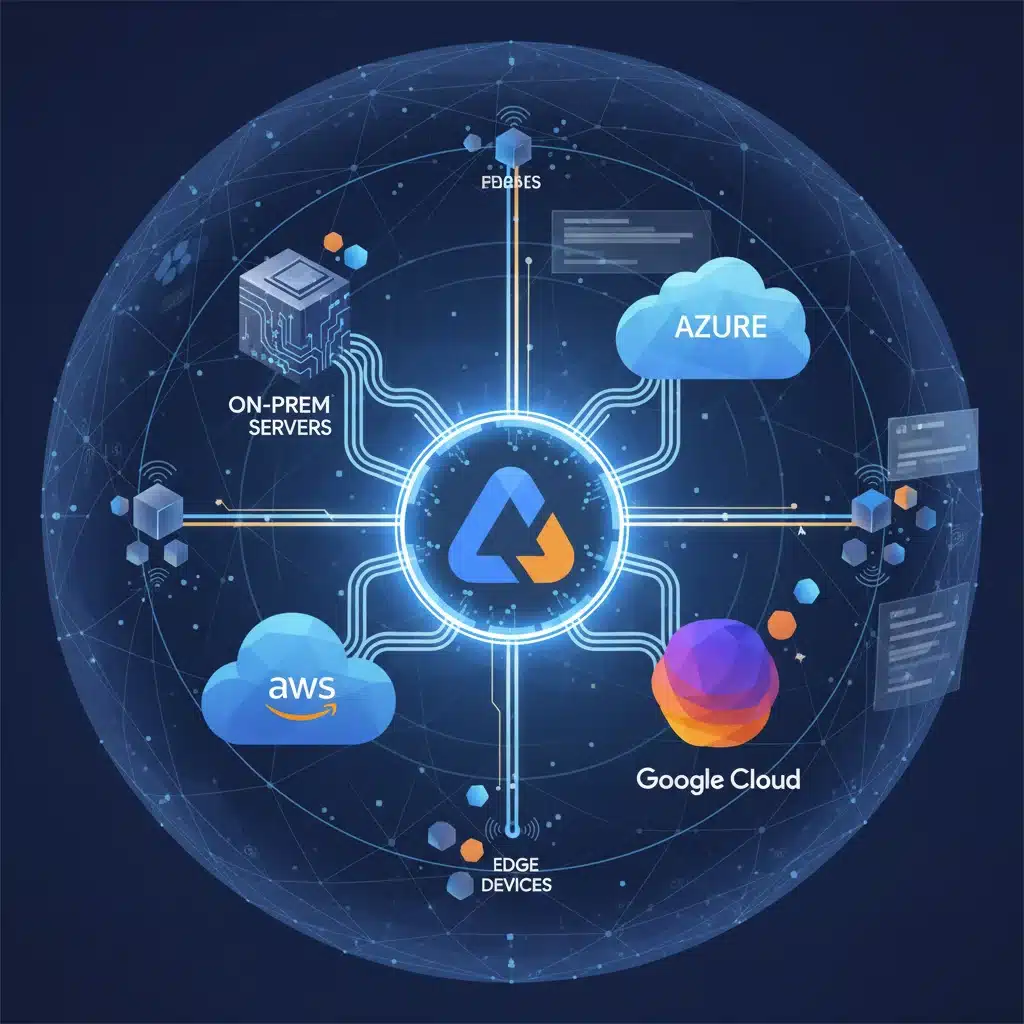
In the rapidly evolving landscape of enterprise IT, the adoption of multi-cloud and hybrid cloud strategies has become the norm rather than the exception. Organizations are increasingly leveraging the best-of-breed services from various cloud providers while simultaneously maintaining critical workloads on-premises. This distributed environment, while offering immense flexibility and resilience, often introduces significant operational complexities, inconsistent management, and escalating costs. Enter Google Cloud Anthos – a revolutionary platform designed to address these very challenges by providing a consistent control plane across diverse infrastructures.
The promise of Anthos is not merely to simplify multi-cloud management; it’s about fundamentally transforming how enterprises operate their IT, leading to tangible benefits such as increased agility, enhanced security, and, crucially, significant operational efficiency gains. Indeed, industry analysts and early adopters project that organizations leveraging Anthos can expect to see efficiency improvements upwards of 15% within the first year of adoption. This isn’t just about saving money; it’s about freeing up valuable resources, accelerating innovation, and allowing IT teams to focus on strategic initiatives rather than day-to-day operational firefighting.
This comprehensive article will delve deep into the capabilities of Anthos, exploring how this powerful platform delivers on its promise of Anthos Multi-Cloud Efficiency. We will examine its core components, the problems it solves, the benefits it delivers, and provide a roadmap for organizations looking to harness its power to achieve their own efficiency targets. Prepare to discover how Google Cloud Anthos is setting a new standard for unified multi-cloud operations.
The Multi-Cloud Conundrum: Why Unification is Essential
Before we explore the solutions Anthos offers, it’s vital to understand the underlying challenges that necessitate a platform of its kind. The decision to adopt a multi-cloud strategy is often driven by sound business reasons: avoiding vendor lock-in, leveraging specialized services from different providers, meeting data residency requirements, enhancing disaster recovery, and optimizing costs. However, this distributed reality frequently gives rise to a new set of problems:
- Operational Silos: Each cloud provider comes with its own set of management tools, APIs, and operational paradigms. Managing workloads across AWS, Azure, and Google Cloud, along with on-premises data centers, often means maintaining separate teams, skill sets, and processes for each environment. This leads to inefficiencies, increased training costs, and a higher potential for human error.
- Inconsistent Deployment and Management: Deploying and managing applications consistently across disparate environments becomes a Herculean task. What works seamlessly in one cloud might require significant re-tooling for another, hindering agility and slowing down time-to-market.
- Security Gaps: Ensuring a consistent security posture and compliance across multiple, heterogeneous environments is incredibly complex. Policy enforcement can be fragmented, leading to potential vulnerabilities and compliance headaches.
- Visibility and Monitoring Challenges: Gaining a unified view of application performance, resource utilization, and overall system health across a multi-cloud estate is difficult. Different monitoring tools for different environments create blind spots and delay incident response.
- Vendor Lock-in (in disguise): While multi-cloud aims to prevent vendor lock-in, inconsistent architectures can paradoxically create a form of ‘architectural lock-in’ where moving an application from one cloud to another becomes prohibitively expensive due to deep integration with platform-specific services.
- Cost Overruns: Without a unified approach, optimizing resource allocation and identifying cost efficiencies across different clouds is challenging, often leading to unexpected expenses.
These challenges collectively diminish the very benefits that multi-cloud strategies promise, leading to increased operational overhead and reduced business agility. This is precisely where Google Cloud Anthos steps in, offering a compelling solution for achieving true Anthos Multi-Cloud Efficiency.
What is Google Cloud Anthos? A Unified Control Plane
At its core, Google Cloud Anthos is an application modernization platform that extends Google Cloud’s services and engineering capabilities to your existing infrastructure, wherever it may be. It’s built on open-source technologies, primarily Kubernetes, and designed to provide a consistent management experience across on-premises data centers, Google Cloud, and other public clouds like AWS and Azure.
Think of Anthos as an operating system for your distributed applications. It abstracts away the underlying infrastructure complexities, allowing developers and operators to deploy, manage, and scale applications uniformly, regardless of where they run. This consistency is the bedrock of achieving significant operational efficiency.
Key Components and Capabilities of Anthos:
- Anthos GKE (Google Kubernetes Engine): This is the heart of Anthos, providing a managed Kubernetes experience wherever you need it. Whether it’s GKE on Google Cloud, GKE On-Prem, GKE on AWS, or GKE on Azure, Anthos ensures a consistent Kubernetes distribution and management plane. This consistency is crucial for portability and uniform operations.
- Anthos Config Management: This component allows you to manage policies and configurations for your Anthos-managed clusters from a central Git repository. It enforces desired states, ensuring consistency, compliance, and security policies across your entire fleet of clusters, regardless of location. This declarative approach significantly reduces manual errors and operational overhead, directly contributing to Anthos Multi-Cloud Efficiency.
- Anthos Service Mesh (powered by Istio): Service Mesh provides advanced traffic management, policy enforcement, and telemetry for your microservices. It enables capabilities like intelligent routing, canary deployments, A/B testing, and fine-grained access control across your services, irrespective of their deployment location. This enhances application reliability and simplifies complex distributed system management.
- Cloud Run for Anthos: For developers looking for a serverless experience, Cloud Run for Anthos allows them to deploy containerized applications as stateless services, scaling automatically from zero to many. It brings the serverless paradigm to your hybrid and multi-cloud environments, boosting developer productivity.
- Anthos Identity Management: Offers consistent authentication and authorization across your Anthos-managed environments, integrating with your existing identity providers like Active Directory or Okta.
- Anthos Security: Provides a comprehensive security posture with features like network policies, binary authorization, and integration with Google Cloud security services, extending protection consistently across your infrastructure.
- Anthos Migrate: Facilitates the migration of virtual machines (VMs) directly into containers running on GKE, accelerating the modernization of legacy applications without extensive refactoring.
- Anthos attached clusters: This feature allows you to register and manage existing Kubernetes clusters (e.g., vanilla Kubernetes, AKS, EKS) within the Anthos control plane, providing a single pane of glass for monitoring and policy enforcement even for clusters not provisioned by GKE.
By bringing these powerful capabilities under a unified umbrella, Anthos creates a cohesive operational environment that simplifies complexity and unlocks significant efficiency gains.
Achieving 15% Operational Efficiency Gains with Anthos
The promise of a 15% efficiency gain is not an arbitrary figure; it stems from the fundamental shifts Anthos introduces in how IT operations are conducted. Let’s break down the mechanisms through which Anthos delivers this substantial improvement:
1. Streamlined Operations and Reduced Toil
The most direct path to efficiency comes from standardizing operations. With Anthos, IT teams no longer need to learn and manage separate toolsets for each cloud or on-premise environment. A single set of skills, tools, and processes can be applied across the entire infrastructure. This:
- Reduces Training Costs: Less need for specialized training for each platform.
- Decreases Operational Overhead: Automating configuration and policy management through Anthos Config Management eliminates manual, error-prone tasks.
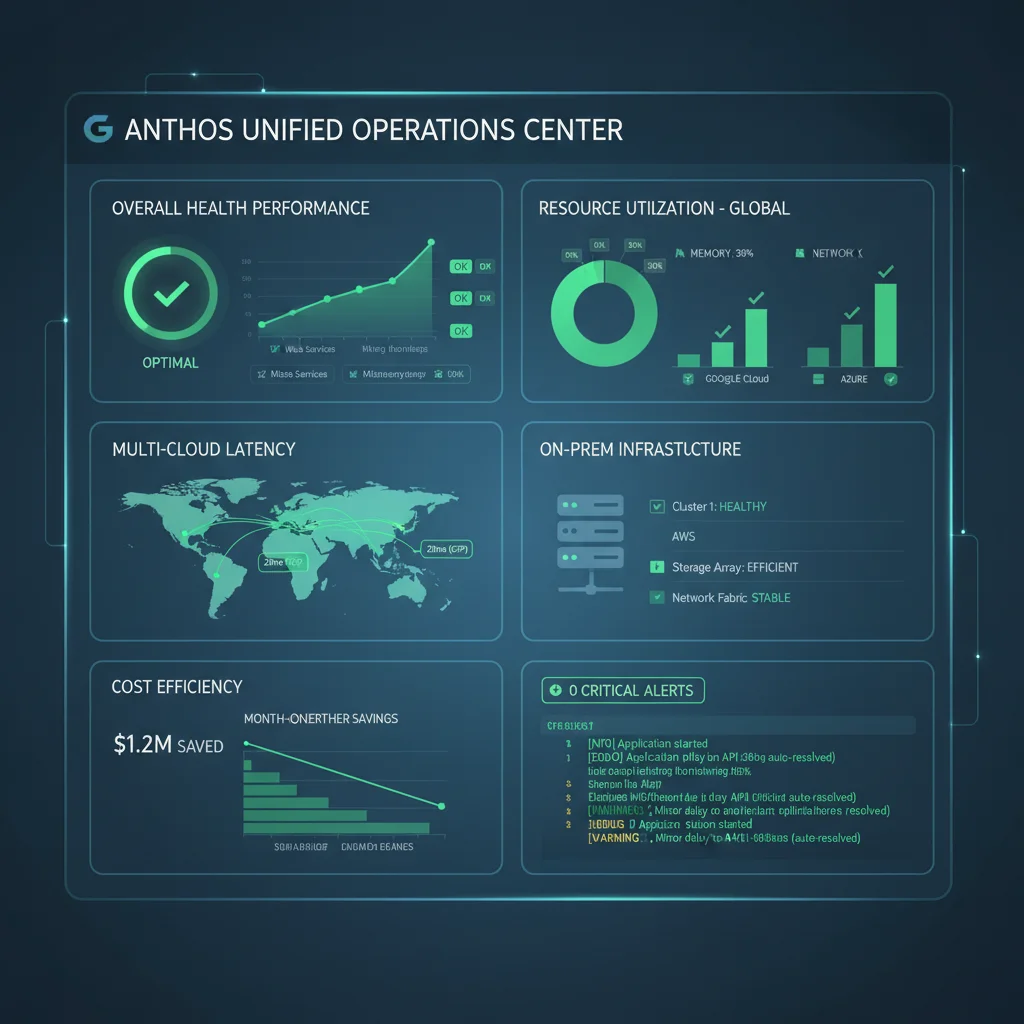
- Faster Troubleshooting: Unified monitoring and logging across all environments (via Google Cloud Operations Suite integration) mean faster identification and resolution of issues.
- Improved Resource Utilization: Consistent deployment and scaling capabilities help optimize resource allocation, reducing waste.
By automating repetitive tasks and unifying management, Anthos frees up engineers to focus on higher-value activities, leading to a more productive and efficient IT department.
2. Accelerated Application Development and Deployment
Developers are a critical part of the efficiency equation. Anthos empowers development teams with a consistent platform, leading to:
- Developer Velocity: Developers can build, test, and deploy applications using the same Kubernetes APIs and tools, regardless of the target environment. This eliminates the need to re-architect or re-configure applications for different clouds, significantly speeding up the development lifecycle.
- Increased Portability: Applications containerized and managed by Kubernetes on Anthos are inherently portable. This means an application developed on-premises can be seamlessly deployed to Google Cloud, AWS, or Azure without modification, reducing friction and accelerating time-to-market.
- Self-Service Capabilities: With Anthos, platform teams can provide developers with self-service access to standardized environments and tools, reducing bottlenecks and empowering development teams to move faster.
The ability to deploy applications faster and more reliably directly translates into business agility and competitive advantage, contributing to overall Anthos Multi-Cloud Efficiency.
3. Enhanced Security and Compliance Posture
Security and compliance are often complex and resource-intensive, especially in multi-cloud environments. Anthos tackles this by:
- Consistent Policy Enforcement: Anthos Config Management allows you to define security and compliance policies once and apply them consistently across all your clusters, regardless of their location. This ensures a uniform security posture and simplifies auditing.
- Reduced Configuration Drift: By enforcing desired states, Anthos minimizes configuration drift, a common source of security vulnerabilities and compliance violations.
- Centralized Identity and Access Management: Unified identity management simplifies user access control and reduces the risk of unauthorized access across different environments.
By streamlining security and compliance, Anthos reduces the human effort required to maintain a secure and compliant IT environment, contributing to significant operational savings.
4. Optimized Cost Management
While Anthos is a premium offering, its ability to optimize costs in the long run is a significant driver of efficiency:
- Resource Optimization: By providing consistent visibility and management, Anthos helps organizations right-size their infrastructure, preventing over-provisioning and reducing unnecessary cloud spend.
- Strategic Workload Placement: The platform enables more intelligent workload placement decisions, allowing organizations to run applications in the most cost-effective environment (e.g., on-premises for predictable workloads, public cloud for burstable demand).
- Reduced Vendor Lock-in (True): By enabling true application portability, Anthos gives organizations greater leverage in negotiating with cloud providers and the flexibility to move workloads to optimize costs without significant re-engineering efforts.
These cost optimizations, combined with reduced operational overhead, paint a clear picture of how Anthos directly impacts the bottom line.
Real-World Impact and Use Cases
The benefits of Anthos are not merely theoretical. Enterprises across various sectors are leveraging the platform to achieve significant improvements:
- Financial Services: Banks and financial institutions use Anthos to modernize legacy applications, maintain strict data residency requirements (often on-premises), and rapidly deploy new digital services across a hybrid infrastructure, all while adhering to stringent regulatory compliance.
- Retail: Retailers employ Anthos for consistent management of e-commerce platforms, inventory systems, and point-of-sale applications across their data centers, public clouds, and edge locations (stores), ensuring seamless customer experiences and operational resilience.
- Telecommunications: Telcos are using Anthos to deploy and manage network functions and edge applications, leveraging its consistency for 5G rollouts and distributed computing close to the customer.
- Manufacturing: Manufacturers are adopting Anthos to manage IoT data processing at the edge, integrate factory automation systems with cloud analytics, and ensure consistent application deployment across geographically dispersed plants.
In each of these scenarios, the common thread is the need for a unified, consistent platform that simplifies complexity, accelerates innovation, and drives Anthos Multi-Cloud Efficiency.
Implementing Anthos: A Strategic Approach
Adopting Google Cloud Anthos is a strategic journey that typically involves several phases:
- Assessment and Planning: Begin by evaluating your current IT landscape, identifying key workloads, infrastructure components, and organizational goals. Determine which applications are suitable for containerization and migration to Anthos.
- Pilot Project: Start with a small, non-critical application or a development environment. This allows your teams to gain hands-on experience with Anthos, understand its capabilities, and refine your operational processes.
- Infrastructure Setup: Deploy and configure Anthos components in your chosen environments (on-premises, Google Cloud, other public clouds). This involves setting up GKE clusters, Anthos Config Management, and Service Mesh.
- Application Migration and Modernization: Begin migrating existing applications to Anthos, leveraging tools like Anthos Migrate where appropriate. For new applications, adopt cloud-native development practices from the outset.
- Operational Integration: Integrate Anthos with your existing CI/CD pipelines, monitoring systems, and security tools. Establish consistent policies and workflows for management, security, and compliance.
- Scaling and Optimization: As your teams become more proficient, expand Anthos adoption to more critical workloads. Continuously monitor performance, optimize resource utilization, and refine your Anthos configuration to maximize efficiency gains.
Successful Anthos implementation requires not just technical expertise but also a cultural shift towards cloud-native operations and a commitment to automation and standardization. Investing in training your teams on Kubernetes and Anthos best practices is paramount.

Challenges and Considerations
While Anthos offers compelling benefits, organizations should be aware of potential challenges:
- Complexity of Initial Setup: Deploying and configuring Anthos across diverse environments can be complex, requiring specialized Kubernetes and cloud expertise.
- Learning Curve: Teams new to Kubernetes and cloud-native concepts will require significant training and upskilling.
- Cost: Anthos is a premium platform, and its licensing model should be carefully evaluated against the projected efficiency gains and cost savings.
- Integration with Legacy Systems: While Anthos helps modernize, integrating existing legacy systems that cannot be containerized can still present challenges.
- Network Configuration: Ensuring seamless and secure network connectivity across hybrid and multi-cloud environments for Anthos clusters requires careful planning.
Addressing these considerations proactively through thorough planning, skilled resources, and a phased approach will ensure a smoother adoption journey and help realize the full potential of Anthos Multi-Cloud Efficiency.
The Future of Multi-Cloud with Anthos
As enterprises continue to embrace distributed IT architectures, platforms like Google Cloud Anthos will become increasingly indispensable. The trend towards edge computing, where applications and data processing move closer to the source, further amplifies the need for a consistent control plane that can span cloud, on-premises, and edge locations. Anthos is well-positioned to be a cornerstone of this future, providing the foundational technology for managing highly distributed, mission-critical workloads.
Google’s continuous investment in Anthos, adding new features and integrations, ensures its relevance and capability to meet evolving enterprise demands. From enhanced AI/ML capabilities at the edge to deeper integrations with serverless technologies, Anthos is set to empower organizations to innovate faster, operate more efficiently, and secure their digital assets across any environment.
Conclusion: Unlock Your 15% Efficiency Gain with Anthos
The journey to true multi-cloud and hybrid cloud operational efficiency is fraught with challenges, but Google Cloud Anthos offers a powerful and comprehensive solution. By providing a unified platform built on open-source standards, Anthos empowers organizations to streamline operations, accelerate development, enhance security, and optimize costs across their entire distributed IT estate.
The projected 15% operational efficiency gain within the first year of adoption is a testament to Anthos’s transformative potential. It’s not just about managing complexity; it’s about converting that complexity into a competitive advantage. For enterprises looking to simplify their multi-cloud strategy, unlock developer velocity, and achieve measurable operational improvements, investing in Google Cloud Anthos is a strategic imperative. Embrace the future of unified operations and realize the full promise of your multi-cloud investments with Anthos.