Azure Arc Hybrid Cloud: Top 5 Integrations for US Businesses in 2026

In the rapidly evolving landscape of enterprise IT, the hybrid cloud has become not just an option, but a strategic imperative for businesses across the United States. As we look towards 2026, the complexity of managing diverse IT environments—spanning on-premises data centers, edge locations, and multiple public clouds—presents significant challenges. This is where Azure Arc emerges as a game-changer, offering a unified management plane that extends Azure’s capabilities to virtually any infrastructure.
Azure Arc is Microsoft’s innovative solution designed to bridge the gap between traditional IT and the cloud-native world. It allows organizations to manage, govern, and secure servers, Kubernetes clusters, and data services across their entire IT estate from a single control plane. For US businesses aiming to optimize their hybrid cloud strategy, understanding and leveraging the key integrations of Azure Arc will be crucial for maintaining competitiveness, enhancing operational efficiency, and ensuring robust security.
This comprehensive guide delves into the top 5 essential Azure Arc Integrations that US businesses should prioritize by 2026. We will explore how these integrations empower organizations to unlock the full potential of their hybrid environments, streamline IT operations, and accelerate their digital transformation journeys. From enhanced governance and security to simplified data management and application deployment, Azure Arc offers a pathway to a more agile and resilient IT infrastructure.
The Strategic Importance of Azure Arc in 2026
As businesses continue to expand their digital footprints, the notion of a single cloud provider catering to all needs is becoming increasingly rare. Many organizations operate in a multi-cloud reality, alongside significant on-premises investments. This distributed IT environment, while offering flexibility and resilience, also introduces complexities related to consistent management, security, and governance.
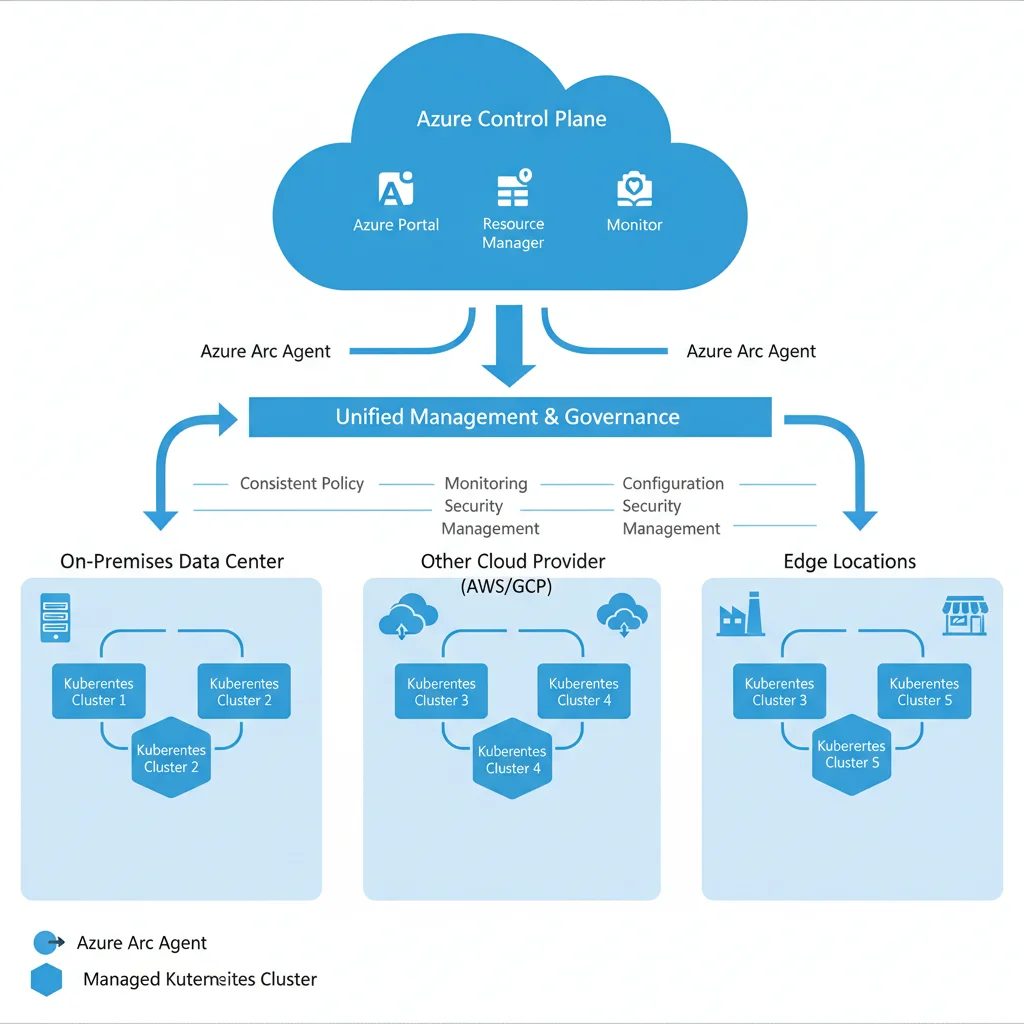
Azure Arc directly addresses these challenges by providing a consistent control plane that extends Azure’s management capabilities to any infrastructure. This means that whether your servers are running in your own data center, on a competitor’s cloud, or at the edge, you can manage them as if they were native Azure resources. This level of abstraction and centralized control is invaluable for US businesses grappling with:
- Operational Inconsistency: Different tools and processes for managing on-premises and cloud resources lead to inefficiencies and errors.
- Security Gaps: Ensuring uniform security policies and compliance across disparate environments is a monumental task.
- Governance Challenges: Applying consistent policies, tags, and access controls across a hybrid estate is often difficult.
- Developer Productivity: Providing developers with a consistent platform for building and deploying applications, regardless of infrastructure, is key.
By 2026, the ability to seamlessly integrate and manage these diverse environments will be a critical differentiator. Azure Arc’s role in enabling this unified approach positions it as a cornerstone of modern hybrid cloud strategies.
Top 5 Azure Arc Integrations for US Businesses in 2026
To truly harness the power of Azure Arc, US businesses must focus on specific integrations that deliver the most significant strategic advantages. Here are the top five:
1. Azure Arc-Enabled Kubernetes: Unified Container Management
Kubernetes has become the de facto standard for orchestrating containerized applications. However, managing multiple Kubernetes clusters spread across different environments (on-premises, edge, and various clouds) can quickly become unwieldy. Azure Arc-enabled Kubernetes provides a single pane of glass for managing all your Kubernetes clusters, regardless of where they are running.
This integration allows US businesses to:
- Centralize Management: Connect any Cloud Native Computing Foundation (CNCF) conformant Kubernetes cluster to Azure Arc.
- Apply Azure Policy: Enforce consistent policies, such as security baselines and resource tagging, across all connected clusters.
- Deploy GitOps Configurations: Automate application and configuration deployment using GitOps, ensuring consistency and reducing manual errors.
- Monitor and Observe: Leverage Azure Monitor for comprehensive visibility into cluster health and performance.
- Extend Azure Services: Deploy Azure services like Azure Machine Learning, Azure Functions, and Azure SQL Managed Instance directly onto your Arc-enabled Kubernetes clusters, bringing cloud-native capabilities closer to your data and applications.
For US businesses leveraging microservices architectures and containerization, this integration is paramount for simplifying operations, enhancing security, and accelerating application development and deployment cycles.
2. Azure Arc-Enabled Servers: Consistent Governance and Security
Managing physical and virtual servers outside of Azure has traditionally been a disparate and often manual process. Azure Arc-enabled servers extend Azure’s management capabilities to Windows and Linux machines hosted anywhere, including on-premises, other clouds, and edge environments.
This integration brings crucial benefits:
- Unified Inventory and Management: View all your servers, regardless of location, as Azure resources, enabling centralized inventory, tagging, and resource organization.
- Azure Policy for Hybrid Environments: Apply Azure Policy to enforce configuration standards, compliance requirements, and security settings across your entire server fleet. This is vital for maintaining regulatory compliance and reducing security risks.
- Azure Security Center Integration: Onboard Arc-enabled servers to Azure Security Center (now part of Microsoft Defender for Cloud) for unified security posture management, threat detection, and vulnerability assessments across your hybrid estate.
- Update Management: Automate patch management and software updates for your Arc-enabled servers, ensuring systems are always up-to-date and secure.
- Azure Monitor for Servers: Collect and analyze performance metrics and logs from all your servers in Azure Monitor, providing a holistic view of your infrastructure’s health and enabling proactive issue resolution.
For US businesses with significant on-premises infrastructure or multi-cloud deployments, Arc-enabled servers are fundamental for achieving consistent governance, security, and operational excellence.
3. Azure Arc-Enabled Data Services: Hybrid Data Management
Data is the lifeblood of any modern business, and managing it effectively across hybrid environments is a complex challenge. Azure Arc-enabled data services allow you to run Azure data services, such as Azure SQL Managed Instance and PostgreSQL Hyperscale, on your infrastructure, whether on-premises or on other clouds.
This integration offers significant advantages for US businesses:
- Always Up-to-Date Data Services: Benefit from the latest Azure data service features and automatic updates, even when running on-premises. This eliminates the need for manual upgrades and ensures your data platforms are always current.
- Elastic Scale and Cloud Benefits On-Premises: Experience cloud-like elasticity and scalability for your data workloads, even in your own data center.
- Consistent Management Experience: Manage your Arc-enabled data services using the same tools and APIs as native Azure data services, simplifying administration and reducing operational overhead.
- Disaster Recovery and High Availability: Leverage built-in high availability and disaster recovery capabilities for your data services, enhancing business continuity.
- Data Residency and Compliance: Meet strict data residency requirements by keeping your data on-premises while still benefiting from Azure’s managed services capabilities. This is particularly important for industries with stringent regulatory demands.
For US businesses dealing with large datasets, strict compliance, or performance-sensitive applications, Azure Arc-enabled data services provide a powerful solution for hybrid data management.
4. Azure Arc-Enabled Machine Learning: AI at the Edge and On-Premises
Artificial intelligence (AI) and machine learning (ML) are transforming industries, but deploying and managing ML models can be resource-intensive and often requires data to be processed close to its source. Azure Arc-enabled Machine Learning extends Azure Machine Learning capabilities to any environment, including on-premises and edge devices.
This integration empowers US businesses to:
- Run ML Workloads Anywhere: Train and deploy ML models on your existing infrastructure, reducing data egress costs and addressing data residency concerns.
- Centralized ML Operations (MLOps): Manage the entire ML lifecycle—from experimentation and training to deployment and monitoring—from a single Azure Machine Learning workspace, regardless of where the models are executed.
- Edge AI Capabilities: Deploy ML models to edge devices, enabling real-time inference and intelligent decision-making closer to the data source, which is critical for IoT and industrial applications.
- Consistent Tooling: Use the same Azure ML SDKs, CLI, and Azure portal for managing ML resources across your hybrid environment.
- Enhanced Security and Governance: Apply Azure security policies and access controls to your ML workloads, ensuring responsible AI practices and data protection.
For US businesses looking to operationalize AI/ML across distributed environments, Azure Arc-enabled Machine Learning is a crucial integration for accelerating innovation and extracting value from data wherever it resides.

5. Azure Arc and Azure Security Center (Microsoft Defender for Cloud): Unified Security Posture
Security is paramount in any IT environment, and the complexity of hybrid cloud introduces significant challenges in maintaining a consistent security posture. The integration of Azure Arc with Azure Security Center (now Microsoft Defender for Cloud) provides a unified security management experience across your entire IT estate.
This powerful combination enables US businesses to:
- Centralized Security Posture Management: Gain a holistic view of your security posture across Azure, on-premises, and other clouds, all within the Microsoft Defender for Cloud dashboard.
- Extended Threat Protection: Extend advanced threat protection capabilities, including vulnerability assessments, just-in-time VM access, and adaptive application controls, to your Arc-enabled servers and Kubernetes clusters.
- Regulatory Compliance: Monitor and enforce compliance with industry standards and regulatory frameworks (e.g., NIST, HIPAA, PCI DSS) across your hybrid infrastructure.
- Automated Security Recommendations: Receive actionable security recommendations based on continuous assessment of your resources, helping you prioritize and remediate risks.
- Incident Response and Remediation: Integrate with Azure Sentinel (now Microsoft Sentinel) for end-to-end security information and event management (SIEM) and security orchestration, automation, and response (SOAR) across your hybrid environment.
For US businesses, particularly those in regulated industries, this integration is non-negotiable for achieving a robust, unified security strategy that protects against evolving cyber threats across their distributed IT landscape.
Implementing Azure Arc: Best Practices for US Businesses
While the benefits of Azure Arc are clear, successful implementation requires careful planning and adherence to best practices:
- Start Small, Scale Gradually: Begin with a pilot project, perhaps by onboarding a few non-critical servers or a single Kubernetes cluster, to gain experience and validate the integration.
- Define Clear Governance Policies: Before onboarding resources, establish clear Azure Policies for tagging, naming conventions, security baselines, and access controls. This ensures consistency from the outset.
- Leverage Automation: Utilize Azure Resource Manager (ARM) templates, Bicep, or Terraform to automate the deployment and configuration of Azure Arc agents and extensions, promoting infrastructure as code.
- Prioritize Security: Integrate Azure Arc with Microsoft Defender for Cloud from day one. Implement least-privilege access and regularly review security recommendations.
- Monitor and Optimize: Use Azure Monitor and Azure Log Analytics to continuously monitor the performance and health of your Arc-enabled resources. This proactive approach helps identify and resolve issues quickly.
- Train Your Teams: Ensure your IT and operations teams are well-versed in Azure Arc concepts and management tools. Training is crucial for maximizing adoption and efficiency.
- Consider Network Connectivity: Plan for reliable and secure network connectivity between your on-premises/edge environments and Azure to ensure seamless communication for Arc agents.
- Review Licensing: Understand the licensing implications of Azure Arc and its various integrations to ensure cost-effectiveness and compliance.
By following these best practices, US businesses can effectively deploy and manage their hybrid environments with Azure Arc, unlocking its full potential to drive digital transformation.
The Future of Hybrid Cloud with Azure Arc
As we move towards 2026, the demand for flexible, secure, and consistently managed hybrid cloud environments will only intensify. Azure Arc is positioned at the forefront of this evolution, offering a powerful platform for extending Azure’s innovative services and management capabilities to any infrastructure.
The ability to unify management, enforce consistent governance, and strengthen security across diverse IT landscapes will be a key competitive advantage for US businesses. By strategically integrating Azure Arc-enabled Kubernetes, servers, data services, machine learning, and leveraging its synergy with Microsoft Defender for Cloud, organizations can build a resilient, agile, and future-proof IT foundation.
The journey to a truly integrated hybrid cloud is complex, but with Azure Arc as a central component, US businesses can navigate this complexity with confidence. It’s not just about managing disparate resources; it’s about transforming your entire IT estate into a cohesive, cloud-powered entity, ready to meet the challenges and seize the opportunities of tomorrow.
Conclusion
Azure Arc is more than just a tool; it’s a strategic enabler for US businesses embracing the hybrid cloud. The five key integrations discussed—Azure Arc-enabled Kubernetes, Servers, Data Services, Machine Learning, and its deep integration with Microsoft Defender for Cloud—represent critical pathways to achieving operational excellence, robust security, and accelerated innovation.
By prioritizing these Azure Arc Integrations, US organizations can overcome the inherent complexities of hybrid environments, streamline their IT operations, and ensure a consistent, secure, and governed experience across all their resources. As 2026 approaches, the businesses that master these integrations will be best positioned to thrive in an increasingly distributed and data-driven world.
Embrace Azure Arc, and unlock the true potential of your hybrid cloud strategy.