APT Protection Software: Saving Mid-Sized Firms $2 Million Annually

The Financial Impact of Advanced Persistent Threat (APT) Protection Software: Saving $2 Million Annually for Mid-Sized Firms
In today’s interconnected digital landscape, cyber threats are more sophisticated and pervasive than ever before. Among the most insidious are Advanced Persistent Threats (APTs) – stealthy, long-term targeted attacks designed to gain unauthorized access to a network and remain undetected for extended periods. For mid-sized firms, often perceived as less fortified than their enterprise counterparts but more lucrative targets than small businesses, APTs pose an existential risk. The financial fallout from a successful APT attack can be catastrophic, encompassing direct monetary losses, operational disruptions, reputational damage, and regulatory fines. This is where robust APT protection software savings become not just a security measure, but a critical financial investment.
This article delves into the profound financial impact of implementing Advanced Persistent Threat (APT) protection software, demonstrating how it can realistically save mid-sized firms up to $2 million annually. We will explore the multifaceted costs associated with APT attacks, the mechanisms through which APT protection mitigates these risks, and provide a compelling business case for its adoption.
Understanding Advanced Persistent Threats (APTs)
Before quantifying the financial benefits of protection, it’s crucial to understand what makes APTs so dangerous. Unlike opportunistic malware, APTs are characterized by their stealth, persistence, and focus. They are typically launched by well-resourced adversaries, including nation-states, organized crime syndicates, or highly skilled hacktivist groups. Their objectives often include intellectual property theft, espionage, long-term data exfiltration, or infrastructure disruption.
Key characteristics of APTs include:
- Targeted Attacks: APTs are not indiscriminate. They target specific organizations or industries, often after extensive reconnaissance.
- Multi-stage Approach: These attacks involve multiple phases, from initial compromise (e.g., spear phishing, zero-day exploits) to establishing a foothold, escalating privileges, lateral movement within the network, and ultimately, data exfiltration or sabotage.
- Stealth and Evasion: APTs are designed to bypass traditional security measures, often employing polymorphic malware, rootkits, and living-off-the-land techniques to remain undetected.
- Persistence: Once inside, APTs aim to maintain long-term access, creating backdoors and redundant access points to ensure continued presence even if initial breach points are discovered.
For a mid-sized firm, the consequences of such an attack can be devastating, far exceeding the costs associated with simpler cyber incidents. This underscores the imperative for effective APT protection software savings.
The Staggering Costs of an APT Attack for Mid-Sized Firms
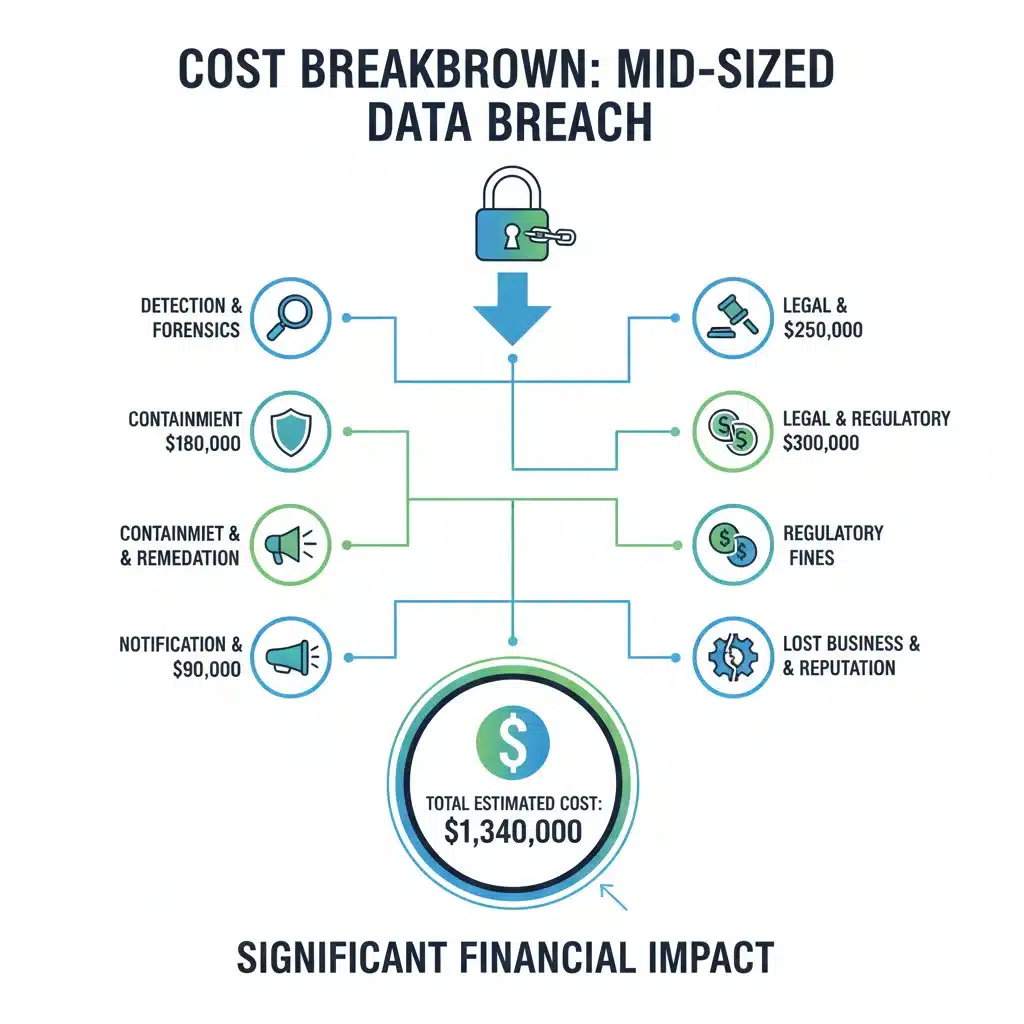
A successful APT attack can inflict a wide array of financial damages, often cascading into unforeseen expenditures. While exact figures vary, industry reports consistently highlight the significant financial burden. Consider the following cost categories:
1. Direct Financial Losses
- Data Breach Costs: This is often the most significant component. It includes the cost of identifying the breach, containing it, notifying affected individuals (which can be legally mandated and extremely expensive per record), post-breach monitoring services for victims, and regulatory fines. For mid-sized firms, these costs can quickly escalate into hundreds of thousands or even millions of dollars.
- Intellectual Property (IP) Theft: If an APT aims to steal proprietary designs, trade secrets, customer lists, or strategic plans, the long-term competitive disadvantage and loss of future revenue can be immeasurable.
- Ransomware Payments: While not all APTs involve ransomware, some sophisticated attacks may deploy it as a final stage or a diversion tactic, demanding hefty sums for data decryption.
- Operational Downtime: Disruptions to critical business operations due to investigation, remediation, or system rebuilding can lead to significant revenue loss. Every hour of downtime translates directly to lost productivity and sales.
2. Investigation and Remediation Expenses
- Forensic Analysis: Specialized cybersecurity firms are often required to investigate the extent of the breach, identify the attack vectors, and determine what data was compromised. These services are highly specialized and costly.
- System Restoration: Rebuilding compromised systems, patching vulnerabilities, and implementing new security controls require significant IT resources, often involving overtime or external consultants.
- Legal and Compliance Fees: Navigating the complex web of data privacy regulations (e.g., GDPR, CCPA) and potential lawsuits from affected parties or shareholders can incur substantial legal expenses.
3. Reputational Damage and Lost Business
- Customer Churn: A data breach erodes customer trust. Customers may switch to competitors, leading to a direct loss of revenue and market share.
- Brand Erosion: The negative publicity surrounding a breach can severely damage a firm’s brand image, making it harder to attract new customers and retain existing ones.
- Investor Confidence: For firms seeking investment or contemplating an IPO, a significant cyber incident can deter investors and impact valuation.
Industry studies consistently show that the average cost of a data breach for mid-sized organizations can range from hundreds of thousands to several million dollars. Preventing even one major APT attack can, therefore, translate directly into substantial APT protection software savings.
How APT Protection Software Delivers $2 Million in Annual Savings
The $2 million annual savings figure is not an arbitrary number. It’s a conservative estimate derived from the cumulative prevention of the aforementioned costs, coupled with enhanced operational efficiencies. Here’s a breakdown of how APT protection software contributes to these significant savings:
1. Preventing Data Breaches and Associated Costs (Estimated Savings: $1,000,000 – $1,500,000)
The primary function of APT protection software is to detect and neutralize advanced threats before they can exfiltrate data or cause significant damage. By preventing a single major data breach, a mid-sized firm can avoid:
- Notification costs: Averaging tens to hundreds of dollars per record for notification alone, plus credit monitoring.
- Forensic and legal fees: Often running into six figures.
- Regulatory fines: Which can be substantial, especially under strict data protection laws.
- Direct data loss costs: Such as intellectual property or customer data.
Considering the average cost of a breach for mid-sized businesses, preventing just one can easily save a firm over a million dollars, making this the largest component of APT protection software savings.
2. Minimizing Operational Downtime and Productivity Losses (Estimated Savings: $200,000 – $400,000)
APT attacks, if successful, can lead to prolonged system outages as organizations scramble to contain the breach, clean systems, and restore operations. This downtime directly impacts productivity and revenue.
- Lost revenue per hour: Depending on the industry, this can range from thousands to tens of thousands of dollars.
- Employee productivity loss: When systems are down, employees cannot perform their jobs, leading to significant wage costs for unproductive time.
- Recovery efforts: The IT team’s focus shifts from strategic initiatives to crisis management, diverting valuable resources.
By proactively identifying and blocking APTs, the software ensures business continuity, safeguarding against these costly disruptions.
3. Reducing Investigation and Remediation Expenses (Estimated Savings: $100,000 – $200,000)
Even if an APT attack is detected early, the cost of investigation and remediation can be substantial. However, sophisticated APT protection tools provide:
- Faster detection: Reducing the dwell time of attackers, thereby limiting the scope of compromise.
- Detailed telemetry: Providing security teams with crucial information to quickly understand the attack’s nature and origin, speeding up containment.
- Automated response: Some solutions can automatically isolate compromised endpoints, preventing lateral movement and reducing manual intervention.
These capabilities significantly reduce the need for extensive, costly external forensic services and internal IT overtime, contributing directly to APT protection software savings.
4. Protecting Brand Reputation and Customer Trust (Estimated Savings: Intangible but Significant, Easily $200,000+ Annually in Avoided Lost Business)
While harder to quantify directly, the long-term impact of reputational damage and lost customer trust can be devastating. Preventing a high-profile data breach safeguards:
- Customer loyalty: Retaining existing customers who might otherwise leave.
- New business acquisition: Maintaining a strong security posture enhances credibility and attracts new clients.
- Market valuation: Protecting the company’s standing in its industry.
The avoidance of losing 5-10% of customers due to a breach can easily translate into hundreds of thousands of dollars in preserved annual revenue, highlighting the indirect yet powerful APT protection software savings.
5. Compliance and Regulatory Fine Avoidance (Estimated Savings: $50,000 – $100,000)
Non-compliance with data protection regulations (like GDPR, CCPA, HIPAA, etc.) following a breach can result in hefty fines. APT protection software helps firms maintain a strong security posture, demonstrating due diligence and significantly reducing the risk of regulatory penalties. Avoiding even a single moderate fine contributes to the overall savings.
When these individual components are aggregated, the total potential annual savings for a mid-sized firm through effective APT protection software can comfortably reach and often exceed $2 million. This robust financial argument makes the investment in such software not just justifiable, but essential for long-term viability and growth.
Key Features of Effective APT Protection Software
To realize these substantial savings, mid-sized firms need to invest in APT protection software that offers a comprehensive suite of capabilities. Look for solutions that include:
- Behavioral Analytics: Detects anomalous activities that indicate an APT, rather than relying solely on signature-based detection.
- Endpoint Detection and Response (EDR): Provides continuous monitoring and recording of endpoint activity, enabling rapid detection and response to threats.
- Network Traffic Analysis (NTA): Monitors network communications for suspicious patterns, command-and-control (C2) traffic, and data exfiltration attempts.
- Threat Intelligence Integration: Leverages up-to-date information on known APT groups, tactics, techniques, and procedures (TTPs) to enhance detection capabilities.
- Sandboxing: Executes suspicious files in an isolated environment to observe their behavior without risking the live network.
- User and Entity Behavior Analytics (UEBA): Identifies deviations from normal user or entity behavior, a common indicator of an APT attacker moving laterally within a network.
- Automated Response Capabilities: The ability to automatically quarantine threats, block malicious IPs, or isolate compromised systems to limit damage.
- Centralized Management and Reporting: Provides a unified view of the security posture and simplifies compliance reporting.
Investing in a solution that integrates these features provides a multi-layered defense against the sophisticated nature of APTs, ensuring maximum APT protection software savings.
Building a Business Case for APT Protection Software
For many mid-sized firms, budget constraints are a reality. Presenting a strong business case for APT protection software, emphasizing its financial benefits, is crucial for gaining executive buy-in. Here’s how to frame it:
1. Quantify the Risk
Start by estimating the potential financial impact of a successful APT attack on your specific organization. Consider:
- The average cost of a data breach in your industry for a firm of your size.
- The value of your intellectual property or sensitive customer data.
- The potential for regulatory fines and legal expenses.
- The cost of operational downtime for your business.
Even a conservative estimate will likely be a staggering figure, making the cost of prevention seem comparatively small.
2. Highlight Cost Avoidance as "Savings"
Frame the investment in APT protection not as an expense, but as a proactive measure that generates significant "cost avoidance" or "savings." Emphasize the $2 million annual saving potential by preventing just one major incident. This shifts the perception from a cost center to a profit protector.
3. Emphasize ROI
Calculate the Return on Investment (ROI). While precise ROI can be complex, a simple calculation can demonstrate value:
ROI = (Avoided Costs - Software Cost) / Software Cost * 100%
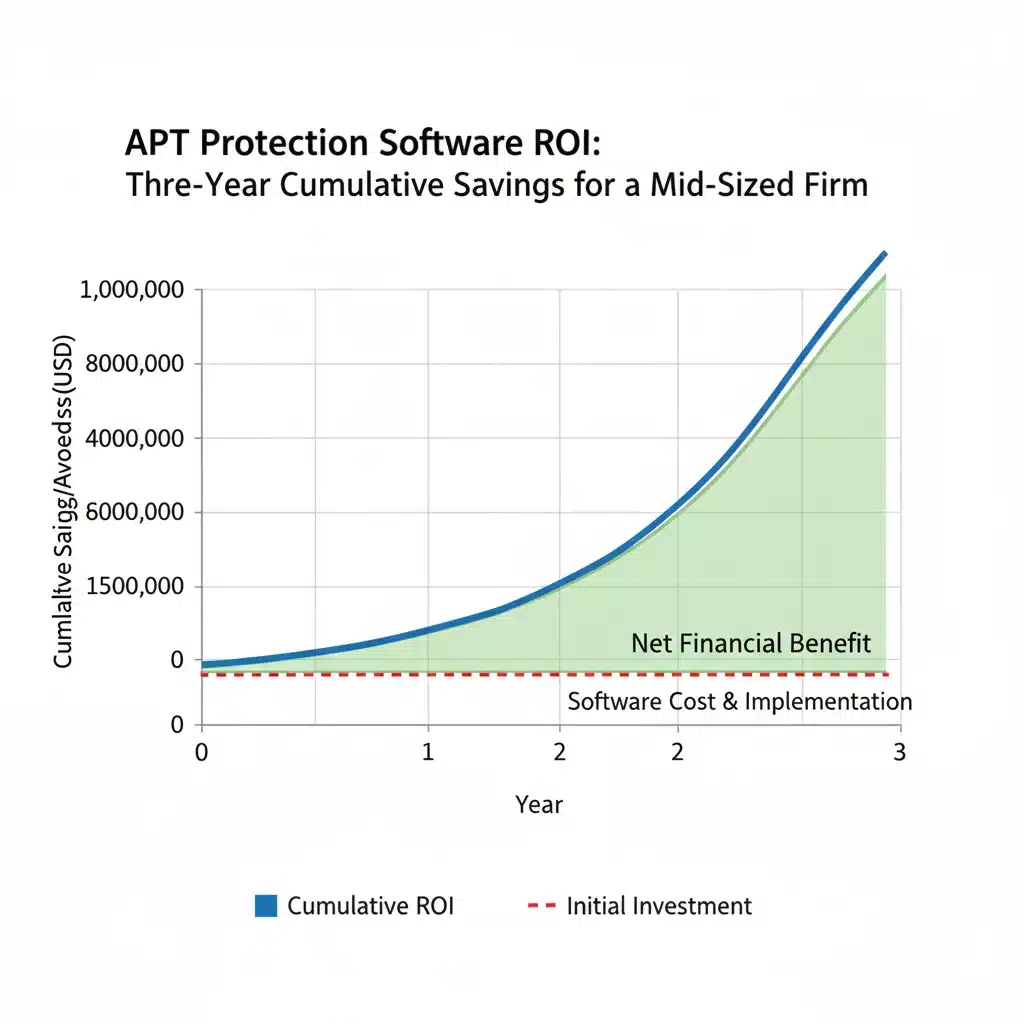
Given the high potential avoided costs, the ROI for effective APT protection software is typically very strong, often paying for itself many times over within the first year.
4. Stress Competitive Advantage and Trust
Beyond direct financial metrics, underscore the intangible benefits: enhanced customer trust, stronger brand reputation, and a competitive edge in an increasingly security-conscious market. A firm known for its robust security posture is more attractive to clients and partners.
5. Regulatory Compliance and Due Diligence
Position APT protection as a fundamental component of meeting regulatory compliance requirements and demonstrating due diligence to stakeholders, auditors, and potential investors.
Implementing APT Protection: Beyond Software
While powerful APT protection software is the cornerstone of defense, it’s important to remember that technology alone is not a panacea. For maximum effectiveness and to truly unlock the full potential of APT protection software savings, firms must also consider:
- Security Awareness Training: Employees are often the first line of defense and the most common target for initial APT compromise (e.g., via spear phishing). Regular, comprehensive training can significantly reduce human error.
- Incident Response Plan: A well-defined and regularly tested incident response plan is crucial for minimizing the impact and cost of any breach that does occur.
- Regular Security Audits and Penetration Testing: Proactively identify vulnerabilities before attackers can exploit them.
- Strong Access Controls and Least Privilege: Limit access to sensitive systems and data only to those who absolutely need it.
- Patch Management: Keep all software and systems updated to patch known vulnerabilities that APTs often exploit.
- Data Backup and Recovery: Implement robust backup and recovery strategies to ensure business continuity even in the face of a successful attack.
A holistic approach, integrating technology, processes, and people, will maximize the efficacy of APT protection and, consequently, the financial benefits.
Conclusion
The threat of Advanced Persistent Threats is a formidable challenge for mid-sized firms, carrying the potential for devastating financial and reputational consequences. However, by strategically investing in robust APT protection software, these organizations can transform a significant risk into a substantial financial advantage. The ability to prevent costly data breaches, minimize operational downtime, reduce investigation expenses, protect brand reputation, and ensure regulatory compliance collectively translates into annual savings of up to $2 million.
This isn’t merely an expenditure on cybersecurity; it’s a strategic investment in the long-term financial health, stability, and competitive positioning of the firm. As cyber threats continue to evolve, the proactive adoption of comprehensive APT protection is no longer an option but a strategic imperative for any mid-sized business serious about safeguarding its future and maximizing its bottom line. Embracing APT protection software savings is, quite simply, smart business.