Cloud Security Software 2026: Protecting U.S. Businesses

Cloud Security Software in 2026: Protecting Your U.S. Business from Emerging Vulnerabilities
The digital landscape is in a constant state of flux, and for U.S. businesses, the year 2026 brings with it an accelerated evolution of cyber threats. As organizations increasingly migrate their critical operations, data, and applications to the cloud, the imperative for robust Cloud Security Software becomes not just a recommendation, but a fundamental requirement for survival and growth. The stakes are higher than ever, with data breaches costing U.S. companies millions and reputational damage proving even more detrimental.
This comprehensive guide delves into the future of Cloud Security Software, outlining the emerging vulnerabilities U.S. businesses will face in 2026 and the advanced solutions available to combat them. We’ll explore the technological advancements, strategic considerations, and best practices necessary to fortify your cloud infrastructure against the sophisticated adversaries of tomorrow.
The Evolving Threat Landscape: Why Cloud Security Software is Critical for U.S. Businesses in 2026
The year 2026 is projected to witness a significant escalation in the sophistication and volume of cyberattacks. Threat actors are no longer just individuals or small groups; they are often well-funded, state-sponsored entities or highly organized criminal syndicates. Their targets are diverse, but U.S. businesses, particularly those with valuable intellectual property or sensitive customer data, remain prime objectives. The reliance on cloud services, while offering unparalleled flexibility and scalability, also introduces new attack vectors that traditional security measures may not adequately address.
Advanced Persistent Threats (APTs)
APTs will continue to be a major concern. These stealthy attacks involve prolonged espionage, where attackers gain access to a network and remain undetected for extended periods, exfiltrating data or disrupting operations. Cloud Security Software in 2026 will need to incorporate advanced behavioral analytics and AI-driven anomaly detection to identify and neutralize these persistent threats before significant damage occurs.
Supply Chain Attacks
The interconnected nature of modern businesses means that a vulnerability in one vendor’s system can compromise an entire supply chain. Attackers are increasingly targeting third-party software providers and cloud service providers to gain access to their clients’ environments. Robust Cloud Security Software must include capabilities for third-party risk management, continuous monitoring of vendor security postures, and stringent access controls.
Ransomware 2.0 and Data Extortion
Ransomware is evolving beyond mere data encryption. In 2026, we’ll see more sophisticated ‘Ransomware 2.0’ attacks that not only encrypt data but also exfiltrate it, threatening to publish sensitive information if the ransom isn’t paid. This double extortion tactic puts immense pressure on businesses. Effective Cloud Security Software will offer immutable backups, advanced threat intelligence, and rapid recovery mechanisms to minimize the impact of such attacks.
AI-Powered Attacks and Deepfakes
The rise of artificial intelligence (AI) is a double-edged sword. While AI is a powerful tool for defense, it also empowers attackers to create more convincing phishing scams, generate deepfake audio and video for social engineering, and automate attack processes at an unprecedented scale. Cloud Security Software will need to leverage AI and machine learning (ML) itself to detect and counter these AI-generated threats, distinguishing genuine interactions from malicious fabrications.
Misconfiguration and Human Error
Despite technological advancements, human error and misconfigurations remain leading causes of cloud breaches. Complex cloud environments can be challenging to manage, leading to inadvertently exposed data or overly permissive access rights. Next-generation Cloud Security Software will emphasize automated compliance checks, continuous security posture management (CSPM), and identity and access management (IAM) solutions to mitigate these internal risks.
Key Features of Advanced Cloud Security Software in 2026
To effectively counter the threats of 2026, Cloud Security Software must offer a comprehensive suite of capabilities. These features go beyond traditional firewalls and antivirus, embracing a more proactive, intelligent, and integrated approach to security.
Cloud Workload Protection Platforms (CWPP)
CWPPs will be central to protecting cloud-native applications and workloads across various cloud environments. These platforms provide unified visibility and control over virtual machines, containers, and serverless functions, offering vulnerability management, runtime protection, and micro-segmentation.
Cloud Security Posture Management (CSPM)
CSPM tools are essential for continuously monitoring cloud environments for misconfigurations, compliance violations, and security risks. In 2026, CSPM will become even more intelligent, offering real-time remediation suggestions and integrating seamlessly with DevOps pipelines to embed security earlier in the development lifecycle.
Cloud Access Security Brokers (CASB)
CASBs act as a gatekeeper between an organization’s on-premises infrastructure and its cloud provider’s infrastructure. They enforce security policies, provide data loss prevention (DLP), and offer threat protection for cloud services. Advanced CASBs in 2026 will have enhanced AI capabilities for user behavior analytics and sophisticated threat intelligence feeds.
Identity and Access Management (IAM) with Zero Trust
The principle of ‘never trust, always verify’ will be paramount. IAM solutions, integrated with multi-factor authentication (MFA) and adaptive authentication, will ensure that only authorized users and devices can access cloud resources. Zero Trust Network Access (ZTNA) will replace traditional VPNs, providing granular, context-aware access to applications and data regardless of location.
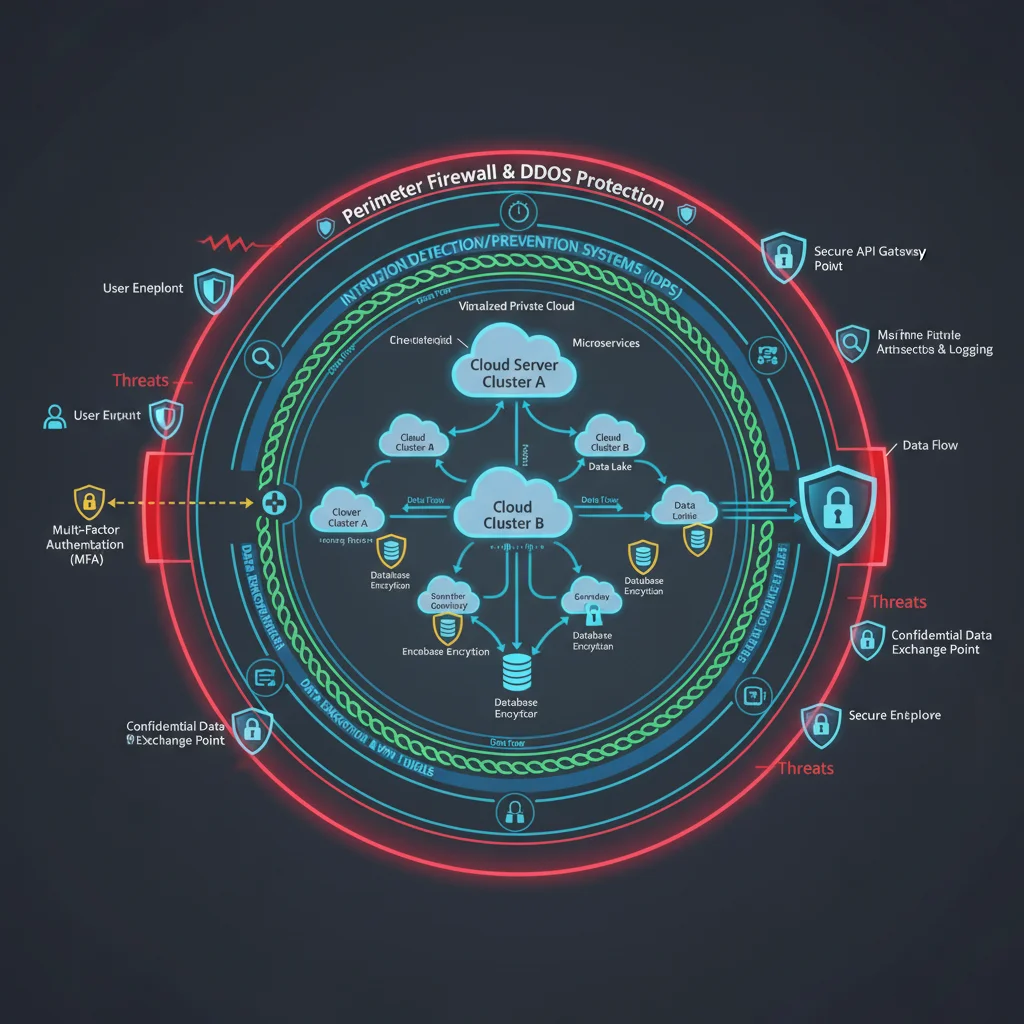
Data Loss Prevention (DLP) and Encryption
Protecting sensitive data, both at rest and in transit, is non-negotiable. Advanced DLP solutions will automatically classify data, monitor its movement, and prevent unauthorized sharing or exfiltration across cloud services. End-to-end encryption, leveraging quantum-resistant algorithms, will become standard practice for critical data.
Extended Detection and Response (XDR)
XDR platforms will unify security data from endpoints, networks, cloud environments, and applications, providing a holistic view of threats. This allows for faster detection, investigation, and response to sophisticated attacks that span multiple security domains. AI and ML will play a crucial role in correlating vast amounts of data and identifying subtle attack patterns.
Security Information and Event Management (SIEM) with SOAR Integration
While SIEM has been a cornerstone of security operations, in 2026, its effectiveness will be significantly amplified by integration with Security Orchestration, Automation, and Response (SOAR) platforms. This combination enables automated incident response, reducing the time from detection to resolution and freeing up security analysts to focus on more complex threats. Cloud-native SIEMs will be optimized for scalability and performance in dynamic cloud environments.
Implementing Cloud Security Software: Best Practices for U.S. Businesses in 2026
Simply acquiring the latest Cloud Security Software is not enough. Effective implementation and ongoing management are crucial. U.S. businesses must adopt a strategic approach that integrates technology with people and processes.
Conduct Regular Risk Assessments and Penetration Testing
Understanding your specific cloud attack surface and identifying potential vulnerabilities is the first step. Regular risk assessments, vulnerability scanning, and penetration testing (both internal and external) will help identify weaknesses before attackers exploit them. These should be conducted by independent third parties to ensure objectivity.
Embrace a DevSecOps Culture
Security should not be an afterthought but an integral part of the entire software development lifecycle. Adopting a DevSecOps culture means embedding security practices and tools into every stage, from design and development to deployment and operations. This proactive approach significantly reduces the number of vulnerabilities reaching production environments.
Prioritize Employee Training and Awareness
Even the most advanced Cloud Security Software can be circumvented by human error. Comprehensive and continuous employee training on cybersecurity best practices, phishing awareness, and safe cloud usage is vital. Employees should understand their role in maintaining the organization’s security posture.
Implement Strong Governance and Compliance Frameworks
U.S. businesses operate under a complex web of regulations, including HIPAA, GDPR (for data of EU citizens), CCPA, and industry-specific mandates. Your Cloud Security Software strategy must align with these compliance requirements, ensuring that data handling, privacy, and security controls meet legal and ethical standards. Regular audits and reporting are essential.
Automate Security Operations
Given the scale and speed of cloud environments, manual security processes are no longer sustainable. Automate as many security tasks as possible, including configuration management, vulnerability scanning, incident response, and policy enforcement. This not only improves efficiency but also reduces the likelihood of human error.
Establish a Robust Incident Response Plan
Despite best efforts, breaches can still occur. A well-defined and regularly tested incident response plan is critical. This plan should outline roles and responsibilities, communication protocols, containment strategies, forensic analysis procedures, and recovery steps. The faster an organization can respond to an incident, the less damage it will incur.
Partner with Trusted Cloud Service Providers and Security Vendors
Choosing the right cloud service provider (CSP) and Cloud Security Software vendors is paramount. Evaluate their security certifications, track record, and commitment to shared responsibility models. Ensure that your chosen partners offer robust security features, transparent reporting, and excellent support.
The Future of Cloud Security Software: Trends Beyond 2026
Looking beyond 2026, the evolution of Cloud Security Software will continue at a rapid pace, driven by emerging technologies and an ever-changing threat landscape.
Quantum-Resistant Cryptography
As quantum computing advances, current encryption methods may become vulnerable. The development and adoption of quantum-resistant cryptographic algorithms will be a critical area for future Cloud Security Software to ensure long-term data confidentiality.
Homomorphic Encryption
This advanced form of encryption allows computations to be performed on encrypted data without decrypting it first. This could revolutionize cloud privacy, enabling businesses to leverage cloud analytics and AI services without exposing sensitive data to the cloud provider.
Decentralized Identity and Blockchain for Security
Blockchain technology could offer new paradigms for decentralized identity management and secure data provenance, providing immutable audit trails and enhanced trust in cloud environments. This could significantly bolster the integrity of Cloud Security Software frameworks.
AI and Machine Learning for Predictive Security
While AI is already a key component, future Cloud Security Software will leverage AI and ML for increasingly predictive security. This means anticipating attacks before they happen, identifying nascent threat patterns, and proactively deploying countermeasures based on vast datasets of global threat intelligence.

Integrated Security Mesh Architectures
The concept of a security mesh, where security controls are distributed and integrated across a decentralized infrastructure, will gain prominence. This approach provides a more flexible and resilient security posture, especially in multi-cloud and hybrid-cloud environments, ensuring consistent application of Cloud Security Software policies.
Choosing the Right Cloud Security Software for Your U.S. Business
Selecting the appropriate Cloud Security Software is a critical decision that requires careful consideration of several factors:
- Scalability and Flexibility: Ensure the software can scale with your business growth and adapt to evolving cloud architectures.
- Integration Capabilities: It should seamlessly integrate with your existing cloud platforms (AWS, Azure, Google Cloud, etc.) and other security tools.
- Comprehensive Coverage: Look for solutions that offer broad protection across your entire cloud estate, from infrastructure to applications and data.
- Automation and Orchestration: Prioritize tools that automate security tasks and integrate with SOAR platforms to streamline incident response.
- Threat Intelligence: The software should be powered by robust, up-to-date threat intelligence feeds to detect the latest attack techniques.
- Compliance and Reporting: Ensure it helps you meet regulatory compliance requirements and provides detailed audit trails and reporting.
- Ease of Use and Management: A user-friendly interface and straightforward management are crucial for efficient operation, especially for smaller teams.
- Vendor Support and Reputation: Choose a vendor with a strong reputation for innovation, reliable support, and a commitment to customer success.
For U.S. businesses, understanding the specific regulatory landscape and data residency requirements is also paramount. Many Cloud Security Software providers offer solutions tailored to specific industries or compliance standards, which can be a significant advantage.
The Cost-Benefit Analysis of Cloud Security Software
While investing in advanced Cloud Security Software might seem like a significant expenditure, it’s crucial to view it as an investment rather than just a cost. The financial and reputational repercussions of a data breach far outweigh the cost of proactive security measures.
- Reduced Risk of Breaches: Proactive security significantly lowers the probability of successful cyberattacks.
- Compliance Adherence: Avoiding hefty fines and legal penalties associated with non-compliance.
- Business Continuity: Minimizing downtime and ensuring operational resilience in the face of cyber incidents.
- Reputation Protection: Maintaining customer trust and brand integrity, which are invaluable assets.
- Data Protection: Safeguarding sensitive customer data, intellectual property, and critical business information.
- Operational Efficiency: Automated security processes can free up IT resources, allowing them to focus on strategic initiatives.
In 2026, the question for U.S. businesses will not be whether to invest in Cloud Security Software, but rather how to implement the most effective and comprehensive solutions to protect their invaluable cloud assets.
Conclusion: Securing the Cloud Future for U.S. Businesses
The landscape of cloud computing is dynamic, offering unprecedented opportunities for innovation and efficiency. However, with these opportunities come increasingly sophisticated cyber threats. For U.S. businesses navigating 2026 and beyond, robust Cloud Security Software is the bedrock of a secure digital future.
By understanding the evolving threat landscape, embracing advanced security features like CWPP, CSPM, CASB, and XDR, and implementing best practices such as DevSecOps and continuous employee training, organizations can build resilient cloud environments. The commitment to strong Cloud Security Software is not merely a technical decision; it is a strategic imperative that ensures business continuity, protects sensitive data, maintains customer trust, and fosters sustainable growth in an increasingly interconnected and vulnerable world. Proactive investment and continuous adaptation will be the hallmarks of successful U.S. businesses in the years to come.