IAM Trends 2026: Securing U.S. Enterprise Data with Advanced Software

In the rapidly evolving digital landscape, safeguarding sensitive information has become paramount for U.S. enterprises. As cyber threats grow in sophistication and regulatory scrutiny intensifies, the role of Identity and Access Management (IAM) is more critical than ever. We stand at the precipice of significant transformations, and understanding the key IAM trends 2026 is not just beneficial, but essential for survival and growth in the competitive market.
This comprehensive guide will delve deep into the future of IAM, exploring the advanced software solutions and strategic approaches U.S. businesses must adopt to secure their data effectively. From the rise of AI-powered authentication to the pervasive implementation of Zero Trust principles, we will uncover the strategies that will define enterprise security in the coming years.
The Evolving Threat Landscape: Why IAM is More Crucial Than Ever
The digital world of 2026 presents a formidable array of challenges for U.S. enterprises. Cybercriminals are no longer content with simple phishing attacks; they are employing advanced persistent threats (APTs), ransomware-as-a-service models, and sophisticated social engineering tactics. Furthermore, the proliferation of cloud services, remote workforces, and the Internet of Things (IoT) has expanded the attack surface exponentially. Each new endpoint, application, and user represents a potential vulnerability that can be exploited. This dynamic environment underscores why robust IAM solutions are no longer a luxury but a fundamental necessity for any organization aiming to protect its intellectual property, customer data, and operational integrity.
One of the most concerning aspects of this evolving threat landscape is the increasing focus on identity. Attackers understand that compromising a single identity can grant them access to an entire network, bypassing layers of perimeter defenses. This shift makes identity the new perimeter, placing immense pressure on IAM systems to be infallible. As we look at IAM trends 2026, it becomes clear that traditional, static access controls are insufficient. Enterprises need agile, intelligent, and adaptive IAM frameworks that can not only authenticate users but also continuously verify their authorization and behavior in real-time.
Moreover, the regulatory environment is becoming increasingly stringent. Regulations like CCPA, HIPAA, and industry-specific mandates require meticulous control over who can access what data, when, and from where. Non-compliance can lead to hefty fines, reputational damage, and loss of customer trust. Therefore, IAM is not just about security; it’s also about governance, risk management, and ensuring an organization’s legal and ethical responsibilities are met. The intersection of these factors makes the discussion around IAM trends 2026 incredibly timely and relevant for all U.S. businesses.
Key IAM Trends 2026: A Deep Dive into the Future of Identity Security
The year 2026 will see several transformative shifts in the realm of Identity and Access Management. These trends are driven by technological advancements, the changing nature of cyber threats, and the increasing demand for seamless yet secure user experiences. U.S. enterprises that embrace these trends will be better positioned to defend against attacks, streamline operations, and foster innovation.
1. AI and Machine Learning Driven IAM
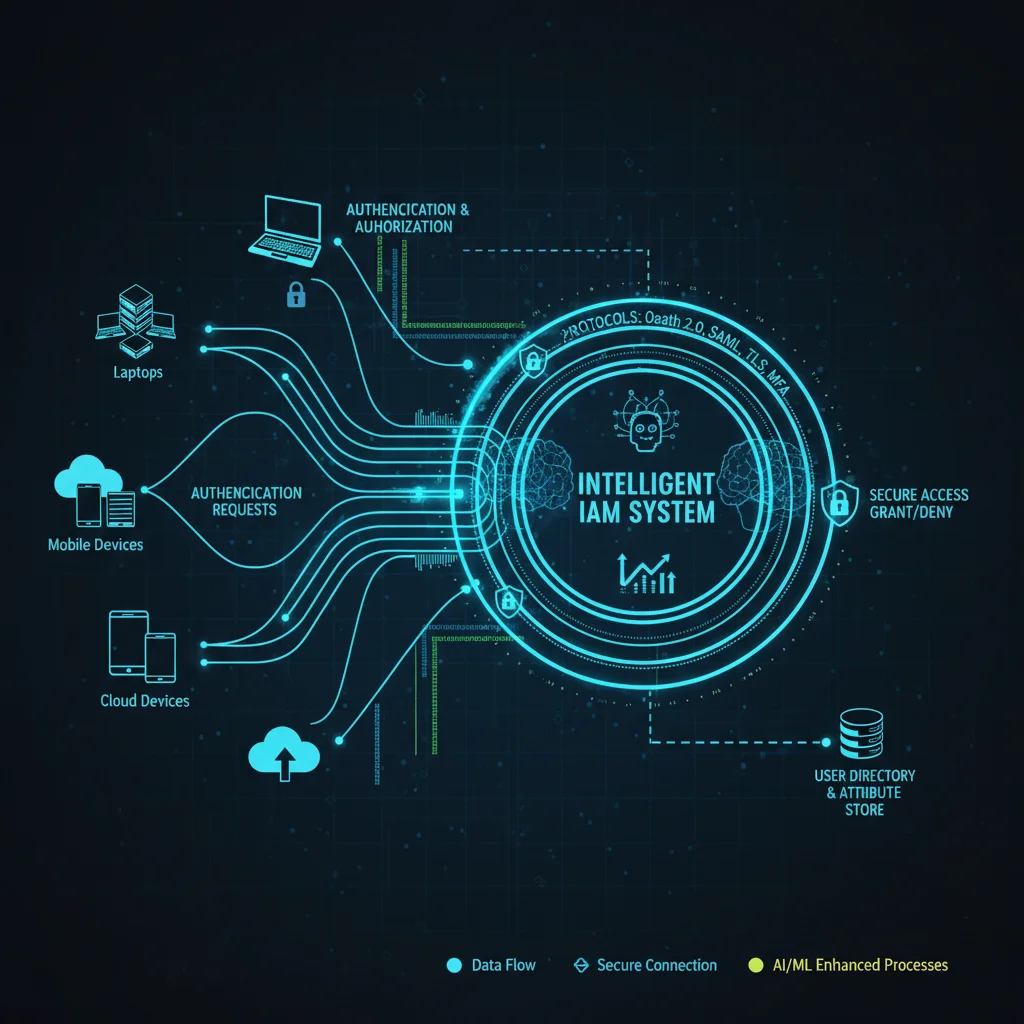
Artificial Intelligence (AI) and Machine Learning (ML) are no longer buzzwords in cybersecurity; they are becoming integral components of advanced IAM solutions. In 2026, AI/ML will revolutionize how identities are managed and protected. These technologies will enable predictive analytics to identify potential threats before they materialize, detect anomalies in user behavior that indicate a compromise, and automate complex access decisions.
For instance, an AI-powered IAM system can learn a user’s typical login patterns, devices, locations, and access requests. If a login attempt occurs from an unusual location at an odd hour, or if a user suddenly tries to access highly sensitive data they’ve never touched before, the AI can flag this as suspicious. It can then trigger additional authentication steps, restrict access, or alert security teams, all without manual intervention. This capability is crucial for identifying insider threats, compromised credentials, and sophisticated phishing attacks that might bypass traditional defenses.
Furthermore, AI will play a significant role in automating access provisioning and de-provisioning, ensuring that users have the right level of access from day one and that access is revoked promptly when roles change or employees leave. This automation reduces human error, improves efficiency, and enhances the overall security posture. The integration of AI and ML will define the intelligence and responsiveness of IAM trends 2026.
2. The Pervasive Adoption of Zero Trust Architecture
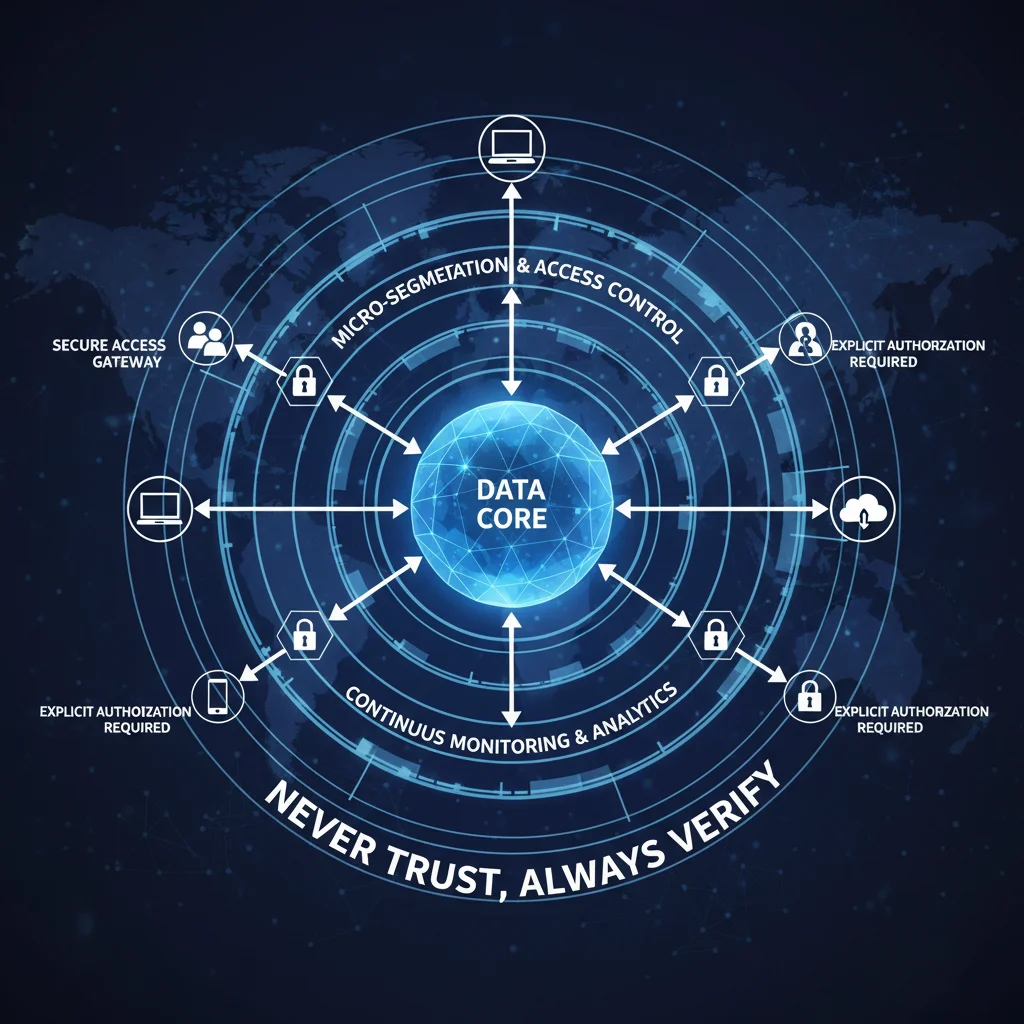
The Zero Trust security model, built on the principle of ‘never trust, always verify,’ will be a cornerstone of enterprise security strategies by 2026. This model dictates that no user, device, or application, whether inside or outside the network perimeter, should be implicitly trusted. Every access request must be authenticated, authorized, and continuously validated. This approach is a radical departure from traditional perimeter-based security, which often assumes that anything inside the firewall is safe.
For U.S. enterprises, implementing Zero Trust means meticulously defining and enforcing access policies based on identity, device posture, location, and the sensitivity of the resource being accessed. It requires robust multi-factor authentication (MFA), granular access controls, and continuous monitoring of all activities. IAM solutions are central to Zero Trust, providing the mechanisms for identity verification and policy enforcement across the entire digital infrastructure.
The benefits of Zero Trust are profound: it significantly reduces the impact of breaches by containing lateral movement, protects against insider threats, and provides a resilient framework for securing hybrid and multi-cloud environments. As organizations continue to decentralize their IT infrastructure, Zero Trust will become the de facto standard for securing access, making it a pivotal element of IAM trends 2026.
3. Passwordless Authentication and FIDO Standards
The era of passwords is slowly but surely coming to an end. Passwords are a primary attack vector, vulnerable to phishing, brute-force attacks, and credential stuffing. In 2026, passwordless authentication methods will gain widespread adoption, significantly enhancing both security and user experience.
Technologies such as biometrics (fingerprint, facial recognition, voice recognition), hardware security keys (like YubiKeys), and magic links will become common. The FIDO (Fast IDentity Online) Alliance standards will play a crucial role in interoperability and widespread adoption of these passwordless solutions. FIDO-certified authenticators offer strong, phishing-resistant security by leveraging public-key cryptography.
For U.S. enterprises, transitioning to passwordless IAM will reduce help desk costs associated with password resets, improve user productivity by eliminating friction, and most importantly, drastically diminish the risk of identity-based attacks. This shift represents a significant improvement in both convenience and security, solidifying its place among the top IAM trends 2026.
4. Identity Fabric and Decentralized Identity
As enterprises grapple with a fragmented identity landscape – users, devices, and applications spread across on-premise, cloud, and hybrid environments – the concept of an ‘identity fabric’ will emerge as a critical solution. An identity fabric is an integrated, unified layer that connects and orchestrates various identity systems, directories, and authentication sources, providing a consistent view and control over all identities.
This approach allows organizations to manage identities and access policies from a single pane of glass, irrespective of where the identities reside or where the resources are located. It simplifies administration, enhances visibility, and ensures consistent policy enforcement across the entire ecosystem. The identity fabric will be crucial for U.S. enterprises dealing with complex mergers and acquisitions, diverse IT infrastructures, and extensive partner ecosystems.
Furthermore, decentralized identity, often powered by blockchain technology, will begin to gain traction. This model gives individuals more control over their digital identities, allowing them to selectively share verified credentials without relying on a central authority. While still in its nascent stages for widespread enterprise adoption, decentralized identity holds the promise of enhanced privacy and security, and its impact will be a key discussion point in the broader IAM trends 2026.
5. Cloud-Native IAM and CIEM
The mass migration to cloud computing necessitates cloud-native IAM solutions. Traditional on-premise IAM systems are often ill-equipped to handle the dynamic, elastic, and distributed nature of cloud environments. Cloud-native IAM is designed from the ground up to secure cloud workloads, applications, and data, offering scalability, flexibility, and integration with cloud provider services.
A significant area within cloud-native IAM is Cloud Infrastructure Entitlement Management (CIEM). CIEM solutions focus on managing and optimizing permissions and entitlements across multi-cloud environments. They help U.S. enterprises identify and remediate excessive or unused permissions, which are a major source of cloud security risks. By providing granular visibility and control over who can do what in the cloud, CIEM addresses a critical blind spot for many organizations.
The complexity of managing identities and permissions across AWS, Azure, Google Cloud, and other platforms makes CIEM an indispensable tool. It helps enforce the principle of least privilege in the cloud, preventing unauthorized access and reducing the blast radius of a potential breach. Cloud-native IAM and CIEM will be non-negotiable components of any robust security strategy, shaping the landscape of IAM trends 2026.
6. Enhanced Governance and Compliance Automation
As mentioned, regulatory compliance is a significant driver for IAM. In 2026, IAM solutions will offer even more sophisticated governance and compliance automation features. This includes automated access reviews, policy enforcement engines, and comprehensive auditing and reporting capabilities tailored to specific regulatory frameworks.
Enterprises will leverage IAM platforms to automatically generate compliance reports for GDPR, HIPAA, SOX, and other regulations, significantly reducing the manual effort and potential for error. These systems will also provide continuous monitoring of access policies to ensure they remain compliant with evolving legal requirements. The ability to demonstrate a strong audit trail of who accessed what and why is crucial for avoiding penalties and maintaining stakeholder trust. This focus on automated governance will be a defining characteristic of IAM trends 2026, particularly for U.S. enterprises operating in highly regulated sectors.
7. Identity Threat Detection and Response (ITDR)
While traditional IAM focuses on preventing unauthorized access, Identity Threat Detection and Response (ITDR) is an emerging category that focuses on detecting and responding to identity-based attacks once they are underway. ITDR solutions integrate with IAM systems to provide real-time monitoring of identity infrastructure, identifying suspicious activities, and orchestrating automated responses.
This includes detecting credential abuse, privilege escalation attempts, lateral movement using stolen identities, and other advanced tactics. ITDR leverages AI/ML to analyze behavioral patterns and identify anomalies that indicate a compromise. Once a threat is detected, ITDR can trigger immediate actions, such as isolating affected accounts, revoking access, or initiating incident response workflows. As identity becomes the primary attack surface, ITDR will become a critical layer of defense, complementing traditional IAM and shaping the proactive security posture for IAM trends 2026.
Implementing Advanced IAM Software: A Strategic Imperative for U.S. Enterprises
Adopting these advanced IAM trends 2026 requires a strategic approach. It’s not merely about purchasing new software; it’s about fundamentally rethinking how identities are managed and secured across the entire organization. U.S. enterprises must embark on a journey that includes assessment, planning, implementation, and continuous optimization.
1. Comprehensive Assessment and Roadmap Development
Before implementing any new IAM solution, organizations must conduct a thorough assessment of their current identity landscape. This includes cataloging all users, applications, systems, and data, understanding existing access policies, and identifying vulnerabilities. A clear roadmap should then be developed, outlining the phased approach to adopting advanced IAM capabilities. This roadmap should align with business objectives, regulatory requirements, and the organization’s risk appetite.
2. Prioritizing Identity Governance and Administration (IGA)
At the core of any effective IAM strategy is robust Identity Governance and Administration (IGA). IGA solutions provide the framework for defining, enforcing, and auditing access policies. In 2026, IGA will be increasingly automated, leveraging AI for access certifications, role management, and policy enforcement. U.S. enterprises must invest in IGA solutions that offer granular control, comprehensive reporting, and seamless integration with other security tools.
3. Integrating with Existing Security Ecosystems
Modern IAM solutions do not operate in a vacuum. They must integrate seamlessly with other components of the security ecosystem, including Security Information and Event Management (SIEM) systems, Security Orchestration, Automation, and Response (SOAR) platforms, and endpoint detection and response (EDR) tools. This integration creates a unified view of security events, enables faster threat detection, and facilitates automated responses, maximizing the value of the IAM trends 2026.
4. User Experience (UX) and Adoption
While security is paramount, the user experience cannot be overlooked. Complex and cumbersome IAM processes can lead to user frustration, workarounds, and ultimately, security vulnerabilities. Advanced IAM solutions in 2026 will prioritize a balance between strong security and ease of use. Passwordless authentication, single sign-on (SSO), and intuitive self-service portals will be critical for driving user adoption and ensuring that security measures enhance, rather than hinder, productivity.
5. Training and Awareness Programs
Technology alone is not enough. Employees are often the weakest link in the security chain. U.S. enterprises must invest in continuous training and awareness programs to educate users about the importance of strong identity practices, the risks of social engineering, and how to use new IAM tools effectively. A security-aware culture is indispensable for maximizing the benefits of the IAM trends 2026 and protecting against human error.
6. Continuous Monitoring and Adaptation
The cyber threat landscape is constantly evolving, and so too must IAM strategies. Organizations must implement continuous monitoring of their IAM systems, regularly review access policies, and adapt their security posture in response to new threats and business requirements. This iterative approach ensures that IAM remains effective and resilient over time.
The Economic and Strategic Advantages of Proactive IAM
Investing in advanced IAM solutions and embracing the IAM trends 2026 offers significant economic and strategic advantages for U.S. enterprises. Beyond simply preventing breaches, robust IAM can drive efficiency, foster innovation, and build customer trust.
Economically, strong IAM reduces the financial impact of cyberattacks, which can include regulatory fines, legal fees, remediation costs, and reputational damage. By automating access management and governance, organizations can also realize significant operational efficiencies, reducing the burden on IT staff and freeing up resources for more strategic initiatives. The ROI on IAM investments becomes increasingly clear as enterprises quantify the avoided costs of breaches and the gains from streamlined operations.
Strategically, a secure identity foundation enables businesses to confidently expand into new markets, adopt cutting-edge technologies like AI and IoT, and collaborate more securely with partners and customers. It builds a reputation for trustworthiness, which is a powerful differentiator in a competitive market. Furthermore, complying with evolving data privacy regulations through advanced IAM can unlock new business opportunities by enabling secure data sharing and processing.
In the highly interconnected world of 2026, the ability to securely manage and control access to digital assets will be a core competency for successful U.S. enterprises. Those that prioritize and strategically implement advanced IAM will not only protect their present but also secure their future.
Conclusion: Navigating the Future with Intelligent IAM
The journey towards a more secure digital future for U.S. enterprises is inextricably linked to the advancements in Identity and Access Management. The IAM trends 2026 point towards a landscape where AI-driven intelligence, Zero Trust principles, passwordless authentication, and comprehensive cloud-native solutions are not just aspirational but foundational.
Organizations must move beyond reactive security measures and embrace a proactive, identity-centric approach. By strategically adopting advanced IAM software, U.S. businesses can fortify their defenses against an ever-growing array of cyber threats, ensure compliance with complex regulatory mandates, and empower their workforce with seamless, secure access to the resources they need. The future of enterprise data security is intelligent, adaptive, and identity-driven, and the time to prepare for it is now.