Zero-Trust Architecture 2026: U.S. Enterprise Implementation Guide

The digital landscape is constantly evolving, bringing with it both unprecedented opportunities and increasingly sophisticated threats. For U.S. enterprises, the traditional perimeter-based security model is no longer sufficient to protect valuable assets from determined adversaries. As we look towards 2026, the imperative to adopt a more resilient and proactive cybersecurity posture has never been clearer. This is where Zero-Trust Architecture Implementation steps in, offering a paradigm shift from implicit trust to explicit verification.
Zero-Trust Architecture (ZTA) is not merely a product or a single technology; it’s a strategic approach to cybersecurity that assumes no user, device, or application should be trusted by default, regardless of whether they are inside or outside the network perimeter. Every access attempt, every transaction, and every connection must be authenticated, authorized, and continuously validated. This comprehensive guide will delve into the critical aspects of implementing ZTA in U.S. enterprises, outlining a step-by-step process to achieve robust security by 2026.
Understanding the Zero-Trust Paradigm
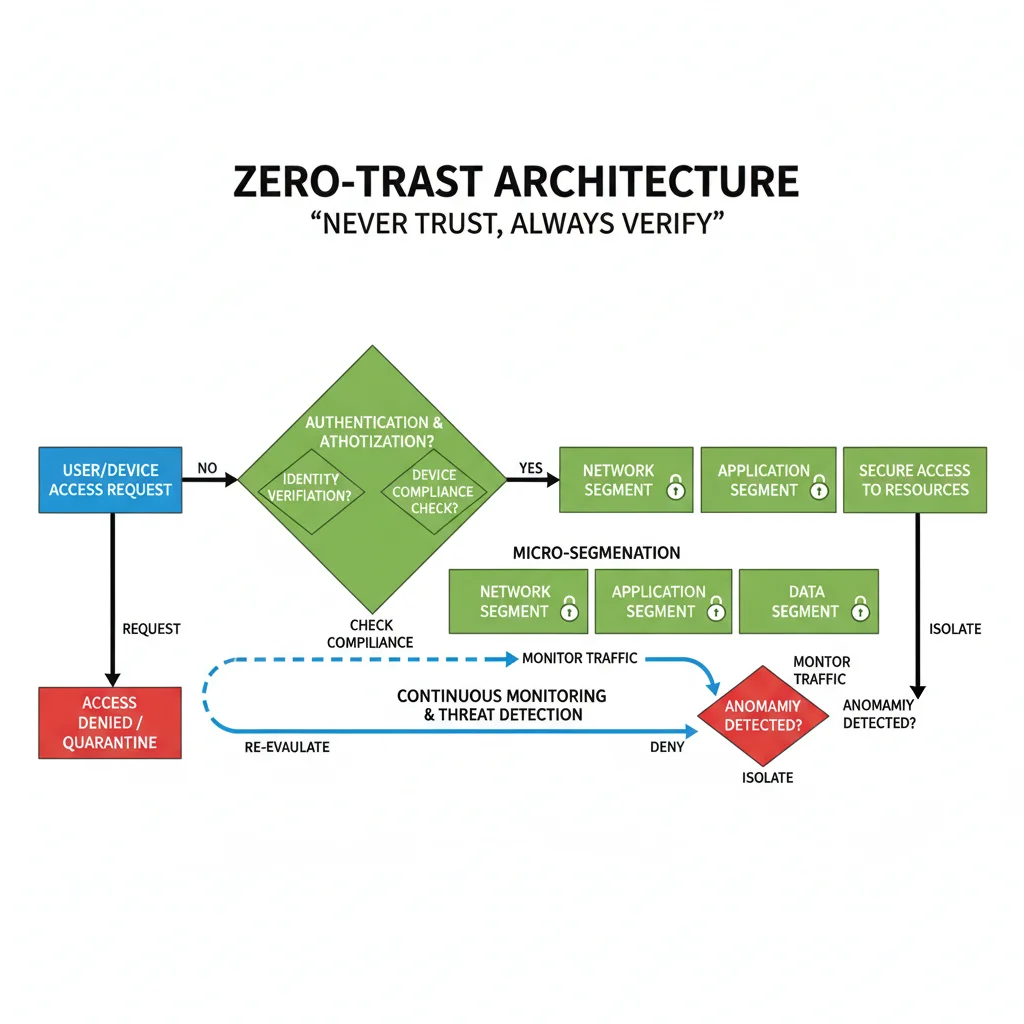
Before embarking on the implementation journey, it’s crucial to grasp the foundational principles of Zero-Trust Architecture. The core tenet is "never trust, always verify." This philosophy challenges the long-held belief that everything inside an organization’s network is inherently secure. Instead, it treats every access request as if it originates from an untrusted network, requiring strict validation before granting access.
Key Principles of Zero Trust:
- Verify Explicitly: Authenticate and authorize every device, user, and application before granting access. This involves strong multi-factor authentication (MFA), role-based access control (RBAC), and attribute-based access control (ABAC).
- Least Privilege Access: Grant users and devices only the minimum access necessary to perform their tasks. This minimizes the potential blast radius of a breach.
- Assume Breach: Operate under the assumption that a breach is inevitable or has already occurred. This mindset drives continuous monitoring, detection, and response capabilities.
- Micro-segmentation: Divide the network into small, isolated segments to limit lateral movement of threats. This prevents an attacker from gaining access to one part of the network and easily moving to others.
- Multi-factor Authentication (MFA): Require users to provide two or more verification factors to gain access to resources.
- Continuous Monitoring and Validation: Continuously monitor and validate the security posture of all assets, users, and applications. This includes real-time threat detection and behavioral analytics.
The shift to ZTA is driven by several factors, including the increasing sophistication of cyberattacks, the rise of remote work, the proliferation of cloud services, and the growing regulatory pressure to protect sensitive data. For U.S. enterprises, adopting Zero-Trust Architecture Implementation is no longer an option but a strategic imperative to safeguard their digital future.
The Strategic Imperative for U.S. Enterprises
The U.S. government has been a strong proponent of Zero Trust, with President Biden issuing an Executive Order on Improving the Nation’s Cybersecurity in May 2021, mandating a move towards ZTA for federal agencies. This directive signals a clear direction for the entire U.S. business ecosystem. Enterprises that proactively adopt ZTA will not only enhance their security posture but also gain a competitive advantage.
Benefits of Zero-Trust Architecture for U.S. Enterprises:
- Reduced Attack Surface: By verifying every access attempt and segmenting the network, ZTA significantly reduces the potential entry points for attackers.
- Improved Breach Containment: Micro-segmentation prevents lateral movement of threats, limiting the damage an attacker can inflict even if they breach an initial point.
- Enhanced Data Protection: Strict access controls ensure that only authorized individuals and devices can access sensitive data, bolstering compliance with regulations like HIPAA, GDPR, and CCPA.
- Better Remote Work Security: ZTA is inherently designed to secure access from any location or device, making it ideal for distributed workforces.
- Simplified Compliance: The principles of ZTA often align with and help meet various regulatory requirements, simplifying the compliance burden.
- Greater Visibility and Control: Continuous monitoring provides deep insights into network activity, allowing for faster detection and response to anomalies.
The journey to Zero-Trust Architecture Implementation is transformative, requiring a holistic approach that impacts technology, processes, and people. It’s an investment in resilience and future-proofing against an ever-evolving threat landscape.
Step-by-Step Guide to Zero-Trust Architecture Implementation by 2026
Implementing Zero-Trust Architecture is a multi-year endeavor that requires careful planning, executive buy-in, and a phased approach. Here’s a detailed roadmap for U.S. enterprises to achieve ZTA by 2026.
Phase 1: Assessment and Planning (2023-2024)
The initial phase focuses on understanding your current environment and defining the scope of your ZTA initiative.
1. Gain Executive Buy-in and Establish a Zero-Trust Team:
- Secure Leadership Support: Present the business case for ZTA to senior management, highlighting risks, benefits, and the strategic imperative.
- Form a Cross-Functional Team: Assemble a team comprising representatives from IT, security, legal, compliance, and business units. This ensures a holistic perspective and smooth integration.
2. Conduct a Comprehensive Inventory and Assessment:
- Identify All Assets: Document all users, devices (managed and unmanaged), applications, data, and services across your on-premises, cloud, and hybrid environments. This includes IoT devices and operational technology (OT).
- Map Data Flows and Dependencies: Understand how data moves across your network and the dependencies between applications and services. This is crucial for micro-segmentation.
- Assess Current Security Posture: Evaluate existing security controls, policies, and gaps against ZTA principles. Identify areas that require immediate attention and those that can be leveraged.
3. Define Your Zero-Trust Strategy and Roadmap:
- Establish Clear Objectives: What are you trying to achieve with ZTA? (e.g., reduce breach risk, improve compliance, secure remote access).
- Prioritize Critical Assets: Begin by securing your most sensitive data and critical applications. This provides early wins and demonstrates value.
- Develop a Phased Implementation Plan: Break down the ZTA journey into manageable phases, with clear milestones and timelines leading up to 2026.
- Choose a Zero-Trust Framework: Consider adopting frameworks like NIST SP 800-207, which provides a structured approach to ZTA implementation.
Phase 2: Foundational Technology Implementation (2024-2025)
This phase involves deploying and configuring the core technologies that underpin Zero-Trust Architecture.
1. Strengthen Identity and Access Management (IAM):
- Implement Strong MFA: Deploy MFA across all user accounts, especially for privileged access.
- Centralize Identity Management: Leverage an Identity Provider (IdP) for single sign-on (SSO) and centralized user provisioning.
- Implement Role-Based and Attribute-Based Access Control (RBAC/ABAC): Define granular access policies based on user roles, attributes (e.g., location, device health), and resource sensitivity.
- Privileged Access Management (PAM): Secure and monitor privileged accounts to prevent misuse.
2. Deploy and Configure Endpoint Security and Device Posture Checking:
- Advanced Endpoint Detection and Response (EDR): Implement EDR solutions to monitor endpoint activity, detect threats, and respond automatically.
- Device Health and Compliance: Establish policies to assess the security posture of all devices (e.g., up-to-date patches, antivirus, encryption) before granting access.
- Network Access Control (NAC): Control which devices can connect to the network based on their security posture.
3. Implement Micro-segmentation:
- Network Segmentation Tools: Utilize firewalls, Software-Defined Networking (SDN), or cloud-native security groups to create granular network segments.
- Isolate Critical Assets: Create separate segments for sensitive data, critical applications, and administrative interfaces.
- Policy Enforcement: Define and enforce policies that control traffic between segments, allowing only authorized communication.
4. Enhance Network and Application Security:
- Next-Generation Firewalls (NGFW): Deploy NGFWs with deep packet inspection, intrusion prevention, and application awareness.
- Secure Web Gateways (SWG) and Cloud Access Security Brokers (CASB): Secure internet access and enforce policies for cloud applications.
- API Security: Implement robust security for APIs, which are often overlooked but critical entry points.
Phase 3: Continuous Monitoring and Optimization (2025-2026)
ZTA is not a one-time project; it’s an ongoing process of continuous improvement and adaptation.
1. Implement Security Information and Event Management (SIEM) and Security Orchestration, Automation, and Response (SOAR):
- Centralized Logging and Analytics: Aggregate security logs from all sources into a SIEM for correlation and analysis.
- Automated Response: Use SOAR platforms to automate incident response workflows, reducing manual effort and improving reaction times.
- Threat Intelligence Integration: Integrate threat intelligence feeds to proactively identify and mitigate emerging threats.
2. Establish Continuous Monitoring and Validation:
- Behavioral Analytics: Monitor user and entity behavior to detect anomalies that may indicate a compromise.
- Vulnerability Management: Regularly scan for vulnerabilities and patch systems promptly.
- Continuous Compliance Audits: Regularly audit security configurations and access policies to ensure compliance with ZTA principles and regulatory requirements.
3. Foster a Security Culture and Provide Ongoing Training:
- Employee Education: Train employees on ZTA principles, phishing awareness, and best security practices.
- Security Awareness Programs: Implement ongoing security awareness campaigns to keep security top of mind.
- Incident Response Drills: Conduct regular incident response drills to test the effectiveness of your ZTA controls and improve your team’s readiness.
4. Regularly Review and Optimize:
- Performance Metrics: Define key performance indicators (KPIs) to measure the effectiveness of your ZTA implementation.
- Regular Audits and Assessments: Conduct periodic internal and external audits to identify areas for improvement.
- Adapt to New Threats and Technologies: Continuously adapt your ZTA strategy to address new cyber threats and leverage emerging security technologies.
By following these phases, U.S. enterprises can systematically build a robust Zero-Trust Architecture, making significant progress towards a more secure and resilient IT environment by 2026.
Challenges and Considerations in Zero-Trust Architecture Implementation
While the benefits of ZTA are clear, the implementation journey is not without its hurdles. U.S. enterprises must be prepared to address these challenges proactively.
1. Complexity and Integration:
Integrating various security tools and systems to achieve a cohesive ZTA can be complex. Legacy systems, diverse cloud environments, and a multitude of vendors can create integration challenges. A well-defined strategy and phased approach are crucial to manage this complexity.
2. Budgetary Constraints:
Implementing ZTA requires significant investment in new technologies, training, and personnel. Enterprises need to allocate sufficient resources and demonstrate a clear return on investment to secure funding.
3. Organizational Resistance to Change:
The shift from implicit trust to explicit verification can be met with resistance from users and IT staff accustomed to traditional security models. Effective change management, communication, and training are essential to overcome this.
4. Skill Gap:
A shortage of cybersecurity professionals with expertise in ZTA principles and technologies can hinder implementation. Enterprises may need to invest in training existing staff or hiring new talent.
5. Maintaining User Experience:
Strict security controls, if not implemented carefully, can negatively impact user experience and productivity. Balancing security with usability is critical to ensure adoption and avoid workarounds.
6. Vendor Lock-in:
Relying too heavily on a single vendor for ZTA solutions can lead to vendor lock-in. Enterprises should aim for a multi-vendor strategy where appropriate, ensuring interoperability and flexibility.
7. Continuous Adaptation:
The threat landscape is constantly evolving. ZTA is not a static solution but requires continuous adaptation and optimization to remain effective against new threats and vulnerabilities.
Addressing these challenges requires a strategic mindset, strong leadership, and a commitment to continuous improvement. U.S. enterprises that successfully navigate these hurdles will build a robust and future-proof security posture.

The Future of Zero Trust in 2026 and Beyond
By 2026, Zero-Trust Architecture will no longer be a niche concept but a fundamental requirement for U.S. enterprises. The advancements in artificial intelligence (AI) and machine learning (ML) will further enhance ZTA capabilities, enabling more sophisticated threat detection, automated policy enforcement, and adaptive access controls.
Emerging Trends and Technologies:
- AI-Powered Threat Detection: AI and ML will play an increasingly vital role in analyzing vast amounts of security data to identify anomalous behavior and predict potential threats in real-time.
- Behavioral Biometrics: Enhanced authentication mechanisms, including behavioral biometrics, will provide more seamless and secure user verification.
- Quantum-Resistant Cryptography: As quantum computing advances, the need for quantum-resistant cryptography will become paramount to protect data against future threats.
- DevSecOps Integration: Integrating security into the DevOps pipeline (DevSecOps) will ensure that ZTA principles are embedded from the very beginning of the software development lifecycle.
- Automated Policy Management: AI and ML will enable more dynamic and automated policy management, adapting access controls based on real-time risk assessments.
- Identity Fabric: The concept of an "identity fabric" will emerge, providing a unified and intelligent layer for managing and securing all identities across diverse environments.
The proactive adoption of Zero-Trust Architecture Implementation will position U.S. enterprises at the forefront of cybersecurity, enabling them to innovate and grow securely in an increasingly interconnected and threat-filled world.
Conclusion: Securing the Enterprise Future with Zero Trust
The journey to implement Zero-Trust Architecture is a significant undertaking, but one that is absolutely essential for U.S. enterprises aiming to thrive in the digital economy of 2026 and beyond. By adopting a "never trust, always verify" mindset, organizations can build a resilient security framework that protects critical assets, ensures regulatory compliance, and empowers secure innovation.
This comprehensive guide has outlined a clear path for Zero-Trust Architecture Implementation, from initial assessment and planning to foundational technology deployment and continuous optimization. While challenges exist, the strategic benefits – including a reduced attack surface, improved breach containment, and enhanced data protection – far outweigh the complexities. By prioritizing executive buy-in, fostering a security-conscious culture, and leveraging advanced technologies, U.S. enterprises can successfully transition to a Zero-Trust model, safeguarding their digital future against the evolving landscape of cyber threats.
The time to act is now. Proactive investment in Zero-Trust Architecture will not only protect your organization from current and future cyberattacks but also instill confidence in your customers, partners, and stakeholders, solidifying your position as a secure and trustworthy entity in the global marketplace.